
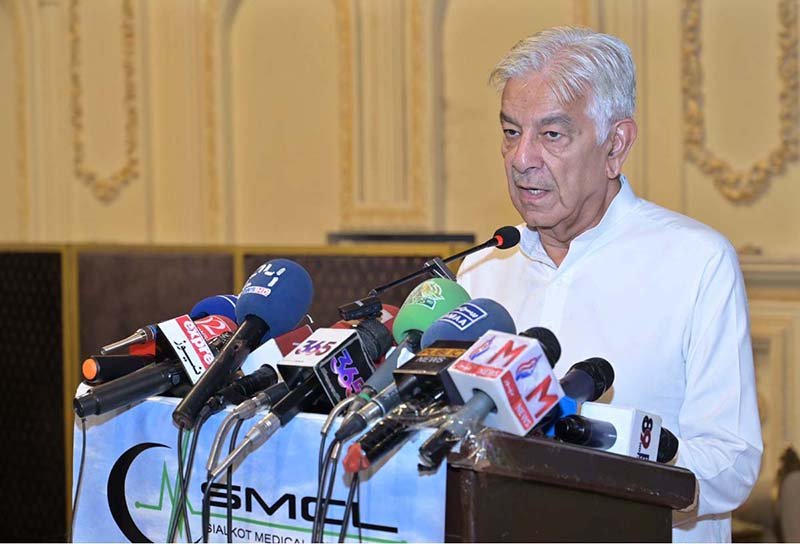
ISLAMABAD — Federal Minister for Defence Khawaja Muhammad Asif has commended the Sialkot Chamber of Commerce and Industry (SCCI) for launching a significant healthcare initiative aimed at enhancing medical facilities in Sialkot. The initiative addresses the city’s long-standing need for advanced healthcare services, marking a critical development in the region’s medical infrastructure.
What Happened
The Sialkot Chamber of Commerce and Industry has embarked on a healthcare project designed to improve the availability and quality of medical services in Sialkot. According to Khawaja Asif, this initiative is a response to the pressing healthcare needs of the local population, which has been underserved for years. During a recent event, Asif highlighted the importance of this project, noting that it represents a collaborative effort between the business community and healthcare providers to deliver better health outcomes for residents.
Asif stated, “The SCCI’s initiative is a commendable step towards addressing the healthcare challenges faced by the people of Sialkot. It is crucial that we support such efforts that aim to enhance the quality of life for our citizens.” The project is expected to involve the establishment of new healthcare facilities equipped with modern technology and staffed by trained professionals.
The SCCI’s healthcare initiative is part of a broader strategy to improve public health infrastructure in the region. Details on the specific facilities to be developed and the timeline for their completion are anticipated to be released in the coming months. The initiative underscores the role of the private sector in supporting public health objectives and bridging gaps in service provision.
Background
Sialkot, a city known for its industrial prowess, particularly in the production of sports goods and surgical instruments, has historically faced challenges in healthcare provision. Despite its economic contributions, the city has lagged in developing adequate medical facilities, leading to a reliance on neighboring cities for specialized treatment.
The SCCI has been instrumental in driving economic growth in Sialkot, and its involvement in healthcare marks a strategic expansion of its role in community development. This initiative aligns with national health policies aimed at improving healthcare access and quality across Pakistan, particularly in underserved areas.
Why It Matters
The Sialkot Chamber’s healthcare initiative is significant for several reasons. Economically, it represents an investment in human capital, as improved health services can lead to a more productive workforce. Socially, it addresses a critical need for accessible and quality healthcare, which is essential for the well-being of the community.
Politically, the initiative demonstrates the potential for public-private partnerships in addressing infrastructure deficits. It highlights the importance of collaboration between government entities and the private sector in achieving sustainable development goals. The project also aligns with broader national objectives to enhance healthcare delivery and reduce regional disparities in service availability.
Internationally, the initiative could serve as a model for other regions facing similar challenges, showcasing how local business communities can play a pivotal role in public health improvements. By addressing healthcare needs, Sialkot can enhance its reputation not only as an industrial hub but also as a city committed to the welfare of its residents.
Key Takeaways
- The Sialkot Chamber of Commerce and Industry has launched a healthcare initiative to improve medical facilities in Sialkot.
- Federal Minister Khawaja Asif praised the initiative, highlighting its importance for the community.
- The project aims to establish new healthcare facilities with modern technology and trained staff.
- This initiative reflects the role of the private sector in supporting public health objectives.
- It aligns with national health policies to improve healthcare access in underserved areas.
Source Attribution
This article is based on official government statements, press releases, and public communications from relevant authorities.














