
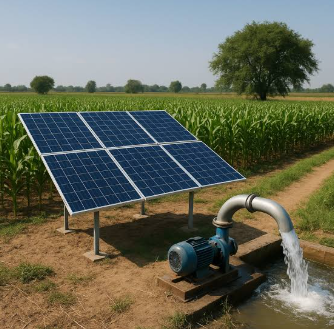
PESHAWAR — The Khyber Pakhtunkhwa (KP) government has sanctioned the installation of 420 solar-powered tube wells to enhance sustainable energy use in the agricultural sector. This initiative, announced by the Agriculture Department, aims to provide cost-effective irrigation solutions to farmers across the province.
What Happened
The KP government has allocated a budget of Rs two billion for the installation of 320 solar agricultural tube wells in various districts. This project is part of a broader strategy to reduce farming costs, boost agricultural productivity, and promote the use of environmentally friendly energy sources. According to the Agriculture Department, the project will be executed under two distinct schemes, benefiting thousands of acres of farmland.
In addition to the 320 tube wells, a special package has been approved for the installation of 100 solar tube wells in the Kohat district, with an allocated budget of Rs225 million. This initiative is expected to improve irrigation facilities for local farmers significantly. Furthermore, the government plans to convert 100 existing agricultural tube wells to solar power, which will help in substantially reducing electricity and fuel expenses for farmers.
To address water scarcity in rain-fed areas, the government has announced the construction of 450 recharge wells across the province. These wells will be geo-tagged to ensure effective monitoring and management of water resources. The Agriculture Department has indicated that more than 1,100 farmers will benefit from the project, receiving 3,540 kilowatt-hours of free solar energy. Special monitoring devices will be installed on the solar tube wells to prevent water wastage and promote efficient water use.
Background
Khyber Pakhtunkhwa, a province with a significant agricultural base, has been facing challenges related to water scarcity and high energy costs. The region’s reliance on traditional energy sources for irrigation has contributed to increased farming expenses and environmental concerns. The shift towards solar energy is part of the government’s broader efforts to transition to renewable energy sources, aligning with national policies aimed at reducing carbon emissions and promoting sustainable development.
In recent years, Pakistan has been investing in solar energy projects to address its energy deficit and support economic growth. The KP government’s initiative is a continuation of these efforts, focusing on the agricultural sector, which is crucial for the province’s economy and food security.
Why It Matters
The approval of 420 solar tube wells represents a significant step towards sustainable agriculture in Khyber Pakhtunkhwa. By reducing reliance on conventional energy sources, the initiative is expected to lower operational costs for farmers, making agriculture more economically viable. This move is particularly important in a region where agriculture is a primary source of livelihood.
The project also holds environmental significance, as it promotes the use of clean energy and reduces the carbon footprint associated with traditional irrigation methods. By converting existing tube wells to solar power, the government is setting a precedent for other provinces to follow, potentially leading to a nationwide shift towards renewable energy in agriculture.
Socially, the initiative is likely to improve the quality of life for farmers by providing them with reliable and affordable energy solutions. The construction of recharge wells will enhance water availability in rain-fed areas, addressing a critical challenge faced by farmers in these regions.
Economically, the project is expected to increase agricultural productivity, contributing to food security and economic stability in the province. By investing in renewable energy infrastructure, the KP government is fostering a more resilient agricultural sector capable of withstanding environmental and economic challenges.
Key Takeaways
- The KP government has approved 420 solar-powered tube wells to support sustainable agriculture.
- A budget of Rs two billion is allocated for 320 tube wells, with an additional Rs225 million for 100 wells in Kohat.
- 100 existing tube wells will be converted to solar power, reducing energy costs for farmers.
- 450 recharge wells will be constructed to improve water availability in rain-fed areas.
- More than 1,100 farmers will benefit from free solar energy, promoting efficient water use.
Source Attribution
This article is based on official government statements, press releases, and public communications from relevant authorities.














