
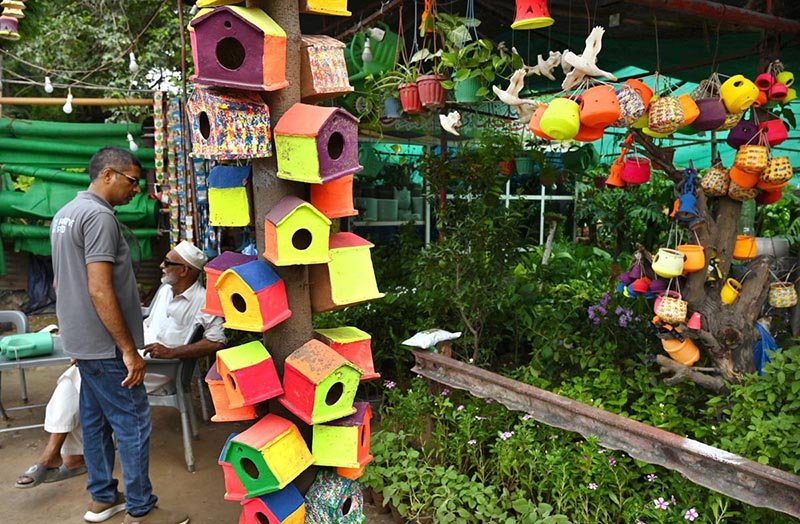
LAHORE — A local vendor in Lahore is capturing the attention of customers with his intricately crafted wooden bird nests, displayed prominently outside a plant nursery. The vendor aims to attract nature enthusiasts and garden lovers by offering these unique, handmade products as a way to enhance their outdoor spaces.
What Happened
On August 20, in the bustling city of Lahore, a vendor set up an eye-catching display of handmade wooden bird nests outside a popular plant nursery. These nests, crafted with precision and care, are designed to provide a natural and aesthetically pleasing addition to gardens and outdoor areas. The vendor, who has been in the business of crafting wooden items for several years, sees this as an opportunity to cater to the growing interest in eco-friendly and sustainable garden products.
According to the vendor, the bird nests are made from locally sourced wood, ensuring that each piece is unique and environmentally friendly. “I wanted to create something that not only serves a functional purpose but also adds beauty to people’s gardens,” the vendor explained. “Birds are an essential part of our ecosystem, and these nests provide them with a safe place to live and thrive.”
The display has attracted a steady stream of customers who are drawn to the craftsmanship and the ecological benefits of the nests. Many visitors to the nursery have expressed interest in purchasing the nests, not only for their gardens but also as gifts for friends and family who appreciate nature and wildlife.
Background
Lahore, known for its rich cultural heritage and vibrant markets, has seen a growing trend towards sustainable and eco-friendly products. In recent years, there has been an increased awareness of the importance of biodiversity and the role that urban gardens and green spaces play in supporting local wildlife. This shift in consumer preferences has led to a rise in demand for products that are both functional and environmentally conscious.
The concept of using handmade wooden bird nests is not new, but it has gained popularity as more people seek to create harmonious and sustainable environments in their homes and gardens. The use of natural materials and traditional crafting techniques aligns with the broader movement towards sustainability and conservation.
Why It Matters
The initiative by the Lahore vendor to promote handmade wooden bird nests is significant in several ways. Economically, it supports local artisans and craftsmen by providing them with a platform to showcase their skills and products. This not only boosts their income but also encourages the preservation of traditional crafting techniques that might otherwise be lost.
Socially, the availability of these bird nests encourages community members to engage with nature and take an active role in conservation efforts. By providing habitats for birds, residents contribute to the preservation of local biodiversity and help maintain ecological balance. This is particularly important in urban areas where natural habitats are often limited.
Furthermore, the initiative aligns with global environmental goals by promoting the use of sustainable materials and reducing reliance on mass-produced, non-biodegradable products. As awareness of environmental issues continues to grow, initiatives like this one play a crucial role in fostering a culture of sustainability and responsible consumption.
Key Takeaways
- A Lahore vendor is attracting customers with handmade wooden bird nests displayed at a plant nursery.
- The nests are crafted from locally sourced wood, emphasizing eco-friendliness and sustainability.
- This initiative supports local artisans and promotes traditional crafting techniques.
- The bird nests encourage urban residents to engage in conservation efforts and support local biodiversity.
- Such initiatives align with global environmental goals by promoting sustainable materials and responsible consumption.
Source Attribution
This article is based on official government statements, press releases, and public communications from relevant authorities.














