
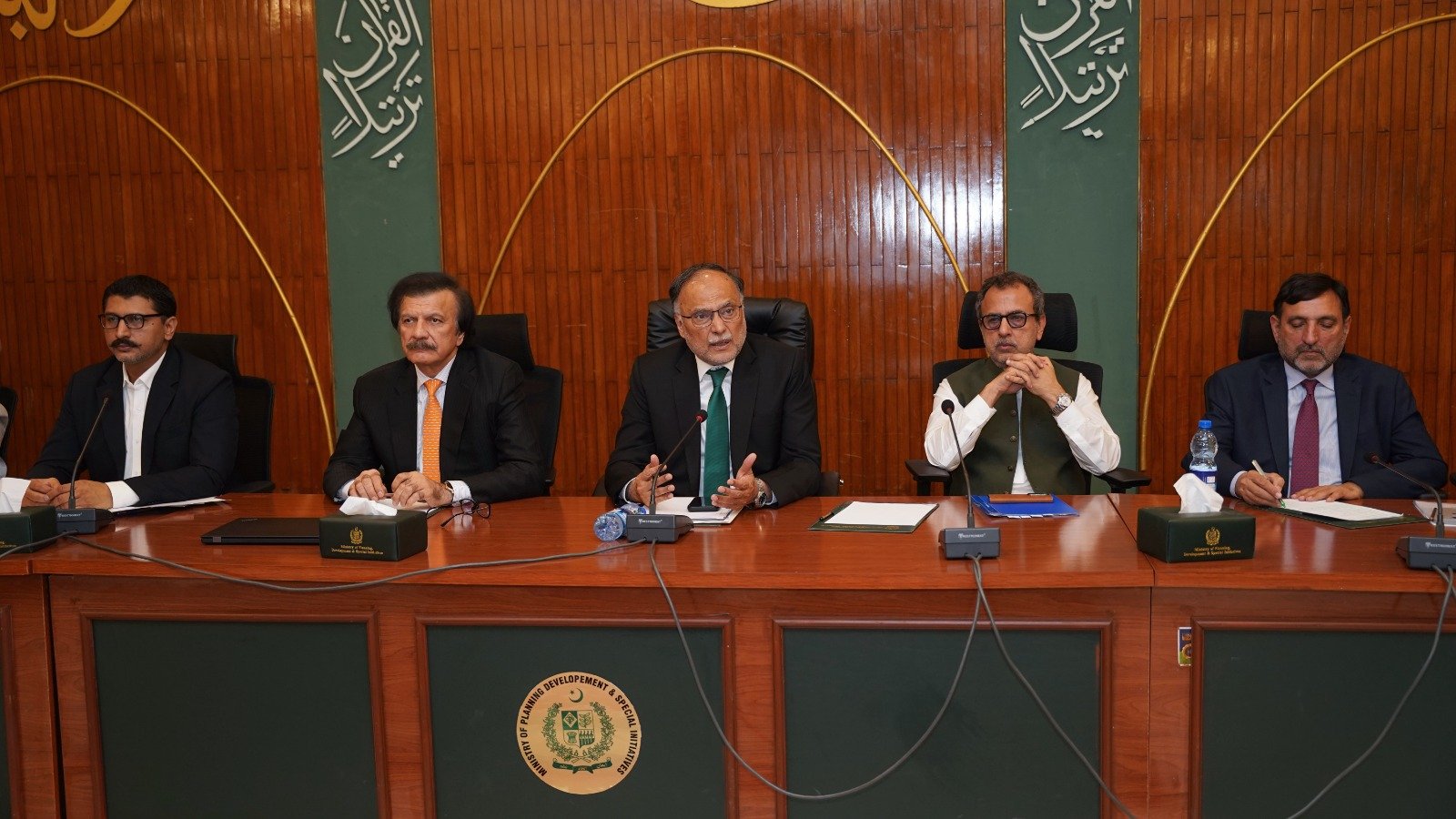
ISLAMABAD — Federal Minister for Planning, Development and Special Initiatives, Professor Ahsan Iqbal, on Wednesday called on Pakistan’s private sector to develop comprehensive five-year export plans. He emphasized that transitioning from discussions to actionable strategies is crucial for achieving export-led growth, which is vital for the country’s economic stability and sustainable development.
What Happened
During a meeting with industry leaders in Islamabad, Minister Ahsan Iqbal urged the private sector to take a proactive role in crafting long-term export strategies. He highlighted the necessity of moving beyond mere dialogue to implement concrete actions that would bolster Pakistan’s export capabilities. “Export-led growth is essential for Pakistan’s economic stability, self-reliance, and sustainable development,” stated Iqbal, underscoring the importance of setting clear, achievable targets.
The minister’s call to action comes at a time when Pakistan faces significant economic challenges, including a trade deficit and reliance on imports. Iqbal stressed that the private sector must align with governmental policies aimed at enhancing export performance. He noted that the government is ready to support industries in this endeavor through policy facilitation and infrastructure development.
Iqbal’s remarks were part of a broader dialogue focused on revitalizing Pakistan’s export sector, which has struggled to keep pace with regional competitors. He encouraged industry leaders to innovate and diversify their export products to meet global market demands. “We need to identify new markets and develop products that can compete internationally,” he added.
Background
Pakistan’s export sector has historically been dominated by textiles, which account for a significant portion of the country’s export revenue. However, in recent years, the sector has faced challenges due to global competition, fluctuating demand, and domestic economic constraints. The government has previously launched various initiatives to support exporters, including tax incentives and subsidies, but these measures have had limited success in significantly boosting export volumes.
In the past, Pakistan has set ambitious export targets, yet achieving these goals has been hindered by infrastructural deficiencies, energy shortages, and a lack of innovation in product development. The current economic climate, exacerbated by the COVID-19 pandemic, has further strained the export sector, making it imperative for the government and private sector to collaborate on sustainable growth strategies.
Why It Matters
The call for five-year export plans is a strategic move aimed at addressing Pakistan’s economic vulnerabilities. By focusing on export-led growth, the country can reduce its trade deficit, increase foreign exchange reserves, and foster economic self-reliance. This approach is particularly important as Pakistan seeks to stabilize its economy and reduce dependency on international financial assistance.
For the private sector, developing long-term export strategies can lead to increased competitiveness in global markets. By diversifying export products and exploring new markets, businesses can mitigate risks associated with market fluctuations and enhance their profitability. This, in turn, can lead to job creation and economic growth, benefiting the broader population.
Furthermore, aligning private sector efforts with government policies can create a more cohesive economic strategy, ensuring that resources are effectively utilized to support export growth. This collaboration is essential for overcoming the structural challenges that have historically impeded Pakistan’s export performance.
Key Takeaways
- Minister Ahsan Iqbal urged the private sector to develop five-year export plans to drive economic growth.
- Export-led growth is seen as crucial for Pakistan’s economic stability and self-reliance.
- The government is committed to supporting industries through policy facilitation and infrastructure development.
- Challenges such as global competition and domestic constraints have historically hindered Pakistan’s export sector.
- Collaboration between the government and private sector is essential for achieving sustainable export growth.
Source Attribution
This article is based on official government statements and public communications from relevant authorities.














