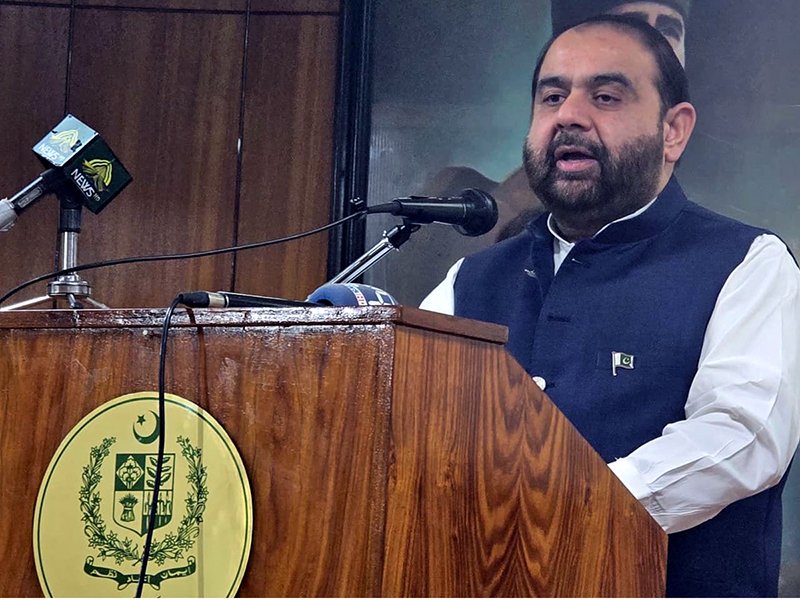
ISLAMABAD — Federal Minister for National Heritage and Culture Aurangzeb Khan Khichi officially launched the first three volumes of the revised edition of the Urdu Lughat at a ceremony held at the National Language Promotion Department (NLPD) on Thursday. The event marks a significant step in preserving and promoting the Urdu language, a key cultural asset of Pakistan.
What Happened
During the ceremony, Minister Aurangzeb Khan Khichi emphasized the importance of the Urdu Lughat as a comprehensive resource for the Urdu language, which is spoken by millions across Pakistan and the diaspora. The revised edition aims to update and expand the dictionary’s contents to reflect contemporary linguistic and cultural developments. The minister stated, “The Urdu Lughat is not just a dictionary; it is a reflection of our cultural heritage and linguistic identity.”
The launch event was attended by notable linguists, scholars, and cultural figures who have contributed to the revision process. The revised volumes are part of an ongoing project to modernize the Urdu Lughat, which has been a cornerstone of Urdu literature and education in Pakistan. The new editions incorporate recent linguistic research and include thousands of new entries, making them an invaluable resource for students, educators, and language enthusiasts.
The NLPD, responsible for the publication, has worked diligently to ensure that the revised volumes meet international standards for lexicography while maintaining the cultural nuances of the Urdu language. The department has also announced plans to digitize the Lughat, making it accessible to a wider audience through online platforms.
Background
The Urdu Lughat, first published in the mid-20th century, has been an essential tool for Urdu speakers and learners. It provides definitions, etymologies, and usage examples for words in the Urdu language. Over the years, the dictionary has undergone several revisions to keep pace with the evolving language. The latest revision is part of a broader initiative by the NLPD to promote Urdu as a modern and dynamic language.
Historically, Urdu has played a crucial role in Pakistan’s cultural and national identity. As the national language, it serves as a unifying force among the diverse linguistic communities in the country. The Urdu Lughat has been instrumental in standardizing the language and providing a reference point for educators and linguists.
Why It Matters
The launch of the revised Urdu Lughat is significant for several reasons. Culturally, it underscores the government’s commitment to preserving and promoting the Urdu language as an integral part of Pakistan’s heritage. By updating the dictionary, the NLPD ensures that Urdu remains relevant in a rapidly changing world where languages are constantly influenced by globalization and technological advancements.
Economically, the revised Lughat can enhance educational outcomes by providing students and educators with an up-to-date linguistic resource. This can improve literacy rates and language proficiency, which are crucial for personal and professional development in an increasingly competitive global market.
On a social level, the revised dictionary fosters a sense of pride and identity among Urdu speakers. It acknowledges the language’s rich history and its role in shaping Pakistan’s cultural landscape. By making the Lughat accessible online, the NLPD also promotes inclusivity, allowing people from different regions and backgrounds to learn and engage with the language.
Key Takeaways
- The first three volumes of the revised Urdu Lughat have been launched by Minister Aurangzeb Khan Khichi.
- The revision includes thousands of new entries and reflects contemporary linguistic developments.
- The NLPD plans to digitize the Lughat, making it accessible online.
- The Urdu Lughat plays a crucial role in preserving Pakistan’s cultural and linguistic heritage.
- The revised dictionary supports educational and economic development by improving language proficiency.
Source Attribution
This article is based on official government statements, press releases, and public communications from relevant authorities.