
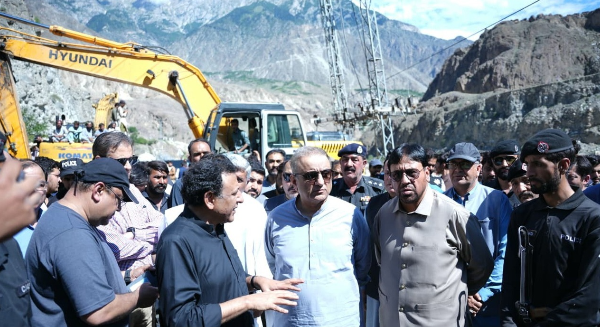
ISLAMABAD — Federal Minister for Communications Abdul Aleem Khan has mandated the prompt restoration of the Skardu-Gilgit Road, which has been severely affected by recent flash floods. During an emergency inspection on Monday, Khan evaluated the damage at the bridge near Sassi Haramosh Ansar Camp and emphasized the urgency of repair operations.
What Happened
The Skardu-Gilgit Road, a critical artery connecting key regions in northern Pakistan, suffered substantial damage due to flash floods that have recently impacted the area. On Monday, Federal Minister Abdul Aleem Khan visited the affected site to assess the extent of the destruction and to oversee the ongoing repair efforts. The inspection focused on the bridge near Sassi Haramosh Ansar Camp, a vital point along the route that has been particularly compromised.
Minister Khan issued directives to the operational staff on-site, insisting on the acceleration of repair work to restore connectivity as soon as possible. He highlighted the importance of this road not only for local transportation but also for the broader economic activities in the region. “The restoration of this road is crucial for the daily lives of the people and the economy of the area,” Khan stated during his visit.
The minister’s visit underscores the government’s commitment to addressing infrastructure challenges posed by natural disasters. The Skardu-Gilgit Road is a lifeline for many communities, providing access to essential services and facilitating trade and tourism, which are vital for the region’s economy.
Background
The Skardu-Gilgit Road is a major transportation route in Pakistan’s northern regions, linking the cities of Skardu and Gilgit. This road is not only essential for local residents but also serves as a key passage for tourists visiting the picturesque landscapes of Gilgit-Baltistan. Historically, this area has been prone to natural disasters, including landslides and floods, which frequently disrupt travel and commerce.
Flash floods, like the ones currently affecting the region, are a recurring challenge, exacerbated by climate change and inadequate infrastructure. In previous years, similar incidents have led to prolonged closures of the road, significantly impacting the local economy and the daily lives of residents. The government has periodically undertaken repair and reinforcement projects, but the frequency and severity of natural disasters continue to pose substantial challenges.
Why It Matters
The swift restoration of the Skardu-Gilgit Road is vital for several reasons. Economically, the road is a critical conduit for trade and tourism. Gilgit-Baltistan is a popular destination for tourists, and any disruption in access can lead to significant economic losses for local businesses and the hospitality industry. The road’s closure also affects the supply chain, hindering the movement of goods and leading to shortages and increased prices for essential commodities.
Socially, the road is indispensable for residents who rely on it for access to healthcare, education, and other essential services. Prolonged disruptions can exacerbate the hardships faced by local communities, particularly in remote areas where alternative routes are limited or non-existent.
Politically, the government’s response to such infrastructure challenges is closely watched by the public. Efficient and timely action can bolster public confidence in the government’s ability to manage natural disasters and maintain critical infrastructure. Conversely, delays or inadequate responses can lead to public dissatisfaction and criticism.
Key Takeaways
- Federal Minister Abdul Aleem Khan has directed the rapid repair of the flood-damaged Skardu-Gilgit Road.
- The road is crucial for economic activities, including trade and tourism, in the Gilgit-Baltistan region.
- Flash floods have caused significant damage to the infrastructure, necessitating urgent restoration efforts.
- The road’s closure impacts local residents’ access to essential services and goods.
- The government’s response to the situation is critical for maintaining public trust and confidence.
Source Attribution
This article is based on official government statements, press releases, and public communications from relevant authorities.














