
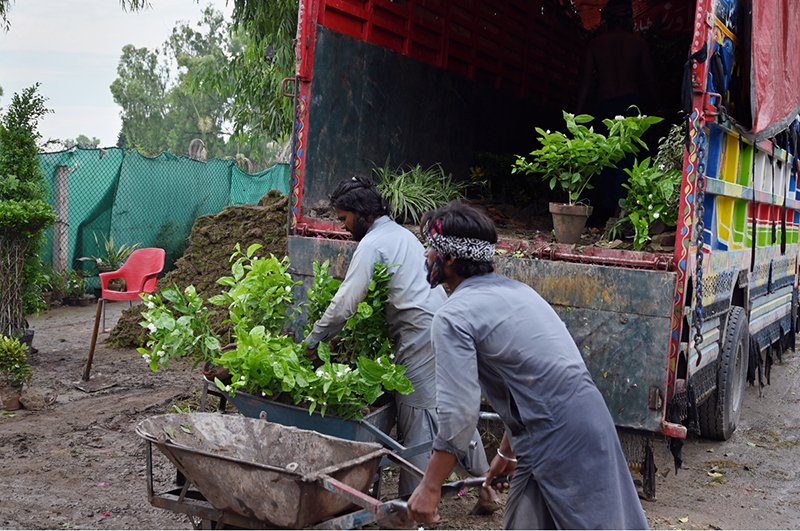
ISLAMABAD — Labourers were seen unloading flowering and ornamental plants from a truck at a local nursery in the H-9 area of the Federal Capital. This activity marks the arrival of fresh consignments of plants coinciding with the monsoon season, which is a critical period for horticulture in the region.
What Happened
The bustling scene at the H-9 nursery involved labourers using wheelbarrows to efficiently transport a variety of flowering and ornamental plants from delivery trucks to their respective display areas. The monsoon season, which typically spans from July to September, is a peak time for nurseries as the increased rainfall provides optimal conditions for planting and growing new stock.
Nursery owners in Islamabad have reported a surge in demand for both flowering and ornamental plants during this period. The monsoon rains not only help in the growth of these plants but also encourage more people to engage in gardening activities. A local nursery manager stated, “The monsoon season is the best time for us to replenish our stock and offer a wider variety of plants to our customers, who are eager to beautify their homes and gardens.”
With the arrival of these new consignments, nurseries are preparing for a busy season ahead. The plants, which include a range of species suitable for the local climate, are expected to attract both amateur and professional gardeners. The influx of plants is also anticipated to boost local sales and provide a temporary increase in employment opportunities for labourers involved in the unloading and arrangement of the plants.
Background
Islamabad’s nurseries have long been a staple for residents looking to enhance their gardens with a variety of plants. The H-9 area, known for its concentration of nurseries, becomes particularly vibrant during the monsoon season. This period is crucial for the horticultural industry as the natural rainfall reduces the need for artificial irrigation, making it an economically favorable time for planting.
The monsoon season in Pakistan is characterized by heavy rains that replenish water tables and provide much-needed moisture to the soil. This natural irrigation is essential for the successful cultivation of both ornamental and flowering plants. Historically, the monsoon has been a time when nurseries stock up on new varieties to meet the increased demand from both local residents and businesses looking to enhance their landscapes.
Why It Matters
The arrival of fresh plant consignments during the monsoon season is significant for several reasons. Economically, it supports local businesses and provides employment opportunities for labourers involved in the horticultural supply chain. The increased activity in nurseries also stimulates related sectors, such as landscaping services and garden supplies, contributing to the local economy.
Socially, the availability of a diverse range of plants encourages community engagement in gardening, which has been shown to have positive effects on mental health and well-being. Gardening activities can foster a sense of community as individuals share tips and experiences, and it promotes environmental awareness and stewardship.
Environmentally, the monsoon season’s natural irrigation supports sustainable gardening practices. By reducing reliance on artificial watering systems, nurseries and gardeners can lower their water consumption, contributing to conservation efforts. The planting of ornamental and flowering plants also enhances urban green spaces, improving air quality and providing habitats for local wildlife.
Key Takeaways
- Labourers are actively unloading new consignments of ornamental plants at Islamabad’s H-9 nursery during the monsoon season.
- The monsoon season provides optimal conditions for planting, boosting demand for flowering and ornamental plants.
- This period supports local nurseries economically and offers temporary employment opportunities for labourers.
- Gardening during the monsoon season promotes community engagement and environmental sustainability.
- The increased activity in nurseries contributes to the local economy and enhances urban green spaces.
Source Attribution
This article is based on official government statements, press releases, and public communications from relevant authorities.














