
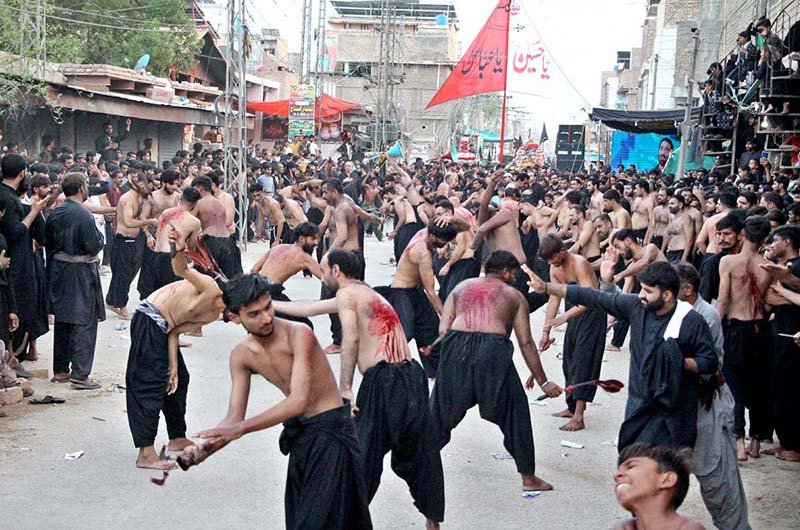
RAHMATPUR — Mourners participated in traditional self-flagellation with knives and chains during a Muharram procession on the 9th of Muharramul Haram. The procession through Rahmatpur Road marks a key event in the month commemorating the martyrdom of Hazrat Imam Hussain (RA), grandson of the Holy Prophet Mohammad (PBUH).
Significant Day in Islamic Calendar
On the 9th of Muharram, a critical date in the Islamic calendar, mourners gathered in Rahmatpur for a traditional procession. This includes self-flagellation, a symbolic gesture of solidarity with Hazrat Imam Hussain (RA) and his followers, martyred during the Battle of Karbala in 680 AD.
The procession solemnly moved along Rahmatpur Road, drawing large crowds of participants and onlookers. Enhanced security ensured the safety of attendees, with police and community leaders managing the event. The procession is among several events culminating in Ashura, observed with even greater devotion.
Religious and Cultural Traditions
Participants chanted elegies and recited poetry commemorating Imam Hussain (RA) and his companions. The atmosphere was one of deep mourning, with many expressing devotion through tears and prayers. Muharram, the first month of the Islamic lunar calendar, holds immense religious importance, especially for Shia Muslims.
This period mourns the martyrdom at Karbala, symbolizing the struggle against tyranny. Traditions like processions and self-flagellation have been observed for centuries, allowing the faithful to express grief and reaffirm their commitment to the values of Imam Hussain (RA).
Impact and Significance
The Muharram processions express profound religious and cultural identity, especially in Pakistan, where a considerable portion of the population observes these rituals. They underscore the historical and spiritual significance of sacrifices at Karbala and reinforce themes of justice and sacrifice.
The observance of Muharram highlights the diversity within Islam, with varied commemorations reflecting the faith’s history. These processions also serve as platforms for expressing contemporary socio-political grievances and aspirations.
Economically, Muharram observances impact local businesses with increased demand for goods and services tied to the rituals. Moreover, security and public safety measures require significant coordination and resources from local authorities.
Key Points
- The Muharram procession in Rahmatpur featured traditional self-flagellation rituals.
- Muharram honors the martyrdom of Hazrat Imam Hussain (RA) at Karbala.
- Processions are a major expression of religious and cultural identity.
- Security measures ensure the safety of participants.
- Muharram observances have economic and socio-political impacts.
Source Attribution
Information in this article was sourced from the Associated Press of Pakistan (APP), reporting on the Muharram events.














