
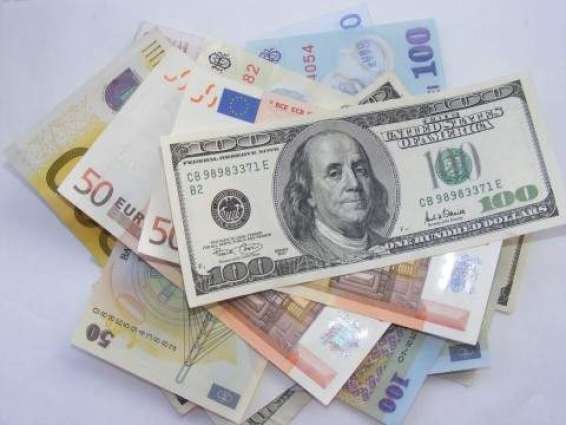
KARACHI — The National Bank of Pakistan (NBP) has announced the latest buying and selling rates for major foreign currencies as of Wednesday, July 22. These rates are crucial for businesses, travelers, and financial analysts who rely on accurate and timely currency data.
What Happened
The National Bank of Pakistan, a key financial institution in the country, released its updated currency exchange rates for several major currencies, including the US Dollar (USD), British Pound (GBP), Euro (EUR), Japanese Yen (JPY), United Arab Emirates Dirham (AED), and Saudi Riyal (SAR). The rates are as follows: the USD is being sold at PKR 279.69 and bought at PKR 276.69, the GBP at PKR 374.32 for selling and PKR 369.89 for buying, and the EUR at PKR 319.02 for selling and PKR 315.26 for buying. Additionally, the JPY is priced at PKR 1.7142 for selling and PKR 1.6940 for buying, the AED at PKR 74.50 for selling and PKR 73.62 for buying, and the SAR at PKR 76.16 for selling and PKR 75.26 for buying.
The release of these rates is part of NBP’s regular updates that help in maintaining transparency and providing necessary information to stakeholders involved in foreign exchange transactions. The rates are subject to fluctuations based on market conditions, and NBP updates them regularly to reflect the current economic environment.
Background
Currency exchange rates are vital indicators of a country’s economic health and are influenced by various factors, including inflation rates, interest rates, and economic stability. The NBP, as a state-owned bank, plays a significant role in setting these rates, which are used as benchmarks across the country. Historically, Pakistan’s currency exchange rates have been affected by both domestic and international economic pressures, including trade balances, foreign reserves, and geopolitical events.
In recent years, the Pakistani Rupee has experienced volatility due to various factors such as political instability, changes in government policy, and global economic trends. The State Bank of Pakistan and other financial institutions like NBP work to stabilize the currency through monetary policy and interventions in the foreign exchange market.
Why It Matters
The exchange rates released by NBP have significant implications for Pakistan’s economy. For businesses engaged in international trade, these rates determine the cost of importing goods and the revenue from exports. A higher exchange rate for the USD, for instance, can increase the cost of imports, affecting the prices of goods in the domestic market.
For individuals, especially those working abroad and sending remittances back to Pakistan, favorable exchange rates can increase the value of their earnings when converted to Rupees. This has a direct impact on household incomes and spending power.
On a broader scale, the exchange rates influence inflation rates within the country. A weaker Rupee can lead to higher import costs, contributing to inflationary pressures. Conversely, a stronger Rupee can help keep inflation in check by reducing the cost of imported goods.
Internationally, stable and predictable exchange rates can enhance investor confidence, attracting foreign investment into the country. This is crucial for economic growth and development, as foreign investment can lead to job creation, infrastructure development, and technological advancement.
Key Takeaways
- The NBP has released updated exchange rates for major currencies as of July 22.
- The USD is being sold at PKR 279.69 and bought at PKR 276.69.
- Exchange rates impact import costs, remittances, and inflation.
- Stable rates can attract foreign investment, aiding economic growth.
- NBP’s updates are crucial for businesses and individuals engaged in foreign exchange.
Source Attribution
This article is based on official communications from the National Bank of Pakistan.














