
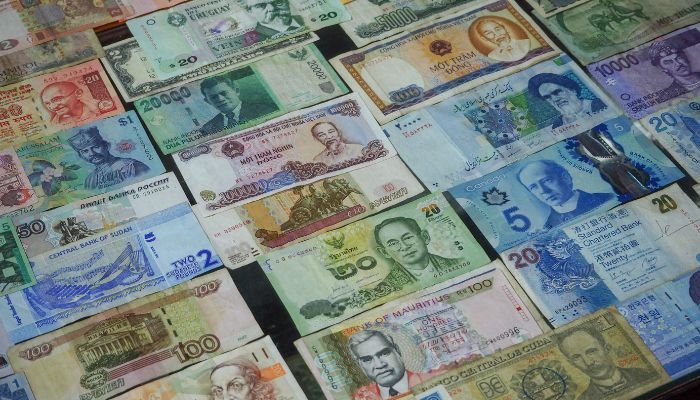
KARACHI — On August 21, the National Bank of Pakistan (NBP) announced the latest exchange rates for currency notes in Karachi, reflecting the current buying and selling prices for major international currencies. These rates are crucial for businesses, travelers, and investors who engage in foreign exchange transactions.
What Happened
The NBP has updated its exchange rates for several major currencies, including the US dollar, British pound, euro, Japanese yen, Saudi riyal, and UAE dirham. According to the latest figures, the US dollar is being sold at PKR 279.34 and bought at PKR 276.34. The British pound is priced at PKR 381.16 for selling and PKR 376.63 for buying. The euro stands at a selling price of PKR 326.64 and a buying price of PKR 322.79. Other currencies like the Japanese yen, Saudi riyal, and UAE dirham also have updated rates, with the yen selling at PKR 1.7565 and buying at PKR 1.7359, the riyal at PKR 74.40 for selling and PKR 73.52 for buying, and the dirham at PKR 76.06 for selling and PKR 75.17 for buying.
Additionally, the London Interbank Offered Rate (LIBOR) for calculating interest on special US dollar bonds has been released. The rates are 3.6587% for one month, 3.7406% for three months, and 3.8440% for six months. These rates are indicative of the cost of borrowing in international markets and are a benchmark for setting various financial products.
The NBP also provided indicative forward buying and selling rates (FBP) for the US dollar, euro, and British pound, which are essential for businesses planning future transactions. For instance, the US dollar’s indicative rates range from PKR 276.11 for sight/15 days to PKR 261.36 for six months, reflecting expectations of currency fluctuations over time.
Background
The National Bank of Pakistan regularly updates its exchange rates to reflect changes in the global currency markets. These rates are influenced by various factors, including international economic conditions, trade balances, and geopolitical developments. The exchange rate system in Pakistan is managed by the State Bank of Pakistan, which oversees monetary policy and foreign exchange regulations to stabilize the national economy.
Historically, Pakistan’s currency has faced challenges due to economic volatility, inflation, and external debt pressures. The government and financial institutions like the NBP play a critical role in managing these challenges by providing transparent and timely financial information to the public.
Why It Matters
Exchange rates have a significant impact on Pakistan’s economy, affecting everything from import and export prices to inflation and foreign investment. For businesses engaged in international trade, understanding and anticipating changes in exchange rates is crucial for financial planning and risk management. A stronger US dollar, for example, can make imports more expensive, affecting the cost of goods and services in Pakistan.
For individual consumers, exchange rates influence the cost of travel, education abroad, and remittances. With a large diaspora sending money back home, fluctuations in these rates can affect the purchasing power of remittances, which are a vital source of foreign exchange for the country.
On a broader scale, stable and predictable exchange rates are essential for economic growth and investor confidence. They help maintain a balance of payments and support the government’s efforts to attract foreign investment by providing a stable economic environment.
Key Takeaways
- The NBP updated exchange rates for major currencies including USD, GBP, and EUR.
- LIBOR rates for USD bonds are provided, indicating international borrowing costs.
- Exchange rates directly impact Pakistan’s economy, affecting trade and consumer prices.
- Stable exchange rates are crucial for economic growth and investor confidence.
- Forward buying and selling rates help businesses plan for future currency fluctuations.
Source Attribution
This article is based on official government statements, press releases, and public communications from relevant authorities.














