
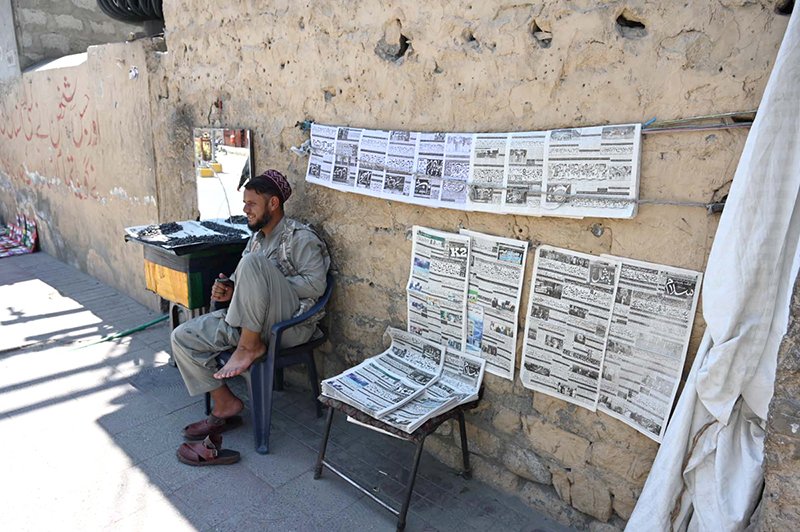
GILGIT — A vendor in Gilgit is seen displaying newspapers hanging on a wall for sale at a roadside stall, highlighting the ongoing struggle of print media in a digital age. As digital platforms continue to grow, traditional newspaper sales are facing significant challenges.
What Happened
In the bustling town of Gilgit, a vendor has creatively arranged newspapers on a wall at his roadside stall, attempting to attract passersby. This scene is a common sight in many parts of Pakistan, where vendors strive to maintain the relevance of print media amidst the rapid rise of digital news consumption. The vendor, whose name remains undisclosed, is part of a shrinking group of individuals who continue to rely on newspaper sales as their primary source of income.
According to industry insiders, the sales of physical newspapers have been on a decline for several years. This trend is not unique to Gilgit but is reflective of a nationwide shift towards digital media. The convenience and immediacy offered by online news platforms have made them increasingly popular among readers, particularly the younger demographic. A local resident commented, “I used to buy newspapers daily, but now I get all my news on my phone. It’s just easier.”
Despite the challenges, some vendors remain optimistic. They believe that there is still a segment of the population that prefers the tactile experience of reading a physical newspaper. “There are still people who come by every morning to pick up their favorite paper,” the vendor noted. However, he admitted that the numbers are dwindling.
Background
The decline in newspaper sales is part of a broader global trend where print media is being increasingly overshadowed by digital platforms. In Pakistan, this shift has been accelerated by the widespread availability of smartphones and affordable internet packages. Historically, newspapers have been a primary source of information for the masses, but the advent of digital technology has revolutionized how news is consumed.
In recent years, several major Pakistani newspapers have expanded their digital presence to adapt to changing consumer preferences. This includes developing mobile apps and enhancing their online content to cater to a tech-savvy audience. However, the transition has not been seamless, with many publications struggling to monetize their digital platforms effectively.
Why It Matters
The shift from print to digital media in Pakistan has significant implications for various stakeholders, including consumers, media organizations, and vendors. For consumers, the transition offers greater accessibility and immediacy, allowing them to stay informed on the go. However, it also raises concerns about the quality and reliability of information, as digital platforms are often susceptible to misinformation and fake news.
For media organizations, the decline in print sales poses financial challenges. Advertising revenue, which traditionally supported print publications, has not fully transitioned to digital platforms, leading to budget constraints and, in some cases, layoffs. This financial strain can impact the quality of journalism, as resources become limited.
Vendors, like the one in Gilgit, face the most immediate impact. Their livelihoods, which depend on daily newspaper sales, are at risk as consumer habits change. This shift necessitates a reevaluation of business models and the exploration of alternative revenue streams to sustain their operations.
Key Takeaways
- Newspaper sales in Gilgit and across Pakistan are declining due to the rise of digital media.
- Vendors are attempting creative strategies to attract customers but face diminishing returns.
- The shift to digital platforms offers convenience but raises concerns about misinformation.
- Media organizations are struggling to monetize digital content effectively.
- Vendors’ livelihoods are at risk, prompting a need for new business strategies.
Source Attribution
This article is based on official government statements, press releases, and public communications from relevant authorities.














