
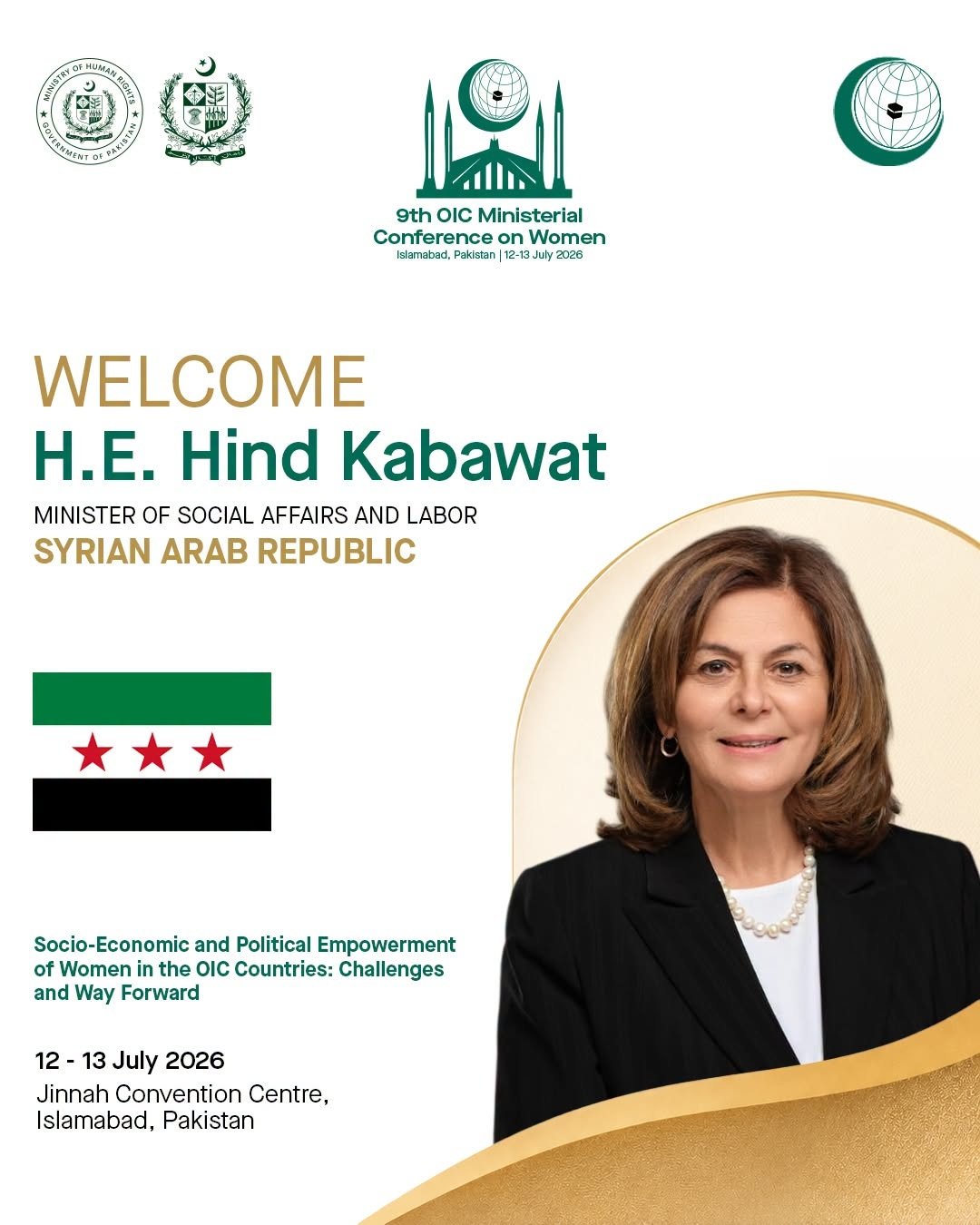
ISLAMABAD — The 9th Organisation of Islamic Cooperation (OIC) Ministerial Conference on Women concluded with a powerful message of hope and solidarity for women in refugee camps and displacement. Syrian Minister of Social Affairs and Labour Hind Kabawat emphasized the event’s significance, highlighting the unity and empowerment of women across the Muslim world.
What Happened
The OIC Ministerial Conference on Women, held in Islamabad, brought together female leaders and representatives from various OIC member states to address pressing issues faced by women, particularly those in refugee camps and displacement. The conference aimed to foster cooperation among Muslim countries to enhance women’s rights and empowerment.
Syrian Minister Hind Kabawat, who participated in the conference, expressed that the gathering was a crucial platform for advancing women’s empowerment and human rights. “This conference reflects the unity of women across the Muslim world and offers a valuable opportunity to advance women’s empowerment, human rights, and shared cooperation,” Kabawat stated.
The conference focused on several key areas, including improving access to education and healthcare for displaced women, enhancing economic opportunities, and promoting gender equality. It also addressed the unique challenges faced by women in conflict zones and refugee camps, emphasizing the need for targeted interventions and support.
Delegates from various countries shared insights and strategies to tackle these issues, underscoring the importance of collaborative efforts to uplift women in vulnerable situations. The conference concluded with a commitment to continue working towards the empowerment of women in all spheres of life, particularly those affected by displacement.
Background
The Organisation of Islamic Cooperation, established in 1969, is the second-largest intergovernmental organization after the United Nations, with a membership of 57 states. The OIC aims to promote solidarity among member states and support the interests of Muslims worldwide. The Ministerial Conference on Women is a key initiative within the OIC framework, focusing on advancing women’s rights and addressing gender-specific challenges.
Women in refugee camps and displacement often face significant challenges, including limited access to education, healthcare, and economic opportunities. These issues are exacerbated by the ongoing conflicts and instability in regions such as Syria, Yemen, and Afghanistan, where millions of women and children are displaced.
Why It Matters
The OIC Women’s Conference is pivotal in addressing the needs of women in refugee camps, offering a platform for dialogue and action among member states. The conference’s focus on empowerment and human rights is crucial for improving the lives of displaced women, who often endure harsh living conditions and limited opportunities.
By fostering cooperation among Muslim countries, the conference aims to create a unified approach to tackling gender-specific challenges. This collaboration is vital for developing effective strategies to support displaced women, ensuring they have access to education, healthcare, and economic opportunities.
The conference’s outcomes have broader implications for Pakistan and other OIC member states, as they work towards achieving gender equality and empowering women in all sectors. The commitment to enhancing women’s rights and addressing the needs of displaced women aligns with global efforts to promote sustainable development and peace.
Key Takeaways
- The OIC Women’s Conference focused on empowering women in refugee camps and displacement.
- Syrian Minister Hind Kabawat emphasized the unity and cooperation among Muslim women.
- The conference addressed key issues such as education, healthcare, and economic opportunities for displaced women.
- The event highlighted the importance of collaborative efforts to support women in vulnerable situations.
- The outcomes align with global goals for gender equality and sustainable development.
Source Attribution
This article is based on official government statements, press releases, and public communications from relevant authorities.














