
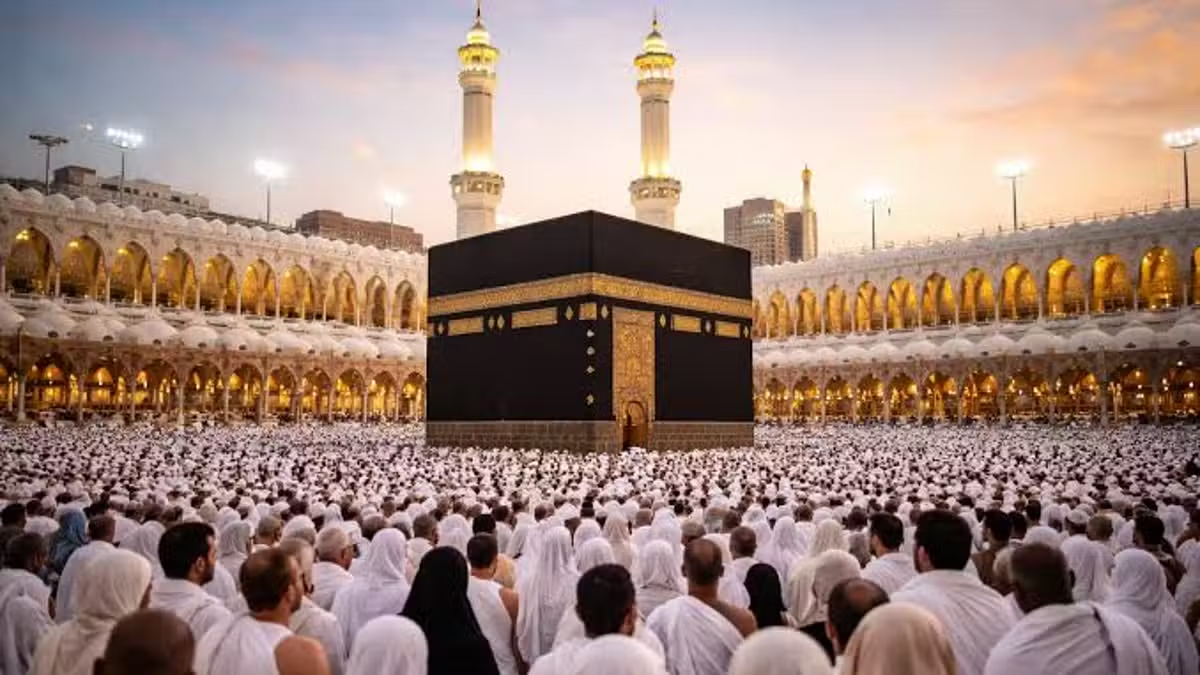
ISLAMABAD — The online registration process for Hajj 2027–2030 has entered its sixth consecutive day, enabling prospective pilgrims to apply conveniently from their homes. A statement from the Associated Press of Pakistan (APP) on June 27 confirmed that registration operates on a first-come, first-served basis.
Current Progress
The online registration for the Hajj pilgrimage covering 2027 to 2030 has received significant attention. A total of 107,587 applicants successfully registered in the first five days. This digital initiative seeks to simplify the application process, reaching a wider audience.
Of those registered, 85,000 applicants have been confirmed, demonstrating strong interest and readiness for this vital religious event. The user-friendly registration eliminates the need for physical visits to registration centers.
The Ministry of Religious Affairs and Interfaith Harmony, which oversees the Hajj operations, underscores the importance of early registration for an orderly pilgrimage experience. Their digital efforts are part of a broader strategy to enhance Hajj operations and improve pilgrim experiences.
Context
Hajj, a primary pillar of Islam, requires Muslims to undertake a pilgrimage to Mecca at least once, contingent on physical and financial capability. It is a crucial religious duty with deep spiritual significance for Muslims globally.
Recently, Pakistan’s government has sought to boost the efficiency and transparency of Hajj registration. Online registration continues these efforts, reducing bureaucratic challenges and improving accessibility for the public.
The previous registration process involved long queues and complex paperwork, often causing delays and inconvenience. Transitioning online is anticipated to resolve these issues, offering a smoother experience for aspiring pilgrims.
Significance
The shift to online Hajj registration is noteworthy for several reasons. Economically, it cuts costs related to physical centers and staff. This digital transformation will conserve resources, enabling the Ministry to reallocate funds to other Hajj operations efficiently.
- Socially, it makes the process more inclusive, reaching a broader audience, independent of location. This is advantageous for those in remote areas who faced barriers accessing registration centers.
- Politically, a successful online system reflects the government’s commitment to modernization and digital innovation, aligning with national e-governance goals.
- Internationally, Pakistan’s approach to modernizing its Hajj operations could guide other nations managing large Muslim populations, showcasing efficient digital solutions for major religious events.














