
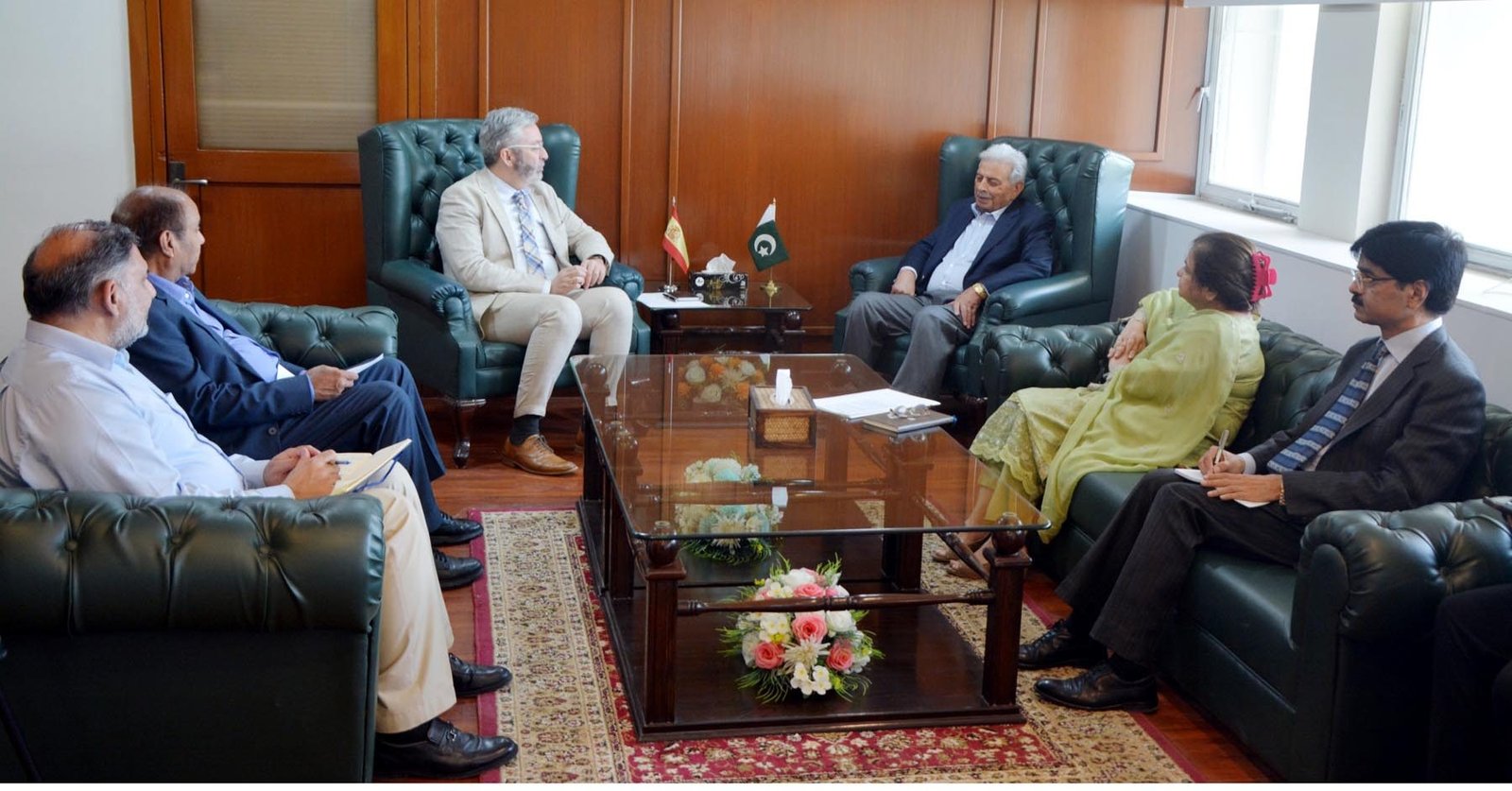
ISLAMABAD — Pakistan is actively pursuing enhanced agricultural and trade relations with Spain, focusing on modern agricultural technologies to improve productivity and climate resilience. Minister for National Food Security and Research, Rana Tanveer Hussain, highlighted these ambitions during discussions on Tuesday.
What Happened
Minister Rana Tanveer Hussain emphasized the critical need for Pakistan to adopt advanced agricultural technologies to bolster its agricultural output and withstand climate challenges. He underscored the importance of collaborating with Spain, a country known for its innovative agricultural practices, to achieve these objectives. The minister’s remarks came during a meeting aimed at exploring potential areas of cooperation between the two nations.
Hussain pointed out that Pakistan’s agricultural sector, which is a cornerstone of the national economy, faces significant challenges due to climate change. He stated, “Strengthening our ties with Spain in the field of modern agricultural technologies is crucial for enhancing our productivity and ensuring climate resilience.” The minister also noted the potential benefits of such collaboration for both countries, particularly in terms of trade and economic growth.
The discussions also touched upon the broader scope of trade relations between Pakistan and Spain. The minister expressed optimism about increasing bilateral trade volumes and exploring new markets for Pakistani agricultural products in Spain. He indicated that both countries could benefit from a more robust trade partnership, leveraging each other’s strengths in agriculture and technology.
Background
Pakistan’s agricultural sector is a vital part of its economy, contributing approximately 24% to the GDP and employing nearly 42% of the labor force. However, the sector faces numerous challenges, including water scarcity, outdated farming practices, and the impacts of climate change. The government has been seeking international partnerships to modernize its agricultural practices and improve food security.
Spain, on the other hand, is recognized for its advanced agricultural technologies and practices, particularly in areas like water management, crop diversification, and sustainable farming. The European nation has a strong agricultural export sector, with its products reaching markets worldwide. This makes Spain a strategic partner for Pakistan in its efforts to modernize agriculture and expand trade.
Why It Matters
The potential partnership between Pakistan and Spain holds significant implications for both countries. For Pakistan, collaboration with Spain could lead to the adoption of advanced agricultural technologies, which are essential for increasing crop yields and ensuring food security in the face of climate change. This is particularly vital as Pakistan grapples with the effects of erratic weather patterns and water shortages.
Economically, a stronger trade relationship with Spain could open new markets for Pakistani products, boosting exports and contributing to economic growth. This is crucial for Pakistan as it seeks to diversify its export base and reduce its trade deficit. By tapping into Spain’s extensive agricultural expertise, Pakistan can enhance its competitiveness in the global market.
For Spain, the partnership offers opportunities to expand its influence and market presence in South Asia. By sharing its agricultural innovations with Pakistan, Spain can strengthen its diplomatic and economic ties in the region, potentially leading to increased trade and investment opportunities.
Key Takeaways
- Pakistan is seeking to enhance its agricultural productivity and climate resilience through cooperation with Spain.
- Minister Rana Tanveer Hussain emphasized the importance of adopting modern agricultural technologies.
- The partnership aims to boost bilateral trade and open new markets for Pakistani products.
- Spain’s expertise in advanced agricultural practices makes it a strategic partner for Pakistan.
- The collaboration could have significant economic and environmental benefits for both countries.
Source Attribution
This article is based on official government statements and public communications from relevant authorities.














