
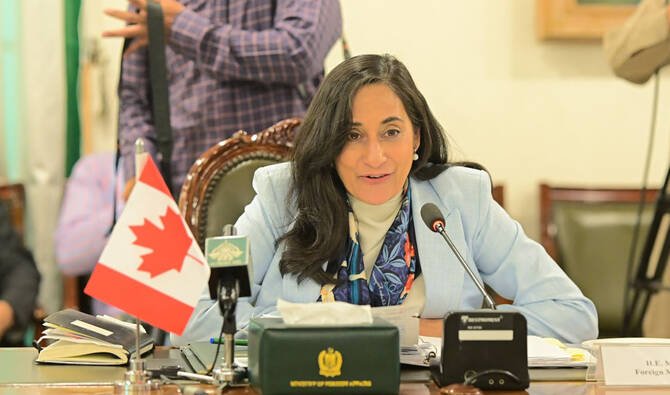
ISLAMABAD — Canada’s Minister for Foreign Affairs, Anita Anand, has highlighted the potential for enhanced economic collaboration between Pakistan and Canada. Speaking on the growing bilateral trade and expanding commercial interests, Anand emphasized the emerging opportunities for both nations to collaborate on regional security and economic growth.
What Happened
During a recent address, Anita Anand, Canada’s Minister for Foreign Affairs, underscored the strengthening ties between Pakistan and Canada, particularly in the realm of economic cooperation. Anand noted that bilateral trade between the two countries has witnessed significant growth, with Canada’s commercial interests in Pakistan expanding considerably. She pointed out that these developments have paved the way for new opportunities for collaboration, not only in economic growth but also in regional security.
Anand’s remarks come at a time when both countries are looking to diversify their economic partnerships and enhance trade relations. She stated, “The growth in bilateral trade and the expansion of commercial interests are indicative of the strong potential for further collaboration between our two nations.” This statement reflects a mutual interest in strengthening economic ties and exploring new avenues for cooperation.
Background
Historically, Pakistan and Canada have maintained cordial diplomatic relations, with economic ties being a significant component of their bilateral relationship. Over the years, both countries have engaged in various trade agreements and initiatives aimed at boosting economic cooperation. Canada has been a key partner in supporting Pakistan’s development goals, particularly in areas such as education, health, and infrastructure development.
The bilateral trade between Pakistan and Canada has been on an upward trajectory, with both countries benefiting from the exchange of goods and services. Canada’s interest in Pakistan’s market has been driven by the latter’s strategic location and its potential as a gateway to South Asia and beyond. This has led to increased Canadian investments in various sectors within Pakistan, including energy, agriculture, and technology.
Why It Matters
The strengthening of economic ties between Pakistan and Canada holds significant implications for both countries. For Pakistan, increased trade and investment from Canada can provide a much-needed boost to its economy, which has been grappling with various challenges, including inflation and a high fiscal deficit. Enhanced economic collaboration can lead to job creation, technology transfer, and improved infrastructure, contributing to overall economic stability.
For Canada, deepening economic relations with Pakistan offers access to a burgeoning market with a young and dynamic population. It also provides Canadian businesses with opportunities to expand their footprint in South Asia, a region that is witnessing rapid economic growth. Additionally, collaboration on regional security can help address shared concerns, such as terrorism and extremism, thereby contributing to global stability.
On a broader scale, the partnership between Pakistan and Canada can serve as a model for other countries looking to enhance economic cooperation amidst a shifting global landscape. As nations increasingly seek to diversify their economic partnerships, the Pakistan-Canada relationship underscores the importance of building resilient and mutually beneficial economic ties.
Key Takeaways
- Canada and Pakistan are exploring new opportunities for economic collaboration, focusing on trade and regional security.
- Bilateral trade between the two countries has grown, with Canada expanding its commercial interests in Pakistan.
- Strengthened economic ties can provide economic benefits for both nations, including job creation and technology transfer.
- The partnership offers Canada access to a dynamic South Asian market, while supporting Pakistan’s economic stability.
- Enhanced collaboration can address shared regional security concerns, contributing to global stability.
Source Attribution
This article is based on official statements from Canada’s Ministry of Foreign Affairs and public communications from relevant authorities.














