
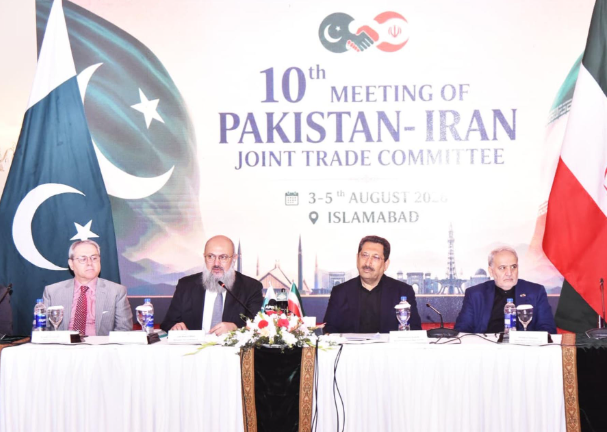
ISLAMABAD — Pakistan and Iran have reiterated their commitment to enhance bilateral trade to $10 billion annually. This announcement was made during the 10th Pakistan-Iran Joint Trade Committee (JTC) meeting held in Islamabad on August 4, 2023.
What Happened
The 10th JTC meeting was co-chaired by Pakistan’s Federal Minister for Commerce, Jam Kamal Khan, and Iran’s Minister for Industry, Mine and Trade. Both nations expressed their determination to strengthen economic ties and achieve the ambitious trade target. The meeting served as a platform to discuss various measures aimed at facilitating trade and investment between the two countries.
During the discussions, both sides emphasized the importance of removing trade barriers and enhancing cooperation in sectors such as energy, agriculture, and technology. The ministers agreed to explore new avenues for collaboration, particularly in the context of regional connectivity and infrastructure development. The meeting also highlighted the need for a more streamlined customs process to facilitate smoother trade operations.
In his remarks, Federal Minister Jam Kamal Khan stated, “Pakistan is committed to deepening its trade relations with Iran. Achieving the $10 billion trade target is a priority for us, and we will work closely with our Iranian counterparts to make this a reality.” Iran’s Minister for Industry echoed these sentiments, emphasizing the mutual benefits of increased trade between the two neighboring countries.
Background
Pakistan and Iran have a long history of economic and cultural ties, with trade being a significant component of their bilateral relationship. Over the years, both countries have signed various agreements to enhance trade and economic cooperation. However, trade volumes have fluctuated due to geopolitical tensions and international sanctions on Iran. Despite these challenges, both nations have continued to seek ways to enhance their economic partnership.
The JTC meetings have been a regular feature of the bilateral relationship, serving as a forum to address trade-related issues and explore new opportunities for cooperation. The current trade volume between Pakistan and Iran is significantly below the $10 billion target, but both countries are optimistic about achieving this goal through concerted efforts and strategic initiatives.
Why It Matters
The reaffirmation of the $10 billion trade target is significant for both Pakistan and Iran, as it reflects their commitment to overcoming past challenges and building a stronger economic partnership. For Pakistan, increasing trade with Iran could provide a much-needed boost to its economy, which has been grappling with fiscal deficits and inflationary pressures. Enhanced trade relations with Iran could lead to increased exports, particularly in sectors like agriculture and textiles.
For Iran, expanding trade with Pakistan offers an opportunity to diversify its economic partnerships amidst ongoing international sanctions. Strengthening ties with a neighboring country like Pakistan could help Iran mitigate some of the economic challenges it faces due to its limited access to global markets.
Regionally, improved trade relations between Pakistan and Iran could contribute to greater stability and economic integration in South Asia and the Middle East. By working together, both countries can play a pivotal role in regional connectivity projects, such as the China-Pakistan Economic Corridor (CPEC), which could further enhance their economic prospects.
Key Takeaways
- Pakistan and Iran have reaffirmed their commitment to achieving a $10 billion annual trade target.
- The 10th Pakistan-Iran Joint Trade Committee meeting focused on removing trade barriers and enhancing cooperation.
- Both countries aim to explore new avenues for collaboration in energy, agriculture, and technology.
- Improved trade relations could provide economic benefits and regional stability for both nations.
- The current trade volume between Pakistan and Iran is below the target, but both sides are optimistic about future growth.
Source Attribution
The article is based on official government statements, press releases, and public communications from relevant authorities.














