
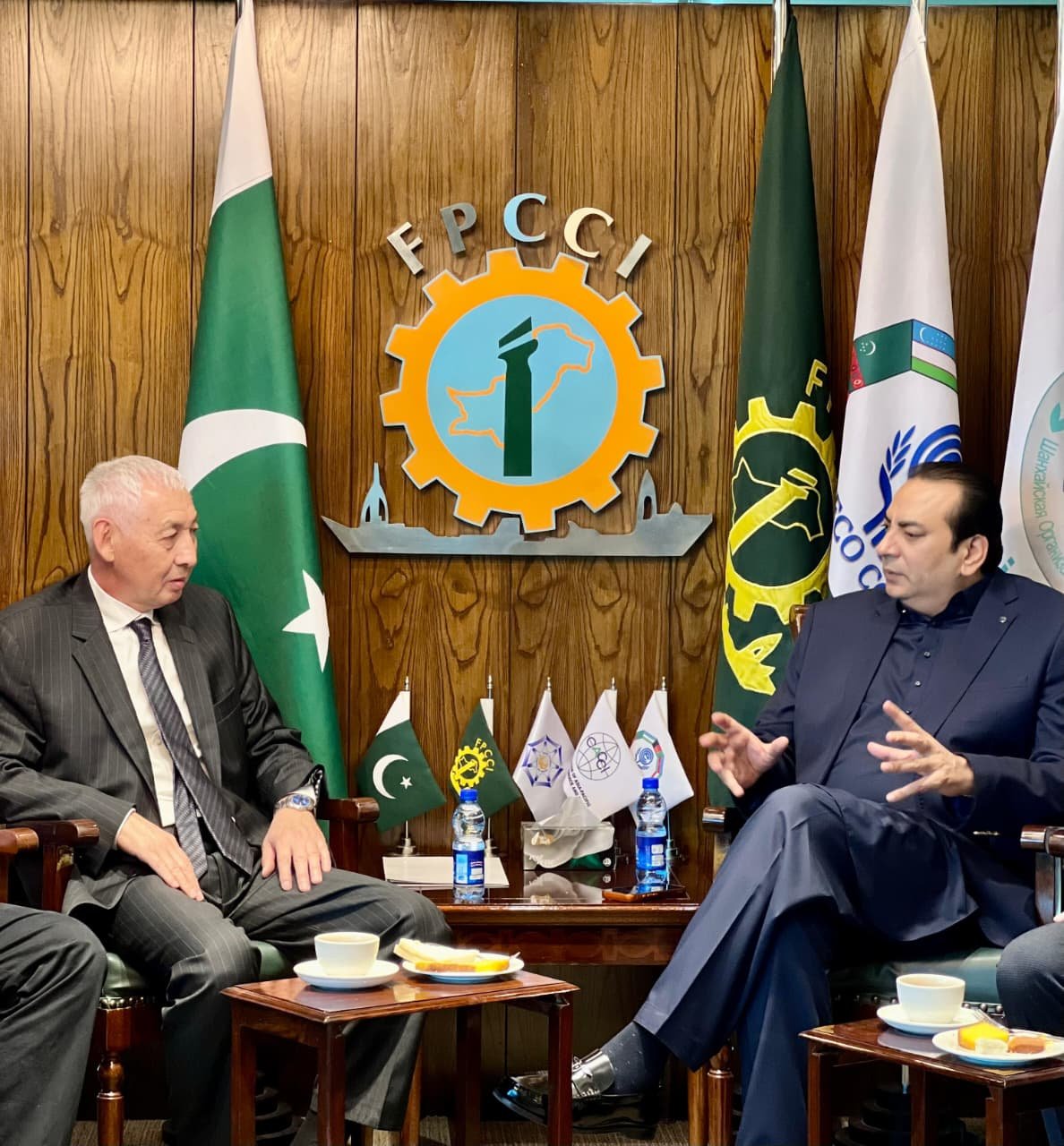
ISLAMABAD — Pakistan and Kyrgyzstan have agreed to establish a Joint Business Council aimed at bolstering trade and investment ties between the two nations. The decision was reached during a meeting between the Chargé d’Affaires of the Embassy of Kyrgyzstan, Aibek Tilebaliev, and the Federation of Pakistan Chambers of Commerce and Industry (FPCCI) President Atif Ikram Sheikh in Islamabad.
What Happened
The meeting, held at the FPCCI headquarters, focused on enhancing bilateral trade relations and fostering economic cooperation between Pakistan and Kyrgyzstan. Aibek Tilebaliev emphasized the importance of strengthening direct business-to-business (B2B) linkages, which he believes will pave the way for increased trade and mutual investment opportunities.
According to Tilebaliev, the establishment of the Joint Business Council will serve as a platform for regular dialogue between the business communities of both countries. “This council will facilitate the exchange of trade delegations and organize joint exhibitions and seminars to promote mutual understanding and cooperation,” he stated.
FPCCI President Atif Ikram Sheikh expressed optimism about the potential benefits of the Joint Business Council, noting that it will help identify and address barriers to trade. “By working together, we can explore new avenues for cooperation in sectors such as textiles, agriculture, and information technology,” Sheikh added.
The discussions also touched upon the need for simplifying visa procedures and improving connectivity between the two countries to support business activities. Both sides acknowledged the potential for growth in sectors such as energy, mining, and tourism.
Background
Pakistan and Kyrgyzstan have maintained diplomatic relations since 1992, following the dissolution of the Soviet Union. Over the years, both countries have sought to enhance economic ties, although trade volumes have remained relatively modest. The formation of the Joint Business Council marks a significant step in efforts to deepen economic engagement.
Historically, both nations have participated in various regional forums such as the Economic Cooperation Organization (ECO) and the Shanghai Cooperation Organization (SCO), which provide platforms for multilateral trade and economic collaboration. The Joint Business Council is expected to complement these efforts by focusing on bilateral initiatives.
Why It Matters
The establishment of the Joint Business Council is a strategic move to enhance economic cooperation between Pakistan and Kyrgyzstan, two countries with complementary economic strengths. For Pakistan, which is seeking to expand its export markets and attract foreign investment, this initiative provides an opportunity to tap into Central Asia’s growing economies.
Kyrgyzstan, with its strategic location and membership in the Eurasian Economic Union (EAEU), offers Pakistani businesses access to a broader regional market. The Joint Business Council could facilitate trade routes and logistics, making it easier for Pakistani goods to reach new markets.
Economically, the council is poised to boost sectors such as textiles, agriculture, and technology, where both countries have competitive advantages. Socially, increased trade and investment could lead to job creation and improved livelihoods in both nations.
Politically, this initiative strengthens bilateral ties and fosters regional stability by promoting economic interdependence. It also aligns with Pakistan’s broader foreign policy objectives of enhancing connectivity with Central Asian states.
Key Takeaways
- Pakistan and Kyrgyzstan have agreed to establish a Joint Business Council to enhance trade and investment.
- The council aims to facilitate B2B linkages and organize trade delegations and joint exhibitions.
- Both countries seek to simplify visa procedures and improve connectivity to support business activities.
- The initiative is expected to boost sectors such as textiles, agriculture, and technology.
- This move aligns with Pakistan’s strategy to expand its economic ties with Central Asian countries.
Source Attribution
The article is based on official government statements, press releases, and public communications from relevant authorities.














