
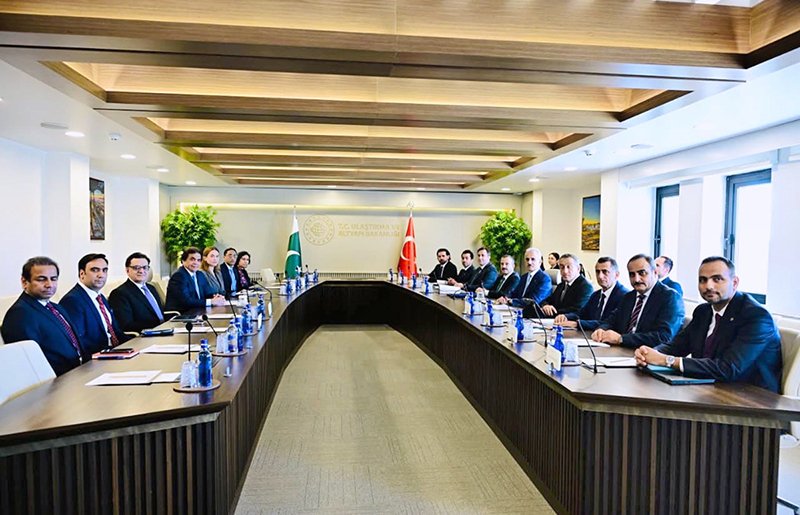
ISLAMABAD — Pakistan’s Federal Minister for Railways Muhammad Hanif Abbasi and Türkiye’s Minister of Transport and Infrastructure Abdulkadir Uraloğlu have agreed to strengthen bilateral cooperation in the railway sector. The agreement, reached during a meeting held on Tuesday, focuses on investment, modernization, and enhancing regional connectivity.
What Happened
The meeting between the two ministers took place in Islamabad, where they discussed various strategies to enhance the railway infrastructure between Pakistan and Türkiye. The discussions centered on increasing investment in the railway sector, modernizing existing infrastructure, and improving regional connectivity to boost trade and economic ties. Both ministers emphasized the importance of leveraging each country’s strengths to create a more robust and efficient railway network.
“We are committed to working closely with Türkiye to modernize our railway system and improve connectivity across the region,” said Federal Minister Muhammad Hanif Abbasi. He highlighted that the collaboration would not only benefit the two nations but also contribute to regional economic growth.
Minister Abdulkadir Uraloğlu echoed these sentiments, stating, “Türkiye sees great potential in partnering with Pakistan to enhance railway infrastructure, which is vital for regional trade and connectivity.” He further added that Türkiye is ready to share its expertise and technology to support Pakistan’s railway modernization efforts.
The agreement includes plans for joint projects and initiatives aimed at upgrading railway lines, enhancing cargo handling capabilities, and introducing advanced technologies for better operational efficiency. Both countries aim to facilitate smoother and faster transportation of goods, which is expected to have a positive impact on trade volumes.
Background
Pakistan and Türkiye have a history of strong diplomatic and economic relations, with both countries being members of the Economic Cooperation Organization (ECO). The railway sector is seen as a crucial component of their bilateral cooperation, given its potential to enhance connectivity not only between the two nations but also with other countries in the region.
In recent years, Pakistan has been focusing on revitalizing its railway infrastructure as part of broader economic development plans. The China-Pakistan Economic Corridor (CPEC) has been a significant driver of infrastructure investment, and the partnership with Türkiye is expected to complement these efforts.
Why It Matters
The agreement between Pakistan and Türkiye is significant for several reasons. Economically, improved railway connectivity is expected to lower transportation costs, enhance trade efficiency, and increase the competitiveness of both countries’ exports. This is particularly important for Pakistan, which is looking to expand its trade footprint in regional markets.
Socially, the modernization of the railway system is anticipated to create job opportunities and stimulate economic activity in regions connected by the railway network. This could lead to improved living standards and economic development in underserved areas.
Politically, the enhanced cooperation between Pakistan and Türkiye strengthens diplomatic ties and showcases a commitment to regional collaboration. It also aligns with broader regional integration efforts, facilitating smoother trade routes across Asia and Europe.
Internationally, the partnership could serve as a model for other countries looking to enhance regional connectivity through collaborative infrastructure projects. The success of this initiative could encourage similar partnerships, contributing to a more interconnected global economy.
Key Takeaways
- Pakistan and Türkiye have agreed to enhance cooperation in the railway sector, focusing on investment and modernization.
- The partnership aims to improve regional connectivity, facilitating trade and economic growth.
- This initiative is part of broader efforts to revitalize Pakistan’s railway infrastructure, complementing CPEC projects.
- Enhanced railway connectivity is expected to create economic opportunities and improve living standards in connected regions.
- The agreement strengthens diplomatic ties and supports regional integration efforts.
Source Attribution
This article is based on official government statements and public communications from relevant authorities.














