
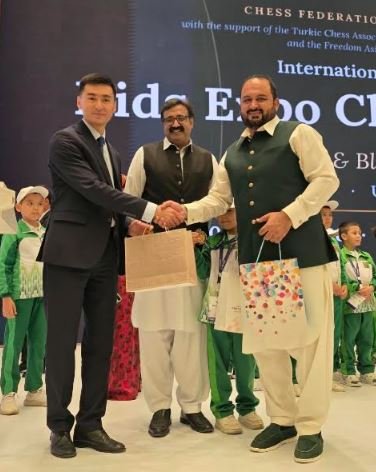
ISLAMABAD — Pakistan and Turkmenistan have agreed to enhance their cooperation in the realm of chess, focusing on promoting the sport among youth, nurturing emerging talent, and creating international opportunities for future players. This agreement was reached during a meeting between the President of the Chess Federation of Pakistan (CFP), Syed Khalid Ali, and his Turkmen counterpart in Islamabad on August 21.
What Happened
The meeting between the chess federations of Pakistan and Turkmenistan aimed to establish a collaborative framework to promote chess as a strategic sport among the youth of both nations. Syed Khalid Ali, President of the Chess Federation of Pakistan, emphasized the importance of this partnership, stating, “Our joint efforts will not only enhance the skills of young chess players but also foster cultural exchange and mutual understanding between our countries.” The Turkmen delegation echoed similar sentiments, highlighting the potential for chess to serve as a bridge between the two nations.
During the discussions, both parties agreed to organize joint training sessions, tournaments, and exchange programs for young players. These initiatives are expected to provide a platform for budding chess enthusiasts to gain international exposure and compete at higher levels. The collaboration will also focus on developing coaching programs and resources to improve the overall standard of chess in both countries.
The agreement aligns with the broader objectives of both nations to promote sports as a means of cultural diplomacy and youth engagement. The chess federations plan to implement these initiatives over the coming months, with the first joint event expected to take place later this year.
Background
Chess has a long-standing history in both Pakistan and Turkmenistan, with the game being played at various levels across the two countries. In recent years, there has been a renewed interest in chess as a competitive sport, leading to increased efforts to nurture talent from a young age. In Pakistan, the Chess Federation of Pakistan has been actively working to promote the game through school programs and national tournaments.
Turkmenistan, on the other hand, has been investing in sports infrastructure and training facilities to support the development of various sports, including chess. The country has hosted several international chess events, attracting players from around the world. This collaboration with Pakistan is seen as a natural extension of Turkmenistan’s commitment to fostering international sports relations.
Why It Matters
The collaboration between Pakistan and Turkmenistan in chess holds significant implications for both countries. Economically, the partnership can lead to increased tourism and cultural exchange, as international chess events draw participants and spectators from various regions. Socially, promoting chess among youth can contribute to cognitive development, critical thinking, and strategic planning skills, which are valuable in both academic and professional settings.
Politically, this initiative strengthens bilateral relations between Pakistan and Turkmenistan, showcasing sports as a tool for diplomacy and cooperation. It also aligns with Pakistan’s broader strategy to engage with Central Asian countries, enhancing regional connectivity and collaboration. Internationally, this partnership positions both countries as active participants in the global chess community, potentially leading to more opportunities for their players on the world stage.
Key Takeaways
- Pakistan and Turkmenistan have agreed to collaborate on promoting chess among youth.
- The partnership includes joint training sessions, tournaments, and exchange programs.
- This initiative aims to enhance bilateral relations and cultural exchange through sports.
- Chess promotion is part of broader efforts to engage youth and develop strategic skills.
- The collaboration aligns with both countries’ goals of fostering international sports ties.
Source Attribution
This article is based on official government statements, press releases, and public communications from relevant authorities.














