
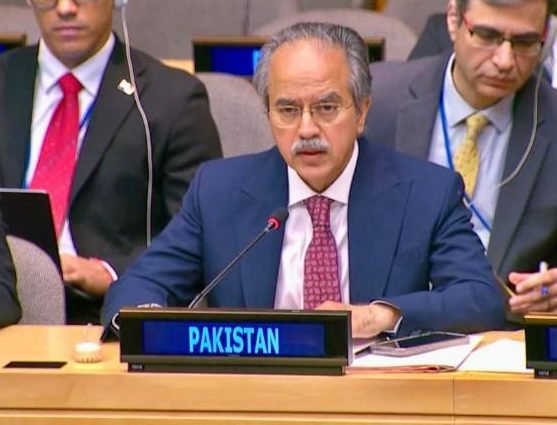
UNITED NATIONS — Pakistan has reiterated its call for the United Nations to enforce Security Council resolutions concerning the Kashmir dispute, as the nation marked Youm-e-Istehsal on August 5. The day is observed to protest against the revocation of Indian-administered Kashmir’s special status in 2019. Pakistan’s Ambassador to the United Nations, Asim Iftikhar Ahmad, emphasized the international community’s responsibility to protect the human rights of the Kashmiri people.
What Happened
On the occasion of Youm-e-Istehsal, Pakistan’s Ambassador to the UN, Asim Iftikhar Ahmad, issued a statement urging the global community to take decisive action regarding the Kashmir issue. He specifically called on the UN to implement its Security Council resolutions that advocate for a plebiscite to determine the will of the Kashmiri people. Ahmad highlighted the ongoing human rights violations in the region and stressed the need for immediate international intervention.
“The people of Indian Occupied Kashmir have faced severe repression and denial of their fundamental rights. It is imperative for the international community to act and ensure justice and peace in the region,” Ahmad stated. The ambassador’s remarks were part of a broader campaign by Pakistan to draw attention to the situation in Kashmir, which has been a flashpoint between India and Pakistan for decades.
The observance of Youm-e-Istehsal marks the day when, in 2019, the Indian government revoked Article 370 of its constitution, stripping Jammu and Kashmir of its special status. This move has been a point of contention, leading to heightened tensions between the two nuclear-armed neighbors.
Background
The Kashmir conflict dates back to the partition of British India in 1947, which resulted in the creation of India and Pakistan. Both nations claim the region in full but control only parts of it. The UN Security Council has passed several resolutions since 1948, calling for a plebiscite to allow the people of Jammu and Kashmir to decide their future. However, these resolutions have yet to be implemented.
In August 2019, the Indian government, led by Prime Minister Narendra Modi, abrogated Article 370, which granted special autonomy to Jammu and Kashmir. This action was met with widespread condemnation from Pakistan and led to increased military presence and restrictions in the region. The move has been criticized by human rights organizations and international bodies for exacerbating tensions and leading to human rights abuses.
Why It Matters
The Kashmir issue remains one of the most volatile geopolitical conflicts in South Asia, with significant implications for regional stability and international relations. The abrogation of Article 370 has not only strained India-Pakistan relations but also raised concerns about human rights violations in the region. Reports of curfews, communication blackouts, and arbitrary detentions have drawn international criticism.
For Pakistan, the Kashmir dispute is a core issue of national identity and foreign policy. The country’s repeated calls for UN intervention highlight its commitment to seeking a peaceful resolution through international mediation. The conflict also impacts regional security, as both India and Pakistan are nuclear-armed states with a history of military confrontations over Kashmir.
Furthermore, the situation in Kashmir affects the broader international community due to its potential to escalate into a larger conflict. The involvement of global powers, either directly or through diplomatic channels, is crucial in preventing further escalation and ensuring the protection of human rights in the region.
Key Takeaways
- Pakistan’s UN Ambassador calls for the implementation of Security Council resolutions on Kashmir.
- The observance of Youm-e-Istehsal marks the anniversary of the revocation of Kashmir’s special status by India in 2019.
- The Kashmir conflict remains a significant geopolitical issue with implications for regional and global stability.
- Human rights organizations have reported ongoing violations in Indian-administered Kashmir.
- The international community’s involvement is deemed crucial for a peaceful resolution.
Source Attribution
This article is based on official government statements, press releases, and public communications from relevant authorities.














