
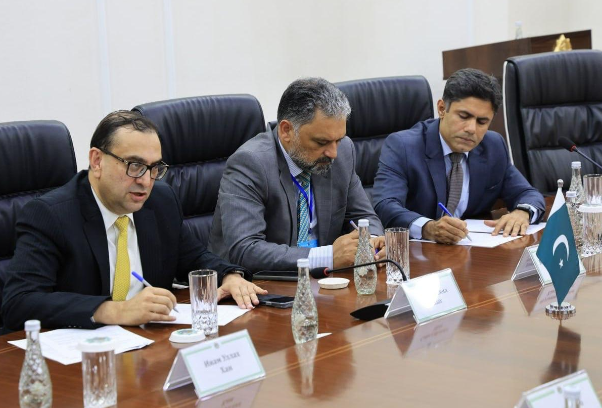
ISLAMABAD — Pakistan Customs has announced an expansion of its digital customs partnership with Uzbekistan, aiming to enhance regional cooperation and secure trade facilitation. This development was confirmed during the 11th Policy-Level Meeting of the United Nations Office on Drugs and Crime (UNODC)–World Customs Organization (WCO) Passenger and Cargo Control Programme (PCCP/IREN) held in Tashkent, Uzbekistan.
What Happened
The meeting, which took place in Tashkent, saw the participation of Pakistan Customs as part of its ongoing efforts to strengthen regional customs cooperation. The delegation from Pakistan was led by senior customs officials who engaged in discussions focused on promoting secure and technology-driven trade facilitation. The event provided a platform for member countries to share experiences and strategies aimed at enhancing customs operations and combating illicit trade.
During the meeting, Pakistan Customs underscored its commitment to leveraging technology to streamline customs processes and enhance the security of trade routes. The discussions also highlighted the importance of digital customs systems in facilitating efficient cross-border trade and reducing the risk of smuggling and other illegal activities.
A key outcome of the meeting was the agreement to deepen the digital customs partnership between Pakistan and Uzbekistan. This initiative is expected to foster greater collaboration in customs operations, improve data sharing, and enhance the overall efficiency of trade between the two countries.
Background
Pakistan and Uzbekistan have been working towards strengthening their bilateral relations, particularly in the area of trade and customs cooperation. The collaboration between the two countries is part of a broader regional effort to enhance connectivity and economic integration in Central Asia. The UNODC-WCO Passenger and Cargo Control Programme has been instrumental in promoting cooperation among customs administrations in the region, focusing on the use of technology to combat illicit trade and enhance border security.
Historically, Pakistan has been an active participant in international forums aimed at improving customs operations and facilitating trade. The country’s customs authority has been involved in various initiatives to modernize its operations, including the adoption of electronic customs systems and the implementation of risk management frameworks.
Why It Matters
The expansion of the digital customs partnership between Pakistan and Uzbekistan holds significant implications for regional trade and economic cooperation. By enhancing the efficiency and security of customs operations, both countries stand to benefit from increased trade volumes and stronger economic ties.
For Pakistan, this partnership represents an opportunity to tap into the Central Asian market, which is increasingly becoming a focal point for trade and investment. Improved customs operations can reduce trade barriers, lower transaction costs, and facilitate smoother cross-border movement of goods. This is particularly important for Pakistan’s export sector, which is seeking to diversify its markets and increase its competitiveness on the global stage.
Furthermore, the use of digital customs systems can significantly reduce the risk of smuggling and other illegal activities, thereby enhancing the security of trade routes. This is crucial for maintaining the integrity of supply chains and ensuring that legitimate trade is not disrupted by illicit activities.
On a broader scale, the partnership aligns with Pakistan’s vision of becoming a regional trade hub by leveraging its strategic location and enhancing connectivity with neighboring countries. Strengthening customs cooperation with Uzbekistan is a step towards realizing this vision and fostering greater regional integration.
Key Takeaways
- Pakistan Customs is expanding its digital partnership with Uzbekistan to enhance regional cooperation.
- The initiative focuses on technology-driven trade facilitation and secure customs operations.
- The partnership aims to improve data sharing and streamline cross-border trade.
- This development is part of broader efforts to enhance economic integration in Central Asia.
- Improved customs operations can boost trade volumes and strengthen economic ties between Pakistan and Uzbekistan.
Source Attribution
This article is based on official government statements, press releases, and public communications from relevant authorities.














