
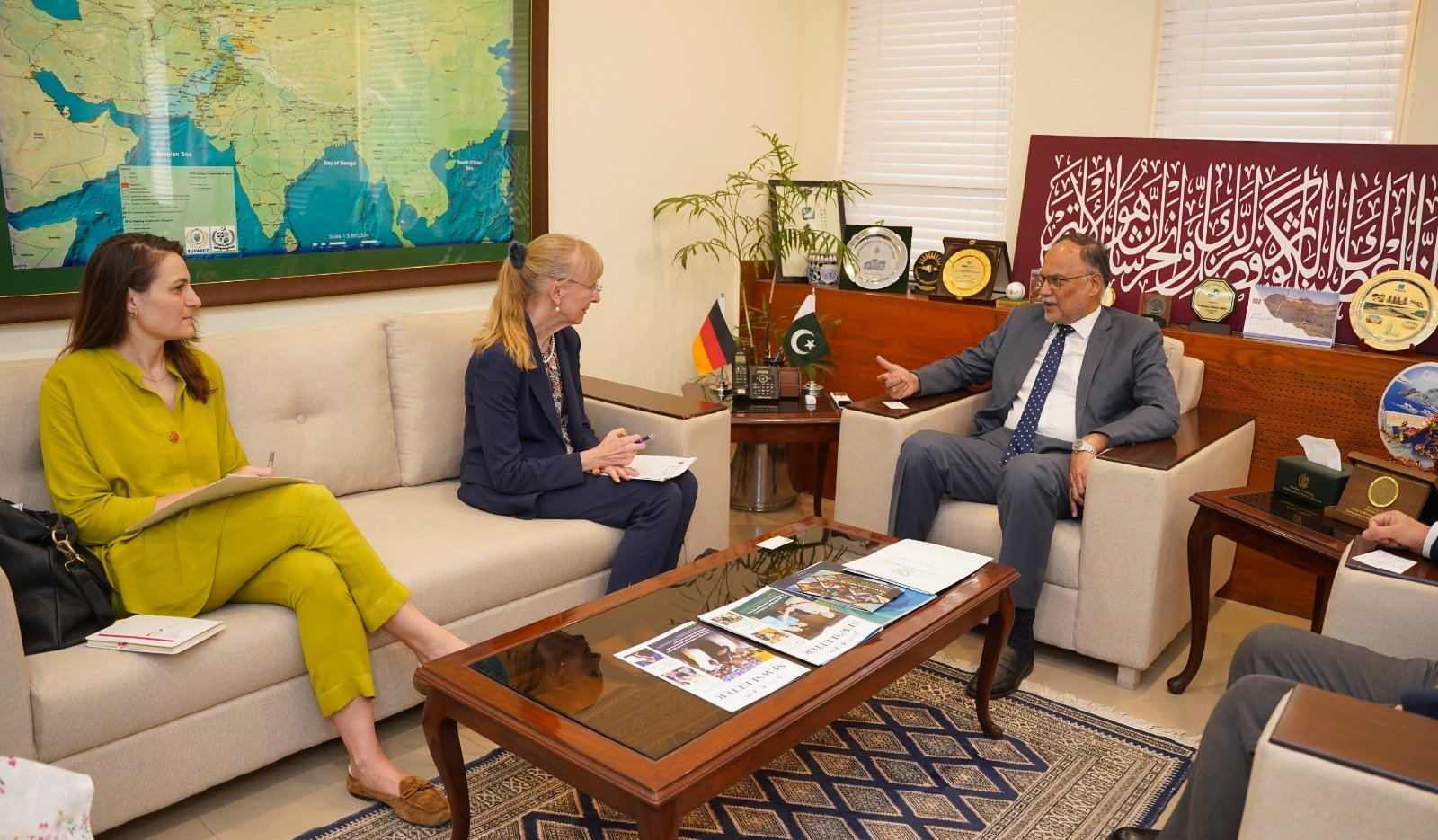
ISLAMABAD — On Thursday, Germany’s Ambassador to Pakistan Ina Lepel met with Professor Ahsan Iqbal, Pakistan’s Federal Minister for Planning, Development, and Special Initiatives. The meeting in Islamabad focused on expanding bilateral cooperation in sectors like education, tourism, culture, economic reforms, and investment promotion. Both nations are committed to strengthening diplomatic and economic ties.
Meeting Highlights
During the discussions, Ambassador Lepel and Minister Iqbal explored ways to boost collaboration between Germany and Pakistan. They aim to leverage Germany’s expertise in education and economic reforms to support Pakistan’s development objectives. Both parties emphasized the importance of cultural exchanges and tourism as a means to enhance mutual understanding and cooperation.
Professor Ahsan Iqbal highlighted the critical role of educational cooperation, particularly in developing skilled human resources to drive economic growth. He remarked, “Education is a key area where we can learn from Germany’s advanced systems and methodologies.” The potential for German investment in Pakistan’s underdeveloped tourism sector was also noted as offering significant growth opportunities.
Germany’s Commitment
Ambassador Lepel reaffirmed Germany’s dedication to supporting Pakistan’s economic reform efforts. She stated, “Germany is keen to assist Pakistan in implementing effective economic reforms for sustainable development and prosperity.” A conducive environment for investment is essential to attract foreign investors, according to the ambassador.
Historical Context
Pakistan and Germany’s diplomatic relations date back to 1951. They have engaged in numerous initiatives, notably in education, renewable energy, and economic development. Germany is among Pakistan’s largest EU trading partners, with bilateral trade recently reaching about $2.5 billion.
Historically, Germany has offered technical and financial support to Pakistan, especially in vocational training and energy sector reforms. The German Academic Exchange Service (DAAD) has played a vital role in educational exchanges by providing scholarships and research prospects for Pakistani students and academics.
Impact on Development
The discussions between Pakistan and Germany have significant implications for Pakistan’s socio-economic advancement. By improving collaboration in education, Pakistan stands to gain from Germany’s expertise in technical and vocational training, crucial for a skilled workforce, productivity, and economic expansion.
Tourism development is another promising collaboration area. With its rich cultural heritage and natural landscapes, Pakistan has immense potential to attract international tourists. German investment and know-how can help establish the necessary infrastructure and marketing strategies, positioning Pakistan as an enticing tourist destination.
Economic reforms are vital for improving Pakistan’s business environment and attracting foreign investment. Germany’s support can equip Pakistan with the tools and strategies needed for successful reforms, fostering economic stability and growth.
Strengthening ties with Germany also elevates Pakistan’s global standing, paving the way for broader engagement with the European Union. This can result in increased trade, investment, and cultural exchanges, benefiting both nations.














