
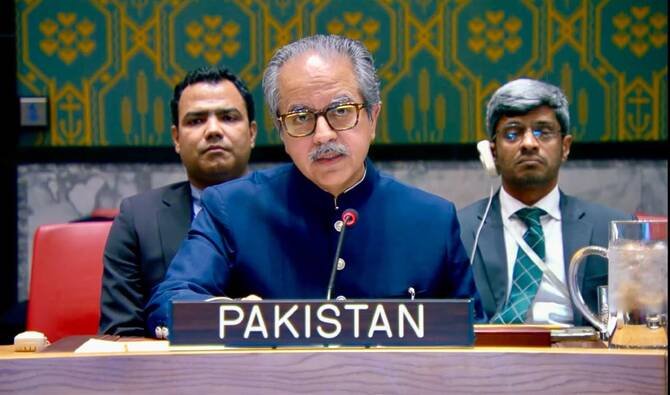
UNITED NATIONS — Pakistan has announced an intensification of its diplomatic efforts to mediate between the United States and Iran, aiming to resolve ongoing tensions in the Middle East. This announcement was made during an emergency meeting of the United Nations Security Council (UNSC) on Thursday, where Pakistan emphasized its commitment to facilitating the implementation of the Islamabad Memorandum of Understanding (MoU) between the two nations.
What Happened
During the UNSC meeting, Pakistan’s representative highlighted the country’s proactive approach in engaging with both regional and international stakeholders. The goal is to ensure the successful follow-up and implementation of the Islamabad MoU, which was designed to de-escalate the conflict between the US and Iran. The MoU, a diplomatic initiative spearheaded by Pakistan, outlines a framework for dialogue and cooperation between the two countries.
Pakistan’s ambassador to the UN stated, “We are committed to playing a constructive role in promoting peace and stability in the Middle East. Our diplomatic channels are actively engaged with both the United States and Iran, as well as other key regional players, to ensure the success of the Islamabad MoU.” The ambassador further elaborated on the importance of multilateral efforts in addressing the complex geopolitical issues that have fueled tensions in the region.
The UNSC meeting was convened in response to the rising hostilities between the US and Iran, which have raised concerns about the potential for a broader conflict in the Middle East. Pakistan’s intervention is seen as a crucial step in bridging the communication gap between the two countries and fostering a diplomatic resolution.
Background
The tensions between the United States and Iran have been a persistent issue in international relations, exacerbated by a series of events including the US withdrawal from the Joint Comprehensive Plan of Action (JCPOA) in 2018 and subsequent sanctions on Iran. These actions have led to increased hostilities, including military confrontations and economic disruptions.
Pakistan, due to its strategic location and historical ties with both the US and Iran, has often found itself in a unique position to act as a mediator. The Islamabad MoU, introduced earlier this year, represents a formal effort by Pakistan to leverage its diplomatic relationships to foster dialogue and reduce tensions.
Why It Matters
The diplomatic engagement by Pakistan is significant for several reasons. Economically, the stability of the Middle East is crucial for global oil markets, and any escalation in US-Iran tensions could lead to disruptions in oil supply, affecting global prices and economic stability. For Pakistan, maintaining regional stability is essential for its own economic interests, given its reliance on Middle Eastern oil imports.
Politically, Pakistan’s role as a mediator enhances its standing on the international stage, showcasing its ability to contribute to global peace efforts. This could lead to strengthened diplomatic ties with both Western and Middle Eastern countries, potentially opening up new avenues for economic and political cooperation.
On a social level, the resolution of US-Iran tensions could lead to a reduction in regional conflicts that have displaced millions and strained resources in neighboring countries, including Pakistan. A peaceful resolution would contribute to regional stability, benefiting not only the immediate parties involved but also the broader international community.
Key Takeaways
- Pakistan is actively mediating between the US and Iran to implement the Islamabad MoU.
- The UNSC meeting highlighted Pakistan’s diplomatic efforts to resolve Middle East tensions.
- The US-Iran conflict has significant economic and political implications globally.
- Pakistan’s mediation enhances its international diplomatic standing.
- Stability in the Middle East is crucial for global oil market stability.
Source Attribution
This article is based on official government statements, press releases, and public communications from relevant authorities.














