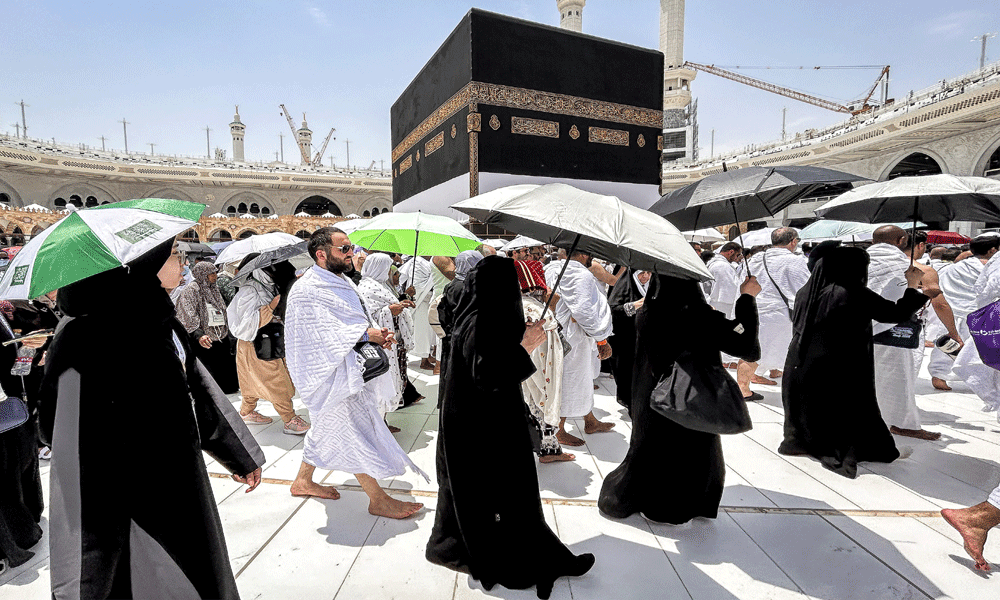
ISLAMABAD — Pakistan’s Ministry of Religious Affairs and Interfaith Harmony has unveiled a new three-year Hajj Policy and Plan aimed at ensuring long-term stability and cost efficiency in the country’s Hajj operations. The policy, covering the years 2027 to 2030, marks a significant shift from the previous annual planning approach to a multi-year framework.
What Happened
The Ministry of Religious Affairs and Interfaith Harmony announced a comprehensive 16-page document outlining the new Hajj Policy. This strategic initiative is designed to replace the traditional annual planning model with a three-year policy framework. The plan is expected to bring about stability in Hajj-related costs and ensure continuity in operations, benefiting both the pilgrims and the government.
According to the ministry, the policy will focus on securing three- to four-year contracts with service providers in Saudi Arabia. This approach is intended to lock in prices and reduce the financial volatility that has historically affected Hajj operations. By negotiating longer-term agreements, the ministry aims to mitigate the impact of fluctuating exchange rates and inflation on the cost of Hajj for Pakistani pilgrims.
Minister for Religious Affairs and Interfaith Harmony, Mufti Abdul Shakoor, stated, “This multi-year policy is a step towards ensuring that our pilgrims can perform Hajj with peace of mind, knowing that their expenses are predictable and manageable.” The policy document also highlights the ministry’s commitment to enhancing the overall experience of pilgrims through improved services and facilities.
Background
Historically, Pakistan has relied on annual planning for its Hajj operations, which often led to uncertainties regarding costs and logistical arrangements. The fluctuating exchange rates and inflation have been significant challenges, affecting the affordability of Hajj for many Pakistanis. In recent years, there have been calls for a more sustainable approach to managing Hajj operations, prompting the ministry to explore multi-year planning as a viable solution.
Hajj, one of the five pillars of Islam, is a religious obligation for Muslims who are financially and physically able to undertake the pilgrimage. Each year, thousands of Pakistanis travel to Saudi Arabia to perform Hajj, making it a significant logistical undertaking for the government. The introduction of a multi-year policy is expected to streamline these efforts and provide a more predictable framework for managing the pilgrimage.
Why It Matters
The introduction of a three-year Hajj policy is a crucial development for several reasons. Economically, it offers a more stable pricing model for pilgrims, reducing the financial burden on individuals and families planning to perform Hajj. By securing longer-term contracts, the government can negotiate better rates and services, ultimately passing these benefits on to the pilgrims.
Socially, the policy aims to enhance the overall experience of Pakistani pilgrims by ensuring consistent quality in services and accommodations. This is particularly important given the spiritual significance of Hajj and the need for a seamless experience during the pilgrimage.
Politically, the move reflects the government’s commitment to improving public services and addressing the concerns of its citizens. By adopting a multi-year approach, the Ministry of Religious Affairs and Interfaith Harmony demonstrates its proactive stance in managing one of the country’s most significant religious events.
Internationally, the policy aligns with Saudi Arabia’s vision for a more organized and efficient Hajj operation. It underscores Pakistan’s commitment to collaborating with Saudi authorities in ensuring a smooth and well-coordinated pilgrimage for its citizens.
Key Takeaways
- Pakistan’s Ministry of Religious Affairs has introduced a three-year Hajj policy for 2027 to 2030.
- The policy aims to stabilize costs and improve continuity in Hajj operations.
- Long-term contracts with Saudi service providers will help manage financial volatility.
- The initiative seeks to enhance the overall experience for Pakistani pilgrims.
- The policy reflects the government’s commitment to improving public services and international cooperation.
Source Attribution
This article is based on official government statements, press releases, and public communications from the Ministry of Religious Affairs and Interfaith Harmony.