
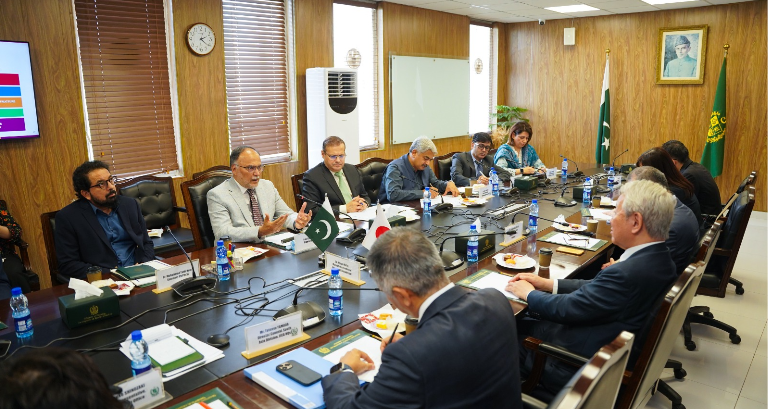
ISLAMABAD — Pakistan and Japan have reaffirmed their commitment to enhancing bilateral development cooperation, focusing on key areas like infrastructure, human resource development, digital transformation, tourism, and sustainable economic growth. This commitment aligns with Pakistan’s URAAN Pakistan 5Es framework, aiming to propel the nation’s development agenda.
What Happened
On Wednesday, during a high-level meeting in Islamabad, officials from Pakistan and Japan reiterated their dedication to deepening their development partnership. The meeting was attended by President of the Japan International Cooperation Agency (JICA) and key Pakistani officials, including Minister for Planning, Development, and Special Initiatives Ahsan Iqbal. Both parties expressed a mutual interest in leveraging Japan’s expertise in technology and infrastructure to support Pakistan’s economic and social development goals.
Minister Ahsan Iqbal highlighted the importance of Japan’s role in Pakistan’s development landscape. “Japan has been a longstanding partner in our journey towards economic stability and growth,” he stated. The discussions centered around the URAAN Pakistan 5Es framework, which focuses on economic growth, energy, environment, education, and equity. This framework is seen as a blueprint for sustainable development in Pakistan.
The Japanese delegation expressed their willingness to contribute to Pakistan’s digital transformation and infrastructure projects. They emphasized the potential for collaboration in renewable energy projects, which are crucial for Pakistan’s energy security and environmental sustainability. The meeting concluded with both sides agreeing to explore new avenues for cooperation, particularly in tourism and human resource development.
Background
Pakistan and Japan have a history of strong bilateral relations, particularly in the area of development cooperation. Japan has been one of Pakistan’s largest development partners, providing assistance in various sectors including health, education, and infrastructure. The URAAN Pakistan 5Es framework is a strategic initiative by the Pakistani government to streamline development efforts across key sectors, ensuring a holistic approach to national growth.
In recent years, Japan has significantly contributed to Pakistan’s infrastructure projects, including the construction of roads and bridges, as well as in the energy sector. The two countries have also collaborated on educational initiatives, with Japan offering scholarships and training programs for Pakistani students and professionals.
Why It Matters
The reaffirmation of development ties between Pakistan and Japan is significant for several reasons. Economically, Japan’s involvement in Pakistan’s infrastructure and energy projects can lead to enhanced efficiency and sustainability, addressing some of the country’s pressing challenges such as energy shortages and outdated infrastructure.
Socially, the focus on human resource development and education aligns with Pakistan’s need to equip its workforce with the skills necessary for a modern economy. Japan’s expertise in digital transformation can aid Pakistan in modernizing its industries and improving public services, thereby boosting productivity and economic growth.
Politically, strengthening ties with Japan can enhance Pakistan’s position in the international arena, fostering goodwill and cooperation with a major global economic power. This partnership can also serve as a model for Pakistan’s engagement with other countries, emphasizing mutual benefits and shared goals.
Internationally, the collaboration highlights the importance of sustainable development and the role of international partnerships in achieving global development goals. Japan’s commitment to supporting Pakistan’s development efforts is a testament to the potential of international cooperation in addressing complex challenges.
Key Takeaways
- Pakistan and Japan have reaffirmed their commitment to deepen development cooperation under the URAAN Pakistan 5Es framework.
- The focus areas include infrastructure, human resource development, digital transformation, tourism, and sustainable economic growth.
- Japan’s expertise in technology and infrastructure is pivotal for Pakistan’s development goals.
- The partnership is significant for economic, social, and political reasons, enhancing Pakistan’s international standing.
- Both countries are exploring new avenues for collaboration, particularly in renewable energy and education.
Source Attribution
This article is based on official government statements, press releases, and public communications from relevant authorities.














