
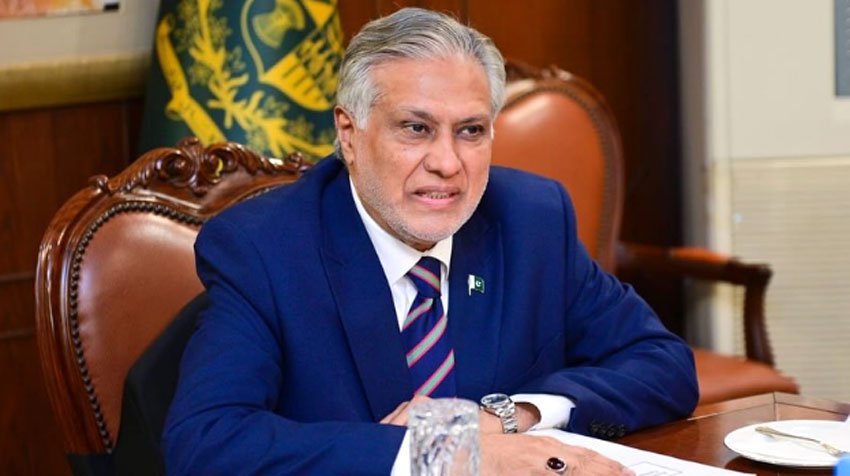
NEW YORK — Deputy Prime Minister and Foreign Minister Senator Muhammad Ishaq Dar reiterated Pakistan’s steadfast support for Palestine during a meeting with Ambassador Riyad Mansour, the Permanent Observer of Palestine to the United Nations, at the UN Headquarters on Monday. The meeting underscored Pakistan’s commitment to the Palestinian cause, emphasizing the right to self-determination for the Palestinian people.
What Happened
During the meeting in New York, Deputy Prime Minister Ishaq Dar assured Ambassador Riyad Mansour of Pakistan’s unwavering support for the Palestinian cause. Dar emphasized Pakistan’s long-standing position advocating for the rights of Palestinians, including their right to self-determination and the establishment of an independent state with pre-1967 borders and East Jerusalem as its capital. The Deputy Prime Minister highlighted the importance of a peaceful resolution to the Israeli-Palestinian conflict, which he stated is essential for regional stability.
Dar’s reaffirmation of support comes amid ongoing tensions in the Middle East, where the Israeli-Palestinian conflict continues to be a significant issue on the international stage. The meeting was part of Pakistan’s broader diplomatic efforts to engage with international stakeholders and advocate for the Palestinian cause at various global forums.
Ambassador Riyad Mansour expressed gratitude for Pakistan’s consistent support and highlighted the critical role that international allies play in advocating for Palestinian rights. He acknowledged Pakistan’s efforts in raising awareness and pushing for resolutions at the United Nations that support Palestinian self-determination.
Background
Pakistan has historically been a vocal supporter of the Palestinian cause, consistently advocating for Palestinian rights at international platforms such as the United Nations. The country has called for a two-state solution based on pre-1967 borders, with East Jerusalem as the capital of a sovereign Palestinian state. This stance aligns with the broader consensus among many Muslim-majority countries and is rooted in Pakistan’s foreign policy principles.
The Israeli-Palestinian conflict has been a protracted issue, with numerous attempts at peace negotiations failing to yield a lasting solution. The conflict has resulted in significant humanitarian challenges, with Palestinians facing restrictions on movement, economic hardships, and limited access to resources.
Why It Matters
The reaffirmation of support by Pakistan’s Deputy Prime Minister highlights the country’s ongoing commitment to international diplomacy and its role as an advocate for Muslim-majority nations. Pakistan’s stance on Palestine is significant as it reflects the broader sentiment of the Muslim world, which seeks a fair and just resolution to the conflict.
For Pakistan, supporting Palestine is not only a matter of foreign policy but also a reflection of its commitment to human rights and international law. The issue resonates deeply with the Pakistani populace, many of whom view the Palestinian struggle as a parallel to their own historical experiences with colonialism and partition.
Internationally, Pakistan’s continued advocacy for Palestine helps to keep the issue in the global spotlight, encouraging dialogue and negotiations aimed at achieving peace. It also strengthens Pakistan’s diplomatic ties with other countries that support the Palestinian cause, fostering alliances that can be leveraged in other areas of international relations.
Key Takeaways
- Deputy Prime Minister Ishaq Dar reaffirmed Pakistan’s support for Palestinian self-determination at a UN meeting.
- Pakistan advocates for a two-state solution based on pre-1967 borders, with East Jerusalem as the capital of Palestine.
- Ambassador Riyad Mansour expressed gratitude for Pakistan’s consistent support at international forums.
- Pakistan’s stance on Palestine is aligned with the broader consensus among many Muslim-majority nations.
- The issue of Palestinian rights is significant in Pakistan’s foreign policy and resonates with its citizens.
Source Attribution
This article is based on official government statements, press releases, and public communications from relevant authorities.














