
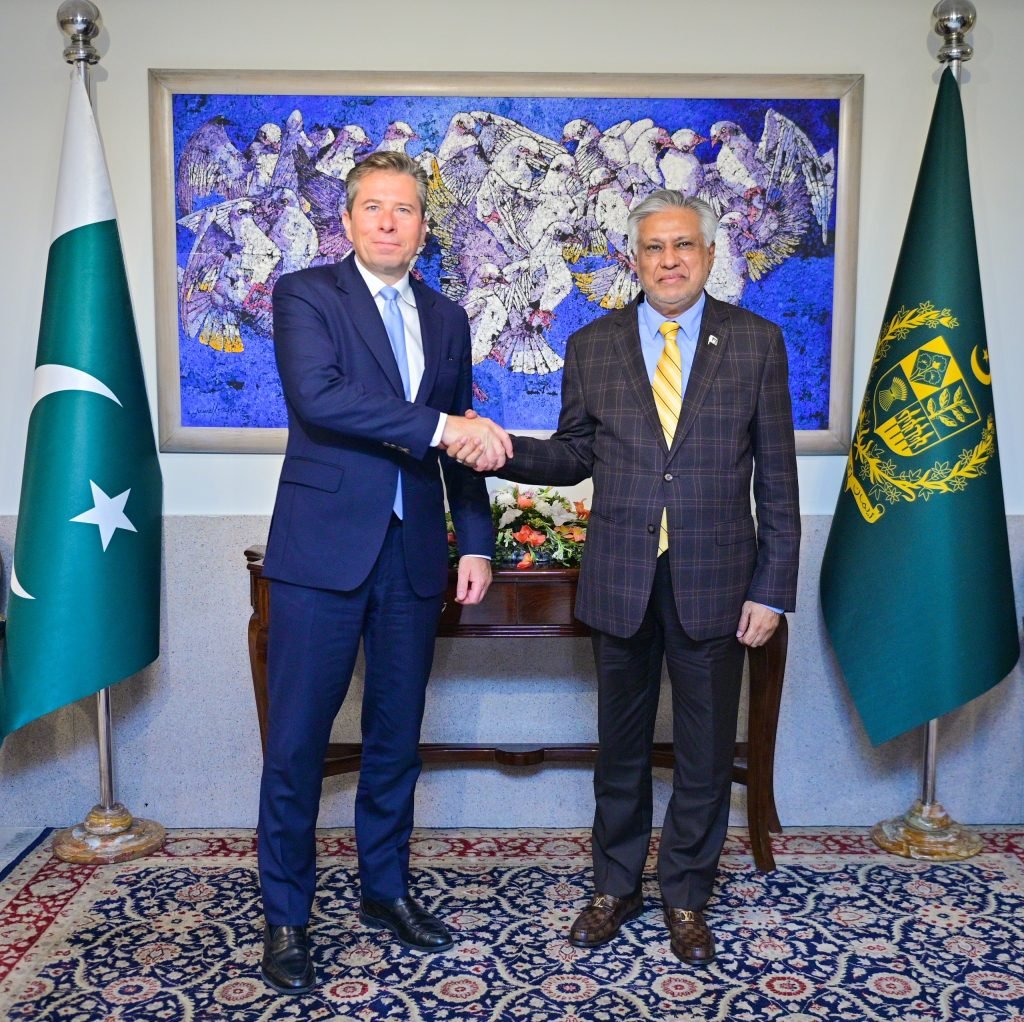
ISLAMABAD — Deputy Prime Minister and Foreign Minister Senator Mohammad Ishaq Dar on Wednesday reaffirmed Pakistan’s commitment to supporting the United Nations Office for the Coordination of Humanitarian Affairs (UNOCHA) in its efforts to address the humanitarian crisis in the Occupied Palestinian Territory. Dar praised UNOCHA’s role in providing essential assistance to those affected by ongoing conflicts.
What Happened
During a meeting held in Islamabad, Senator Mohammad Ishaq Dar highlighted the critical work undertaken by UNOCHA in the Occupied Palestinian Territory. He acknowledged the organization’s dedication to delivering humanitarian aid and facilitating coordination among various agencies to ensure effective relief efforts. Dar emphasized Pakistan’s unwavering support for UNOCHA’s initiatives aimed at alleviating the suffering of the Palestinian people.
In his address, Dar stated, “Pakistan remains committed to supporting UNOCHA in its mission to provide humanitarian assistance in the Occupied Palestinian Territory. We recognize the immense challenges faced by the Palestinian people and stand in solidarity with them.” His remarks underscored Pakistan’s long-standing position on the Palestinian issue and its advocacy for international humanitarian efforts.
UNOCHA has been actively involved in coordinating relief operations in the region, focusing on providing food, medical aid, and shelter to those affected by the conflict. The organization also plays a pivotal role in mobilizing resources and coordinating with other international agencies to ensure a comprehensive response to the humanitarian needs in the area.
Background
The humanitarian situation in the Occupied Palestinian Territory has been a matter of international concern for decades. The region has experienced prolonged conflict, resulting in significant humanitarian challenges. UNOCHA, established in 1991, has been instrumental in coordinating international relief efforts and addressing the needs of vulnerable populations in conflict zones worldwide, including Palestine.
Pakistan has historically supported the Palestinian cause, advocating for a two-state solution and the establishment of an independent Palestinian state with pre-1967 borders. The country has consistently called for an end to the occupation and has supported various initiatives aimed at achieving peace and stability in the region.
Why It Matters
The reaffirmation of support by Pakistan for UNOCHA’s efforts in the Occupied Palestinian Territory holds significant implications both regionally and internationally. Pakistan’s commitment underscores its role as a key player in advocating for humanitarian assistance and political solutions to the Palestinian issue. This support aligns with Pakistan’s broader foreign policy objectives, which emphasize solidarity with oppressed populations and support for international humanitarian norms.
For the Palestinian people, continued support from countries like Pakistan is crucial in sustaining international attention on their plight. It helps ensure that humanitarian needs are met and that the international community remains engaged in seeking a resolution to the conflict. The support also bolsters UNOCHA’s capacity to mobilize resources and coordinate efforts effectively, thereby enhancing the overall impact of humanitarian interventions.
On a broader scale, Pakistan’s stance highlights the importance of international cooperation in addressing humanitarian crises. It reinforces the need for collaborative efforts among nations to tackle complex challenges and underscores the role of multilateral organizations like UNOCHA in facilitating such cooperation.
Key Takeaways
- Pakistan reaffirms its support for UNOCHA’s humanitarian efforts in the Occupied Palestinian Territory.
- Deputy Prime Minister Mohammad Ishaq Dar praised UNOCHA’s role in providing essential aid to Palestinians.
- UNOCHA coordinates relief operations, focusing on food, medical aid, and shelter for affected populations.
- Pakistan’s support aligns with its foreign policy objectives of advocating for oppressed populations.
- International cooperation is crucial in addressing humanitarian crises and achieving lasting solutions.
Source Attribution
This article is based on official government statements, press releases, and public communications from relevant authorities.














