
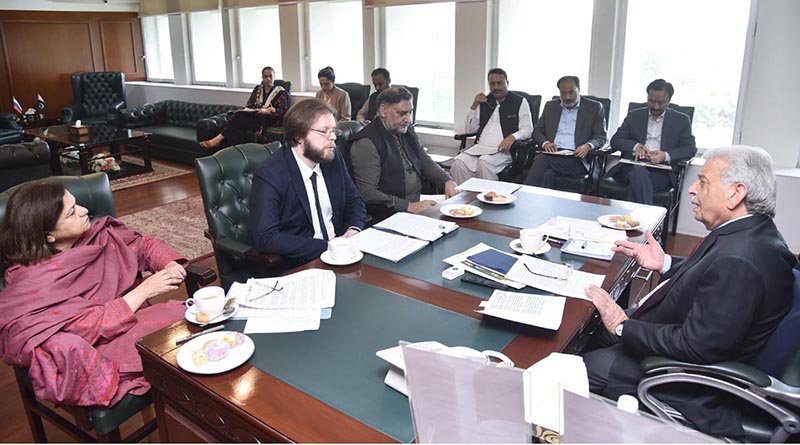
ISLAMABAD — Federal Minister Rana Tanveer Hussain met with Russian representative Nikita Buzanov to explore avenues for agricultural cooperation between Pakistan and Russia. The meeting, held in Islamabad, focused on strengthening bilateral ties in the agricultural sector, a critical area for both nations.
What Happened
During the meeting, Federal Minister Rana Tanveer Hussain and Nikita Buzanov, the Russian representative, discussed potential collaborations in agricultural technology, trade, and research. The dialogue aimed at enhancing the agricultural output and efficiency of both countries by leveraging each other’s strengths and resources.
Minister Hussain emphasized the importance of modernizing Pakistan’s agricultural sector, which is a significant contributor to the country’s GDP and employment. He stated, “Pakistan is keen to adopt advanced agricultural technologies and practices to increase productivity and sustainability.” The minister highlighted the potential benefits of Russian expertise in agricultural machinery and technology, which could be instrumental in modernizing Pakistan’s farming practices.
Buzanov expressed Russia’s interest in expanding its agricultural ties with Pakistan, noting the strategic importance of such cooperation. “Russia sees great potential in collaborating with Pakistan to enhance agricultural productivity and trade,” Buzanov remarked. He also proposed joint ventures in agricultural research and development to address common challenges such as climate change and food security.
The meeting concluded with both parties agreeing to form a joint working group to identify specific areas of cooperation and to facilitate the exchange of expertise and technology. This initiative is expected to pave the way for future agreements and projects that could significantly benefit both countries.
Background
Pakistan and Russia have been exploring opportunities to enhance their bilateral relations, particularly in sectors like energy, defense, and agriculture. Historically, Pakistan’s agricultural sector has been a backbone of its economy, contributing approximately 24% to the GDP and employing nearly 42% of the workforce. However, challenges such as outdated farming techniques, water scarcity, and climate change have hindered its growth potential.
Russia, on the other hand, has made significant advancements in agricultural technology and production, becoming one of the world’s largest exporters of wheat and other grains. The country has been looking to expand its agricultural footprint by partnering with nations that have untapped potential, such as Pakistan.
Why It Matters
The potential collaboration between Pakistan and Russia in agriculture is significant for several reasons. Economically, it could lead to increased agricultural productivity and exports for Pakistan, thereby boosting its economy. Access to Russian agricultural technology and expertise could help Pakistani farmers adopt more efficient and sustainable practices, addressing issues like low yield and resource scarcity.
Socially, enhanced agricultural cooperation could lead to job creation and improved livelihoods for millions of Pakistanis who depend on agriculture for their income. By modernizing the sector, Pakistan can ensure food security and reduce poverty levels, which are critical for its socio-economic stability.
Politically, strengthening ties with Russia could provide Pakistan with a strategic ally in the region, balancing its foreign relations and enhancing its geopolitical standing. This partnership could also open doors for further cooperation in other sectors, such as energy and defense, contributing to regional stability and development.
Key Takeaways
- Pakistan and Russia are exploring enhanced agricultural cooperation to boost productivity and trade.
- The meeting focused on adopting advanced agricultural technologies and forming a joint working group.
- Russia’s expertise in agricultural technology could significantly benefit Pakistan’s farming sector.
- Improved agricultural practices could lead to economic growth, job creation, and food security in Pakistan.
- Strengthening ties with Russia could enhance Pakistan’s geopolitical position and regional influence.
Source Attribution
This article is based on official government statements, press releases, and public communications from relevant authorities.














