
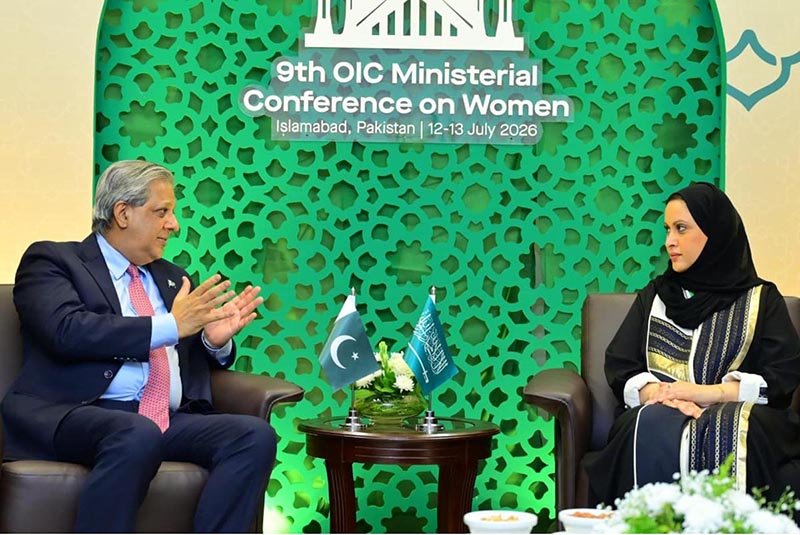
ISLAMABAD — Federal Minister for Human Rights, Senator Azam Nazeer Tarar, met with Dr Maimoonah Al Khalil, Secretary General of the Family Affairs Council, Government of Saudi Arabia, on the sidelines of the 9th OIC Ministerial Conference on Women. The meeting took place to discuss collaborative efforts in promoting women’s rights and empowerment across OIC member states.
What Happened
The meeting between Senator Azam Nazeer Tarar and Dr Maimoonah Al Khalil occurred during the 9th Organization of Islamic Cooperation (OIC) Ministerial Conference on Women, which was held to address pressing issues related to women’s rights in the Islamic world. The conference provided a platform for member states to share experiences, strategies, and policies aimed at enhancing the status of women in their respective countries.
During the meeting, both representatives expressed their commitment to advancing women’s rights and discussed potential areas of collaboration. Senator Tarar emphasized the importance of joint efforts in addressing challenges faced by women, particularly in areas of education, health, and economic participation. He stated, “Our focus should be on creating an environment where women can thrive and contribute meaningfully to society.”
Dr Al Khalil highlighted Saudi Arabia’s recent initiatives in promoting gender equality and women’s empowerment, citing reforms that have increased women’s participation in the workforce and leadership roles. She noted, “Saudi Arabia is keen to share its experiences and learn from other OIC member states to further enhance the role of women in our societies.”
Background
The OIC Ministerial Conference on Women is a significant event that brings together member states to discuss and develop policies aimed at improving the status of women. The conference aligns with the OIC’s broader objectives of promoting peace, security, and development in the Islamic world. Previous conferences have resulted in the adoption of various resolutions and action plans focused on women’s rights and empowerment.
Pakistan has been an active participant in the OIC’s initiatives on women’s rights, with a focus on legislative reforms and policy measures to enhance gender equality. The country has implemented several programs aimed at increasing women’s access to education, healthcare, and economic opportunities.
Why It Matters
The collaboration between Pakistan and Saudi Arabia in the realm of women’s rights is significant for several reasons. Firstly, it underscores the importance of regional cooperation in addressing gender inequality, a challenge that transcends national borders and requires collective action. By working together, OIC member states can share best practices and develop comprehensive strategies that benefit women across the Islamic world.
Economically, empowering women can lead to substantial growth and development. Studies have shown that increasing women’s participation in the workforce can boost GDP and improve overall economic stability. For countries like Pakistan and Saudi Arabia, where women’s labor force participation remains relatively low, such initiatives are crucial for sustainable development.
Politically, enhancing women’s rights can lead to more inclusive governance and decision-making processes. By ensuring that women have a voice in political and social spheres, countries can create more balanced and equitable societies. This can also improve international perceptions and strengthen diplomatic ties among OIC member states.
Key Takeaways
- Senator Azam Nazeer Tarar and Dr Maimoonah Al Khalil met to discuss women’s rights at the OIC conference.
- The meeting focused on collaborative efforts to promote gender equality in OIC member states.
- Saudi Arabia shared its recent reforms aimed at increasing women’s workforce participation.
- Pakistan emphasized the importance of joint initiatives to address challenges faced by women.
- The collaboration highlights the economic and political benefits of empowering women in the region.
Source Attribution
This article is based on official government statements, press releases, and public communications from relevant authorities.














