
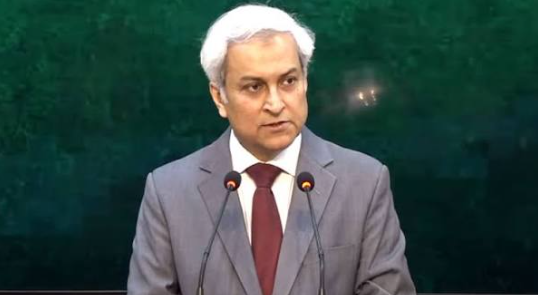
ISLAMABAD — Pakistan has taken over the presidency of the United Nations Conference on Disarmament (CD) in Geneva, a pivotal role in international arms control discussions. Ambassador Tahir Hussain Andrabi, who serves as the Additional Secretary for Arms Control and Disarmament, is representing Pakistan in this capacity, presiding over the conference’s sessions.
What Happened
On Monday, Pakistan assumed the presidency of the UN Conference on Disarmament, marking a significant moment in its diplomatic engagements on the global stage. Ambassador Tahir Hussain Andrabi is leading the conference’s proceedings, which are crucial for addressing international security and disarmament issues. The conference, which convenes in Geneva, is the sole multilateral disarmament negotiating forum of the international community. It has a long-standing mandate to negotiate arms control and disarmament agreements.
In his opening remarks, Ambassador Andrabi emphasized the importance of the conference in fostering international peace and security. He stated, “The Conference on Disarmament plays an essential role in the global efforts to promote disarmament and arms control. Pakistan is committed to contributing constructively to the work of the conference.” The presidency will allow Pakistan to steer discussions and negotiations on critical issues such as nuclear disarmament, prevention of an arms race in outer space, and negative security assurances.
Pakistan’s presidency comes at a time when the international community is grappling with various security challenges, including the proliferation of weapons of mass destruction and regional conflicts. The conference provides a platform for member states to engage in dialogue and seek consensus on measures to enhance global security.
Background
The United Nations Conference on Disarmament was established in 1979 as a result of the first special session of the UN General Assembly devoted to disarmament. It is a successor to various disarmament bodies that have existed since the early 1960s. The conference has a rotating presidency, with each member state taking turns to lead the sessions. Pakistan’s presidency is part of this rotation and is the final presidency for the current cycle.
Historically, the conference has been instrumental in negotiating major disarmament agreements, including the Treaty on the Non-Proliferation of Nuclear Weapons (NPT) and the Comprehensive Nuclear-Test-Ban Treaty (CTBT). However, in recent years, the conference has faced challenges due to differing priorities among member states, leading to a stalemate in negotiations.
Why It Matters
Pakistan’s leadership role in the UN Conference on Disarmament is significant for several reasons. Firstly, it underscores Pakistan’s active participation in international disarmament efforts and its commitment to global security. As a nuclear-armed state, Pakistan’s involvement in disarmament discussions is crucial for regional stability in South Asia, where tensions with neighboring India persist.
Economically, Pakistan’s presidency could enhance its diplomatic standing, potentially attracting international support and cooperation in other areas, such as trade and development. The role also provides Pakistan with an opportunity to influence the international disarmament agenda, advocating for issues pertinent to its national security interests, such as the prevention of an arms race in outer space.
On a broader scale, the conference’s outcomes could impact global arms control policies, affecting international relations and security dynamics. Successful negotiations could lead to new treaties or agreements that strengthen global non-proliferation regimes and reduce the risk of armed conflict.
Key Takeaways
- Pakistan has assumed the presidency of the UN Conference on Disarmament in Geneva.
- Ambassador Tahir Hussain Andrabi is leading the conference sessions.
- The conference addresses critical issues like nuclear disarmament and arms control.
- Pakistan’s presidency highlights its commitment to international security efforts.
- The role provides an opportunity to influence global disarmament policies.
Source Attribution
This article is based on official government statements, press releases, and public communications from relevant authorities.














