
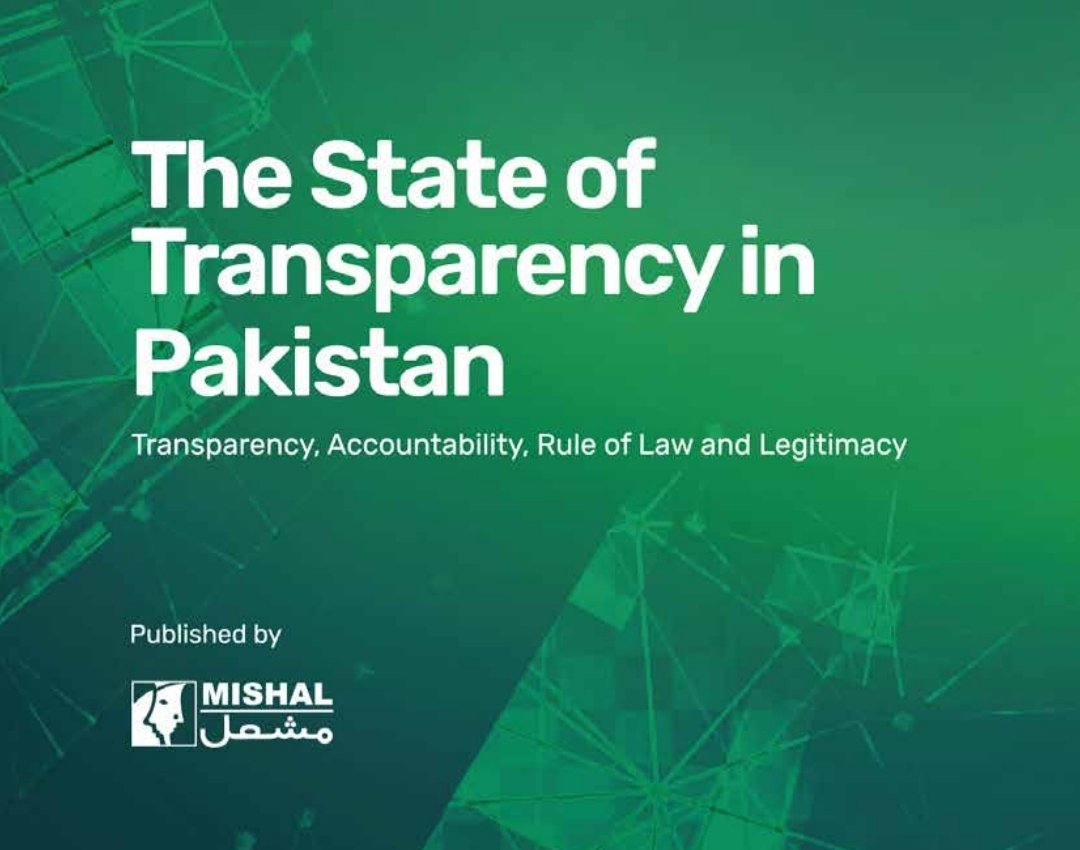
ISLAMABAD — Pakistan has launched its first comprehensive national transparency report, titled the ‘State of Transparency in Pakistan Report 2026’, aimed at evaluating governance quality through the lens of its citizens. The report, unveiled on Wednesday, serves as a benchmark for assessing public trust and governance practices across the country.
What Happened
The ‘State of Transparency in Pakistan Report 2026’ marks a pivotal step in the country’s efforts to enhance evidence-based governance. This inaugural report is the first of its kind to provide a nationally representative assessment of governance quality, drawing on the experiences, perceptions, and expectations of Pakistani citizens. The report was launched in Islamabad in a ceremony attended by government officials, policy makers, and representatives from civil society.
The report’s findings are based on extensive surveys and data collection conducted nationwide, capturing the sentiments of a diverse cross-section of the population. It aims to offer insights into how governance is perceived by the public and to identify areas where improvements are needed. The transparency report is expected to be a critical tool for policymakers to address governance challenges and to foster greater accountability and transparency in public institutions.
According to the report, key areas of concern include bureaucratic inefficiencies, corruption, and lack of transparency in government operations. The report also highlights the need for reforms in public service delivery and calls for increased citizen engagement in governance processes.
Background
Pakistan has long grappled with issues of governance and corruption, which have hindered economic growth and development. The launch of the transparency report comes in the wake of various initiatives aimed at improving governance, such as the establishment of anti-corruption bodies and the implementation of e-governance systems to reduce bureaucratic red tape.
Historically, Pakistan has struggled with low rankings in global transparency and governance indices. The government has been under pressure to improve its standing by addressing systemic issues that contribute to corruption and inefficiency. The transparency report is part of a broader strategy to rebuild public trust and to enhance the effectiveness of government institutions.
Why It Matters
The launch of the transparency report is significant for several reasons. Firstly, it provides a data-driven approach to understanding governance challenges in Pakistan, allowing for targeted interventions. By identifying specific areas where governance is lacking, policymakers can implement reforms that directly address these issues, thereby improving public service delivery and accountability.
Economically, improved governance can lead to increased investor confidence, as transparency and accountability are critical factors for attracting foreign direct investment. A transparent governance system can also enhance the country’s international reputation, potentially leading to more favorable trade agreements and partnerships.
Socially, the report empowers citizens by giving them a voice in governance processes. By highlighting public perceptions and expectations, the report encourages greater citizen engagement and participation in democratic processes. This can lead to a more informed and active citizenry, which is essential for a functioning democracy.
Politically, the report can serve as a tool for political accountability. By providing an objective assessment of governance quality, it can hold government officials and institutions accountable for their performance. This can lead to more responsive and responsible governance, ultimately strengthening democratic institutions in Pakistan.
Key Takeaways
- Pakistan launched its first national transparency report to assess governance quality.
- The report is based on citizen experiences, perceptions, and expectations.
- Key concerns include bureaucratic inefficiencies and lack of transparency.
- The report aims to improve public trust and accountability in governance.
- It has significant economic, social, and political implications for Pakistan.
Source Attribution
This article is based on official government statements, press releases, and public communications from relevant authorities.














