
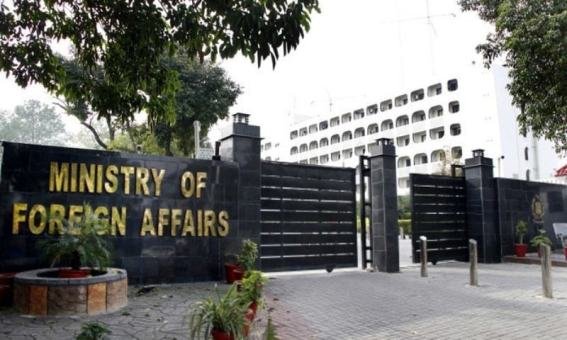
ISLAMABAD — Pakistan has expressed deep concern over the recent escalation in regional tensions, urging all involved parties to exercise restraint. The Foreign Office issued a statement on Wednesday, highlighting the importance of dialogue and diplomacy to maintain peace and stability in the region.
What Happened
The Foreign Office of Pakistan, in a statement released on Wednesday, conveyed its apprehensions regarding the rising tensions in the region. The statement emphasized the need for all parties to avoid actions that could further destabilize the already volatile situation. “There is no alternative to continued engagement, dialogue, and diplomacy to achieve the shared goal of peace,” the statement read.
This call for restraint comes amid a backdrop of increasing hostilities and confrontations in the region, which have raised concerns about potential conflicts. While specific incidents or countries involved were not detailed in the statement, the emphasis was clearly on preventing any actions that might exacerbate tensions.
The Foreign Office’s statement aligns with Pakistan’s longstanding policy of advocating for peaceful resolutions to conflicts through diplomatic means. This approach is seen as essential for ensuring long-term regional stability and security.
Background
Pakistan’s call for restraint is not an isolated incident but part of a broader historical context where the country has often found itself in the midst of regional tensions. The South Asian region has been a hotspot for geopolitical conflicts, with historical disputes often flaring up into larger confrontations.
In recent years, Pakistan has consistently advocated for peace and dialogue, particularly in its relations with neighboring countries. The country has been involved in various diplomatic efforts to resolve issues through peaceful means, reflecting its commitment to regional stability.
Historically, the region has seen numerous conflicts, including wars and military standoffs, which have had significant implications for the security and economic development of the countries involved. Pakistan’s emphasis on diplomacy is aimed at breaking this cycle of conflict and fostering a more stable environment.
Why It Matters
The call for restraint by Pakistan’s Foreign Office carries significant implications for regional and international politics. The South Asian region is home to several nuclear-armed states, making any escalation in tensions particularly concerning for global security. A conflict in this region could have far-reaching consequences, not only for the countries involved but also for international peace and security.
Economically, the region is interconnected, with trade and investment flows that could be severely disrupted by any conflict. This would have a direct impact on the livelihoods of millions of people, exacerbating poverty and instability. By advocating for dialogue and diplomacy, Pakistan is seeking to protect these economic interests and promote sustainable development.
Socially, prolonged tensions and conflicts can lead to humanitarian crises, with displaced populations and human rights violations becoming more prevalent. Pakistan’s stance is aimed at preventing such outcomes and ensuring that the region remains a place where people can live in peace and prosperity.
Internationally, Pakistan’s call for restraint is likely to be welcomed by global powers and international organizations that have an interest in maintaining stability in the region. It positions Pakistan as a responsible actor on the global stage, committed to peace and security.
Key Takeaways
- Pakistan has expressed deep concern over escalating regional tensions and urged restraint.
- The Foreign Office emphasized the importance of dialogue and diplomacy for peace.
- Pakistan’s call aligns with its historical advocacy for peaceful conflict resolution.
- Regional tensions have significant economic, social, and international implications.
- Pakistan’s stance is likely to be supported by global powers and international organizations.
Source Attribution
This article is based on official government statements and public communications from relevant authorities.














