
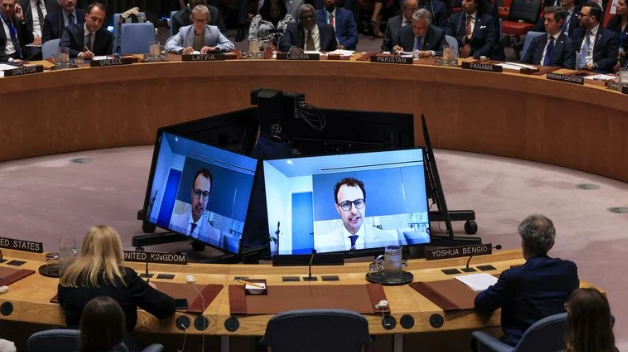
UNITED NATIONS — Pakistan has issued a cautionary statement to the United Nations Security Council regarding the potential dangers posed by the unregulated advancement of artificial intelligence (AI). On Thursday, Deputy Prime Minister and Foreign Minister of Pakistan, Senator Mohammad Ishaq Dar, emphasized the need for international collaboration to establish regulatory frameworks to prevent AI from exacerbating global inequalities and jeopardizing international peace.
What Happened
During a session at the United Nations Security Council, Senator Mohammad Ishaq Dar articulated Pakistan’s concerns about the rapid development of AI technologies. He highlighted that without appropriate oversight and governance, AI could significantly widen existing global disparities and pose a threat to international security. “Concerted efforts are required to erect the necessary guardrails, regulations and governance frameworks,” Dar stated, underscoring the urgency of the matter.
Dar’s address called for a collective international response to the challenges posed by AI, urging member states to prioritize the creation of comprehensive regulatory mechanisms. He warned that the absence of such measures could lead to AI technologies being used in ways that undermine global stability and equality.
The session also saw discussions on the potential for AI to disrupt labor markets, influence democratic processes, and exacerbate socio-economic divides if left unchecked. The Pakistani delegation stressed the importance of ensuring that AI development is aligned with the principles of fairness, transparency, and accountability.
Background
The conversation around AI regulation has been gaining momentum as countries worldwide grapple with the ethical and security implications of rapidly advancing technologies. AI has the potential to revolutionize industries, improve efficiencies, and drive economic growth. However, it also poses significant risks, including job displacement, privacy violations, and the creation of autonomous weapons systems.
Historically, the UN has played a pivotal role in addressing global challenges through multilateral cooperation. The call from Pakistan aligns with ongoing international efforts to develop a cohesive strategy for managing AI technologies. Various international bodies and think tanks have been advocating for the establishment of global standards and ethical guidelines to govern AI development and deployment.
Why It Matters
The issue of AI regulation is of critical importance to both developed and developing nations. For countries like Pakistan, the unchecked proliferation of AI could exacerbate existing socio-economic challenges, widening the gap between the global north and south. This could lead to increased tensions and instability, both within and between nations.
Economically, AI has the potential to disrupt traditional industries, leading to significant job losses in sectors reliant on manual labor. This could have a profound impact on countries with large populations employed in such industries, potentially leading to increased unemployment and social unrest.
Politically, the misuse of AI technologies could undermine democratic processes, with concerns about AI-driven misinformation campaigns and election interference. This underscores the need for robust regulatory frameworks to ensure that AI is used ethically and responsibly.
Internationally, the development of autonomous weapons systems powered by AI presents a new frontier in warfare, raising ethical and security concerns. The potential for AI to be used in military applications necessitates urgent international dialogue and cooperation to prevent an arms race in AI technologies.
Key Takeaways
- Pakistan has warned the UN Security Council about the risks of unregulated AI development.
- Deputy Prime Minister Mohammad Ishaq Dar emphasized the need for international regulatory frameworks.
- AI poses risks to global equality, labor markets, and international security.
- There is an urgent need for international cooperation to establish ethical guidelines for AI.
- Unchecked AI development could exacerbate global socio-economic divides.
Source Attribution
This article is based on official government statements, press releases, and public communications from relevant authorities.














