
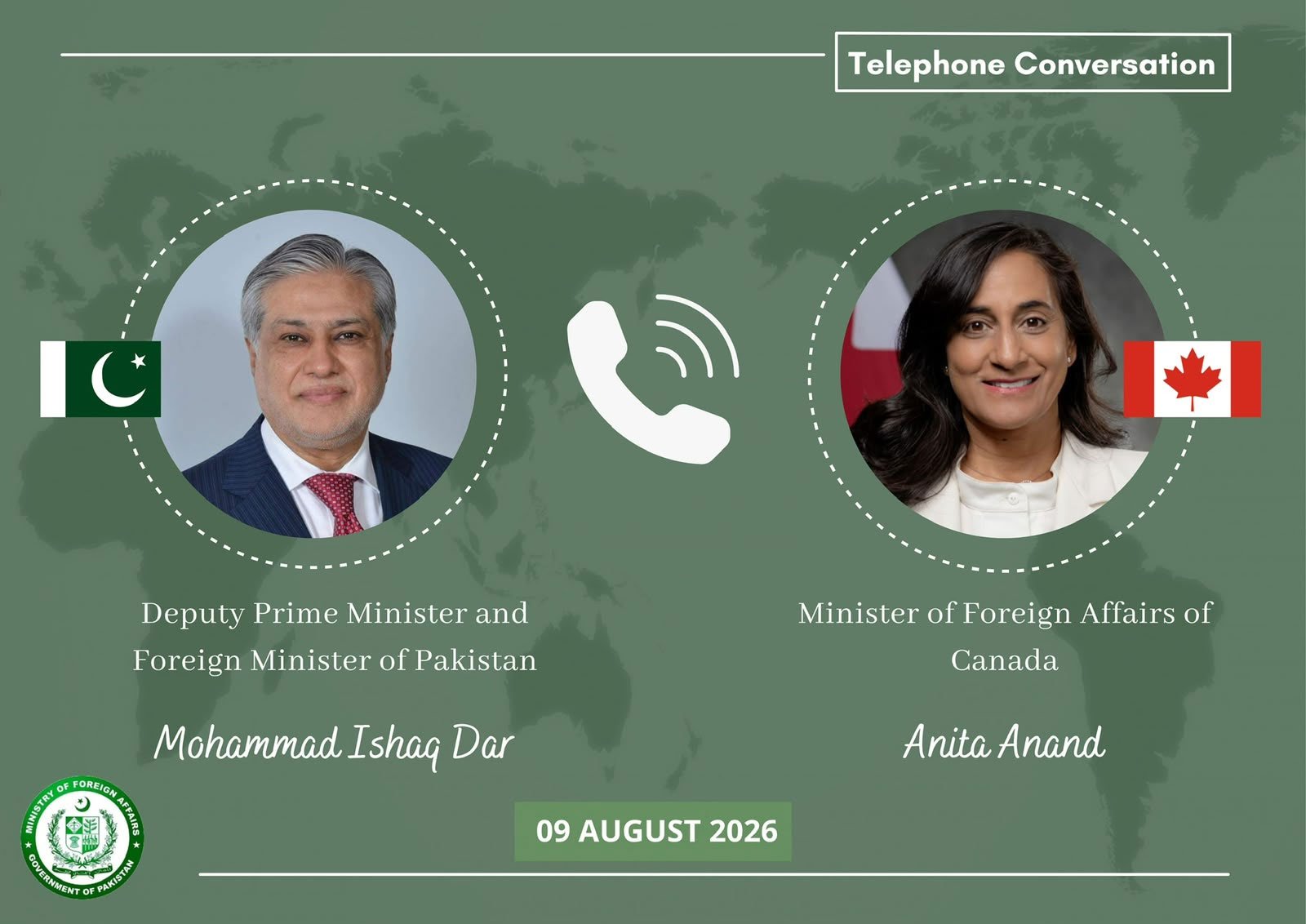
ISLAMABAD — Deputy Prime Minister and Foreign Minister Senator Mohammad Ishaq Dar held a conversation with Canadian Foreign Minister Anita Anand on Sunday to discuss the evolving regional situation, particularly focusing on the Makkah Joint Defence Agreement recently signed between Pakistan, Saudi Arabia, and Türkiye.
What Happened
The discussion between Deputy Prime Minister Mohammad Ishaq Dar and Canadian Foreign Minister Anita Anand revolved around the geopolitical implications of the Makkah Joint Defence Agreement. This agreement, signed earlier this month, aims to enhance military cooperation and strategic alignment among Pakistan, Saudi Arabia, and Türkiye. The two officials exchanged views on how this trilateral pact could influence regional stability and security dynamics.
According to official statements, both ministers underscored the importance of maintaining peace and stability in the region, which has been fraught with tensions due to various geopolitical challenges. “Our discussion focused on mutual interests in promoting peace and security in the region,” said Deputy Prime Minister Dar. The Canadian Foreign Minister echoed these sentiments, emphasizing the need for collaborative efforts to address regional security issues.
The conversation also touched upon other regional matters, including economic cooperation and bilateral relations between Pakistan and Canada. Both ministers expressed a commitment to strengthening diplomatic ties and exploring opportunities for economic collaboration.
Background
The Makkah Joint Defence Agreement marks a significant step in regional military cooperation, especially in the context of Middle Eastern geopolitics. Historically, Pakistan has maintained strong military and economic ties with both Saudi Arabia and Türkiye. This agreement is seen as a continuation of efforts to bolster these relationships and address shared security concerns.
The region has witnessed various conflicts and political tensions, with countries like Iran and Yemen often at the center of geopolitical discussions. The trilateral defence pact is perceived as a strategic move to counterbalance regional threats and ensure a stable security environment.
Canada, while geographically distant, has vested interests in the stability of the Middle East and South Asia due to its global diplomatic and economic engagements. The dialogue between the Pakistani and Canadian officials reflects Canada’s active role in international peacekeeping and diplomatic initiatives.
Why It Matters
The Makkah Joint Defence Agreement is a critical development in the context of regional security and international relations. For Pakistan, this pact not only strengthens its defence capabilities but also solidifies its strategic alliances with key regional players like Saudi Arabia and Türkiye. This is particularly important given the ongoing security challenges in Afghanistan and the broader Middle East.
For Canada, engaging in dialogue with Pakistan on regional security issues underscores its commitment to global peace and stability. Such discussions can pave the way for increased diplomatic and economic cooperation between the two countries, potentially leading to joint initiatives in areas like trade, education, and technology.
The agreement and subsequent discussions also have implications for international diplomatic alignments. As countries like the United States and China continue to exert influence in the region, alliances such as the one formed through the Makkah Joint Defence Agreement could shift the balance of power and influence regional policy decisions.
Key Takeaways
- Pakistani and Canadian officials discussed the regional implications of the Makkah Joint Defence Agreement.
- The agreement aims to enhance military cooperation between Pakistan, Saudi Arabia, and Türkiye.
- Both countries emphasized the importance of regional peace and stability.
- The dialogue reflects Canada’s interest in international peacekeeping and diplomatic efforts.
- Strengthened alliances could influence the geopolitical landscape in the Middle East and South Asia.
Source Attribution
This article is based on official government statements, press releases, and public communications from relevant authorities.














