
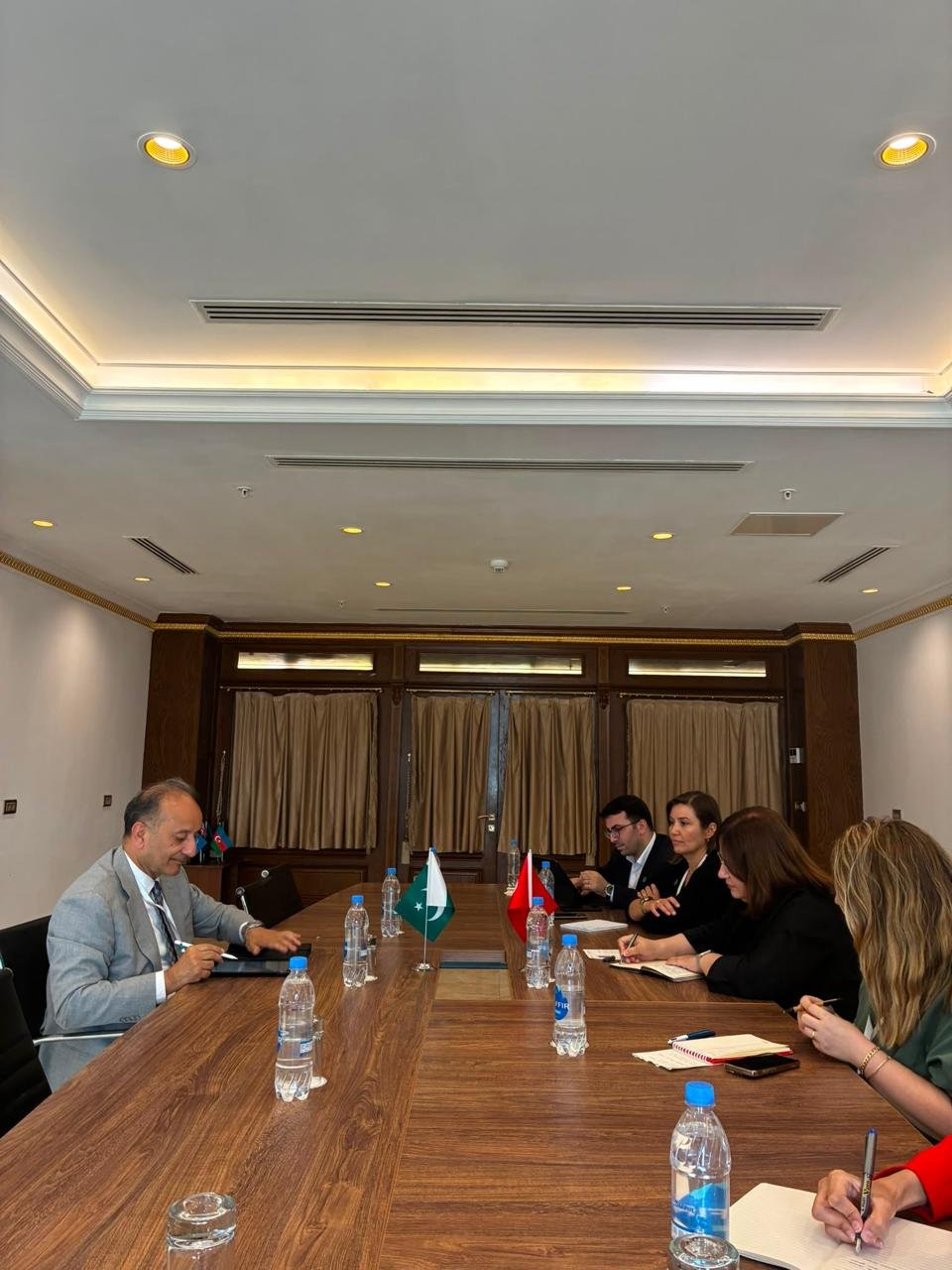
ISLAMABAD — Federal Minister for Climate Change and Environmental Coordination, Dr. Musadik Malik, engaged in a bilateral meeting with Ms. Fatma Varank, Deputy Minister for Environment, Urbanization and Climate Change of the Republic of Türkiye. This meeting was held on July 23 in Shamakhi, Azerbaijan, during the sidelines of the COP31 Heads of Delegation gathering.
What Happened
The meeting between Dr. Musadik Malik and Ms. Fatma Varank focused on enhancing collaboration between Pakistan and Türkiye in addressing climate change challenges. Both ministers expressed their commitment to strengthening bilateral ties and working together on environmental issues of mutual concern. Dr. Malik highlighted Pakistan’s initiatives in combating climate change and emphasized the importance of international cooperation in achieving sustainable development goals.
Ms. Varank, who is also the President of the upcoming COP31, shared insights into Türkiye’s strategies for environmental sustainability and urbanization. She underscored the significance of regional partnerships in tackling climate-related issues and expressed Türkiye’s willingness to support Pakistan in its environmental endeavors. The discussions also covered potential areas for joint projects and knowledge exchange in climate resilience and adaptation strategies.
The meeting concluded with both parties agreeing to continue dialogue and explore avenues for future cooperation, particularly in the context of the upcoming COP31 conference, which is expected to bring together global leaders to discuss climate action and policy implementation.
Background
Pakistan and Türkiye have a history of diplomatic relations and have collaborated on various fronts, including trade, defense, and cultural exchanges. In recent years, both countries have recognized the growing importance of addressing climate change and environmental issues as part of their national agendas. Pakistan, being highly vulnerable to climate change impacts, has been actively seeking international partnerships to enhance its climate resilience and adaptation capabilities.
Türkiye, on the other hand, has been making strides in sustainable urbanization and environmental protection, positioning itself as a key player in regional climate initiatives. The COP31 conference, scheduled to be held in 2024, provides a platform for countries to come together and discuss strategies for reducing greenhouse gas emissions and promoting sustainable development.
Why It Matters
The meeting between Dr. Musadik Malik and Ms. Fatma Varank is significant as it highlights the growing collaboration between Pakistan and Türkiye in the realm of climate change. This partnership is crucial for both countries as they face similar environmental challenges, such as extreme weather events, water scarcity, and the need for sustainable urban planning.
For Pakistan, strengthening ties with Türkiye can lead to valuable knowledge exchange and technical support in implementing effective climate policies. Türkiye’s experience in sustainable urbanization and environmental management can provide Pakistan with insights into best practices and innovative solutions for its own climate challenges.
Moreover, the collaboration aligns with Pakistan’s broader strategy to engage with international partners and leverage global expertise in addressing climate change. As the world moves towards more stringent climate policies, regional cooperation becomes increasingly important for countries like Pakistan, which are on the front lines of climate impacts.
The outcomes of this meeting could also influence the discussions at the upcoming COP31 conference, where both countries are expected to play active roles in shaping the global climate agenda. By working together, Pakistan and Türkiye can contribute to a more coordinated and effective international response to climate change.
Key Takeaways
- Dr. Musadik Malik met with Ms. Fatma Varank in Azerbaijan to discuss climate cooperation.
- The meeting focused on enhancing bilateral ties and exploring joint environmental projects.
- Both countries aim to collaborate on climate resilience and sustainable urbanization.
- The discussions align with Pakistan’s strategy to engage international partners on climate issues.
- Outcomes may influence the agenda at the upcoming COP31 conference.
Source Attribution
This article is based on official government statements, press releases, and public communications from relevant authorities.














