
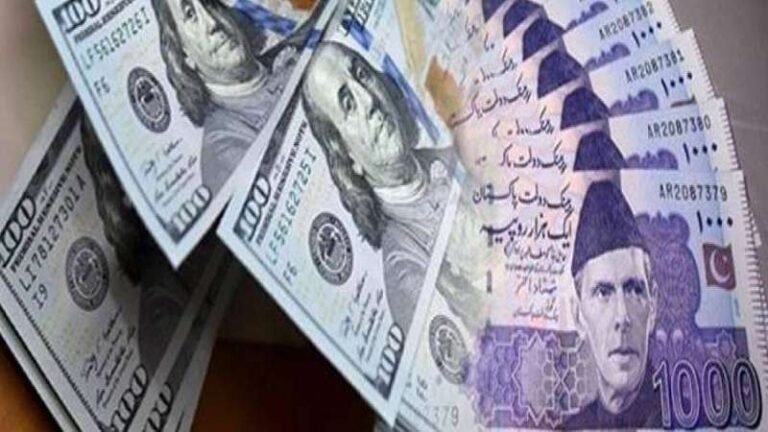
ISLAMABAD — The Pakistani Rupee appreciated by three paisa against the US Dollar in interbank trading on Monday, closing at Rs 277.77 compared to the previous day’s rate of Rs 277.80. This minor increase in the Rupee’s value comes amid ongoing economic challenges and fluctuating foreign exchange reserves.
What Happened
On August 3, 2023, the Pakistani Rupee showed a slight improvement against the US Dollar, gaining three paisa in the interbank market. According to the Forex Association of Pakistan, the Rupee closed at Rs 277.77, compared to the previous closing rate of Rs 277.80. This marginal appreciation reflects the volatile nature of currency markets, influenced by various economic factors both domestically and internationally.
The buying and selling rates of the US Dollar in the open market were also noted, indicating a broader trend in the currency’s performance. Market analysts suggest that this minor gain could be attributed to recent measures taken by Pakistan’s central bank to stabilize the currency, as well as fluctuations in global currency markets.
Currency traders and financial experts continue to monitor the situation closely, as the Rupee’s performance is a critical indicator of Pakistan’s economic health. The interbank market, where banks trade currencies between themselves, often sets the tone for the open market rates, impacting how businesses and consumers experience currency fluctuations.
Background
The Pakistani Rupee has faced significant challenges over the past few years, largely due to economic instability, high inflation rates, and a substantial current account deficit. The government and the State Bank of Pakistan have been working to implement policies aimed at stabilizing the currency and improving the country’s foreign exchange reserves.
Historically, the Rupee has been under pressure from external debt obligations and a reliance on imports, which require foreign currency payments. Efforts to attract foreign investment and boost exports are ongoing, as these are seen as long-term solutions to the currency’s depreciation.
In recent months, the Rupee’s value has been subject to sharp fluctuations, influenced by geopolitical tensions, global oil prices, and domestic economic policies. The central bank’s interventions, including adjustments in interest rates and foreign exchange reserves management, play a crucial role in attempting to stabilize the currency.
Why It Matters
The value of the Pakistani Rupee against the US Dollar is a significant economic indicator, affecting various sectors of the economy. A stronger Rupee can help reduce the cost of imports, including essential goods and raw materials, which can, in turn, help control inflation. Conversely, a weaker Rupee can increase the cost of imports, putting upward pressure on prices and affecting the purchasing power of consumers.
For businesses, particularly those involved in international trade, currency stability is crucial. Exporters benefit from a weaker Rupee as it makes their goods cheaper for foreign buyers, potentially boosting sales. However, importers face higher costs when the Rupee depreciates, which can affect profit margins and lead to increased prices for consumers.
On a broader scale, the Rupee’s performance impacts investor confidence. A stable and appreciating currency can attract foreign investment, which is vital for economic growth and development. Conversely, a volatile currency can deter investors, leading to reduced capital inflows and economic stagnation.
Key Takeaways
- The Pakistani Rupee appreciated by three paisa against the US Dollar in interbank trading, closing at Rs 277.77.
- This minor gain reflects ongoing efforts by the central bank to stabilize the currency amid economic challenges.
- The Rupee’s value is influenced by domestic policies, global market conditions, and geopolitical factors.
- Currency stability is crucial for controlling inflation, managing import costs, and attracting foreign investment.
- The Rupee’s performance is a key indicator of Pakistan’s overall economic health and investor confidence.
Source Attribution
This article is based on official government statements, press releases, and public communications from relevant authorities.














