
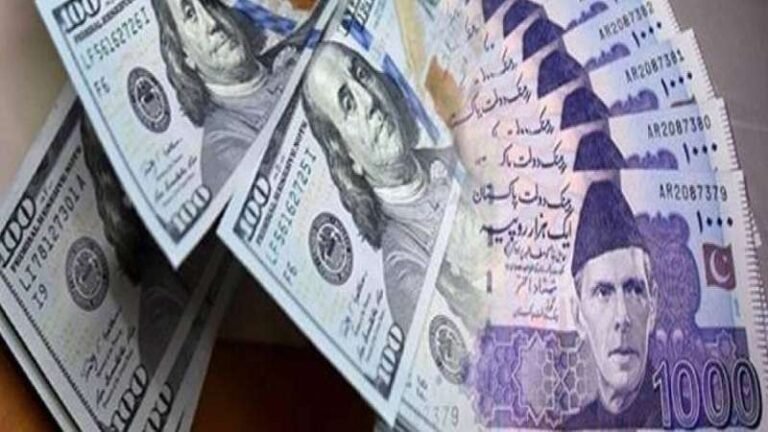
ISLAMABAD — On Thursday, the Pakistani Rupee experienced a slight appreciation of 01 paisa against the US Dollar in interbank trading, closing at Rs 277.81. This marks a minor improvement from the previous day’s closing rate of Rs 277.82, as reported by the Forex Association of Pakistan (FAP).
What Happened
The Pakistani Rupee’s appreciation by 01 paisa against the US Dollar reflects a subtle shift in the currency market dynamics. The closing rate of Rs 277.81 on Thursday indicates a fractional gain from Wednesday’s rate of Rs 277.82. The Forex Association of Pakistan (FAP) provided these figures, highlighting the minute fluctuations in the currency’s value.
In the open market, the buying and selling rates of the US Dollar were recorded at slightly varied figures, showing the ongoing volatility in currency exchanges. While the interbank market saw a marginal gain, the open market rates continue to reflect broader economic conditions and investor sentiments.
Currency traders and financial analysts closely monitor these fluctuations, as even minor changes can have significant implications for importers, exporters, and the overall economic landscape. The current exchange rate dynamics are influenced by multiple factors, including international market trends, domestic economic policies, and geopolitical developments.
Background
The Pakistani Rupee has experienced significant volatility over the past few years, influenced by both domestic and international factors. Historically, the Rupee has been under pressure due to a widening current account deficit, inflationary pressures, and external debt obligations.
In recent months, the Rupee’s value has been affected by fluctuations in global oil prices, remittance inflows, and the government’s fiscal policies aimed at stabilizing the economy. The State Bank of Pakistan (SBP) has also played a crucial role in managing the currency’s stability through interventions and monetary policy adjustments.
Previous trends have shown that the Rupee often faces depreciation pressures during periods of political instability or economic uncertainty. However, strategic interventions by the central bank and government measures have occasionally led to temporary stabilizations or appreciations, as seen in the current scenario.
Why It Matters
The slight appreciation of the Rupee against the US Dollar, though minimal, carries significant implications for Pakistan’s economy. A stronger Rupee can help reduce the cost of imports, particularly essential commodities such as oil, which can, in turn, ease inflationary pressures on the economy.
For businesses engaged in international trade, currency stability is crucial. Importers benefit from a stronger Rupee as it lowers the cost of foreign goods, while exporters may face challenges as their products become relatively more expensive in international markets. The balance between these opposing forces is critical for maintaining economic equilibrium.
Additionally, the currency’s performance is a key indicator for foreign investors assessing the stability and attractiveness of Pakistan’s market. A stable or appreciating Rupee can boost investor confidence, potentially leading to increased foreign direct investment (FDI) and portfolio investments.
The Rupee’s value also affects the country’s external debt obligations, as a stronger currency can reduce the burden of dollar-denominated debt repayments. This can provide the government with more fiscal space to allocate resources towards development projects and social welfare programs.
Key Takeaways
- The Pakistani Rupee appreciated by 01 paisa against the US Dollar in interbank trading, closing at Rs 277.81.
- This minor appreciation reflects the ongoing volatility and complex dynamics of the currency market.
- The Rupee’s performance is influenced by factors such as global oil prices, remittance inflows, and domestic economic policies.
- A stronger Rupee can reduce import costs and ease inflationary pressures, benefiting the economy.
- Currency stability is crucial for attracting foreign investment and managing external debt obligations.
Source Attribution
This article is based on official government statements, press releases, and public communications from relevant authorities.














