
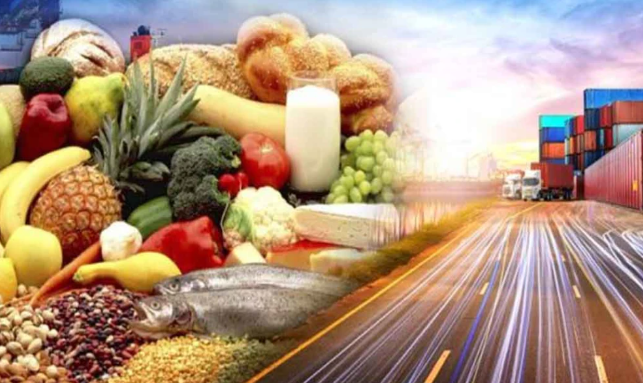
ISLAMABAD — Pakistan’s food commodity exports fell to $5.017 billion in the financial year ending June 30, 2026, marking a significant decrease from the previous year’s $7.116 billion, according to data from the Pakistan Bureau of Statistics.
What Happened
During the fiscal year 2025-26, Pakistan exported food commodities valued at $5.017 billion, reflecting a 29.49 percent decline compared to the $7.116 billion recorded in the previous fiscal year. This downturn was observed across several key export categories.
Rice exports, a major component of Pakistan’s food exports, reached over 4.282 million metric tons, valued at $2.291 billion. However, this figure represents a decline in both volume and value compared to the previous year. Similarly, the export of fish and fish products amounted to 215,170 metric tons, generating $482.017 million. Fruit exports totaled 533,382 metric tons, earning $308.130 million, while vegetable exports reached 594,104 metric tons, valued at $162.770 million.
Other notable exports included tobacco, with 46,669 metric tons exported for $142.527 million, and oilseeds and nuts, with 243,019 metric tons exported for $260.519 million. Meat and meat preparations saw a slight increase in value, with 114,046 metric tons exported for $530.245 million, compared to 114,157 metric tons valued at $495.109 million in the previous year.
Conversely, the import of food commodities into Pakistan rose by 11.66 percent, with imports valued at $9.150 billion compared to $8.195 billion in the fiscal year 2024-25.
Background
Historically, Pakistan has been a significant exporter of various food commodities, with rice being one of its most prominent export products. The country has traditionally relied on agricultural exports to bolster its economy, contributing significantly to foreign exchange earnings. However, recent years have seen fluctuations in export volumes and values due to various factors, including global market conditions, domestic production challenges, and climate-related impacts.
The decline in food exports in FY 2026 can be attributed to several factors, including adverse weather conditions affecting crop yields, increased competition in international markets, and logistical challenges exacerbated by global supply chain disruptions.
Why It Matters
The decline in food exports holds significant implications for Pakistan’s economy, particularly in terms of foreign exchange earnings and trade balance. The reduction in export revenue could exacerbate the country’s trade deficit, placing additional pressure on foreign reserves and potentially affecting the stability of the national currency.
Economically, the downturn in exports could impact the agricultural sector, which is a major source of employment and income for a large portion of the population. Farmers and producers may face financial difficulties due to reduced demand and lower prices for their products in international markets.
Socially, the decline in exports could lead to increased unemployment and reduced income levels in rural areas, where agriculture is the primary livelihood. This situation may necessitate government intervention to support affected communities and ensure food security within the country.
Internationally, Pakistan’s reduced presence in global food markets could affect its trade relationships and competitiveness. The country may need to explore new markets and diversify its export portfolio to mitigate the impact of declining traditional exports.
Key Takeaways
- Pakistan’s food exports fell to $5.017 billion in FY 2026, a 29.49% decrease from the previous year.
- Rice, fish, fruits, and vegetables were among the major export categories experiencing declines.
- Food imports into Pakistan increased by 11.66%, reaching $9.150 billion.
- The decline in exports could impact Pakistan’s trade balance and foreign exchange reserves.
- Economic and social challenges may arise, particularly in rural agricultural communities.
Source Attribution
This article is based on official government statements, press releases, and public communications from relevant authorities.














