
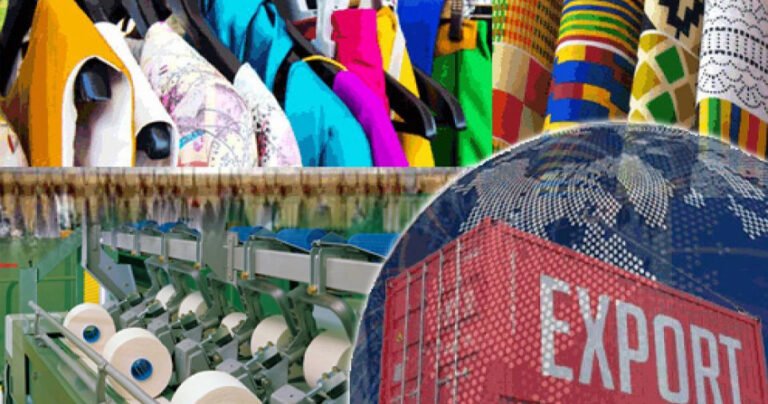
ISLAMABAD — Pakistan’s textile sector has shown a promising start to the financial year 2026-27, with exports increasing by 5.55% during the first two months compared to the same period last year. The Pakistan Bureau of Statistics (PBS) reported that textile exports reached $3.379 billion in July-August 2026, up from $3.202 billion in the corresponding months of 2025.
What Happened
The textile industry, a cornerstone of Pakistan’s economy, has experienced a notable increase in exports during the initial months of the current fiscal year. According to the latest data from the PBS, the sector’s exports amounted to $3.379 billion in July and August 2026, marking a 5.55% rise from $3.202 billion in the same period of the previous year.
Several textile commodities contributed to this growth. Cotton yarn exports surged by 34.80% to $160.679 million, up from $119.195 million. Knitwear exports also increased by 4.79%, reaching $1,004 million compared to $958.634 million last year. Other commodities showing growth included towels, which saw a 6.74% rise to $191.135 million, and ready-made garments, which increased by 13.59% to $827.001 million. Made-up articles, excluding towels and bed wear, grew by 6.95% to $146.032 million, and other textile materials rose by 3.91% to $133.153 million.
However, some segments experienced declines. Cotton cloth exports fell by 7.66%, from $299.180 million to $276.255 million. Similarly, yarn exports, excluding cotton yarn, decreased by 31.78% from $5.938 million to $4.051 million. Exports of bed wear slightly dropped by 0.31% to $563.545 million, while tents, canvas, and tarpaulin exports declined by 7.17% to $14.877 million. Additionally, art, silk, and synthetic textile exports decreased by 11.33% to $58.638 million.
On a year-on-year basis, the textile exports for August 2026 increased by 2.77%, reaching $1,565.841 million compared to $1,523.635 million in August 2025. However, on a month-on-month basis, there was a 13.68% decline in exports from July 2026, when exports were recorded at $1,814.076 million.
Background
The textile industry is a vital component of Pakistan’s economy, contributing significantly to employment and foreign exchange earnings. Historically, the sector has faced challenges such as energy shortages, outdated technology, and fluctuating global demand. Despite these hurdles, the industry has shown resilience, supported by government policies aimed at boosting exports and modernizing infrastructure.
In recent years, the government has implemented various initiatives to enhance the competitiveness of the textile sector, including subsidies on raw materials, tax incentives, and infrastructure development. These measures have been pivotal in maintaining the sector’s growth trajectory despite global economic uncertainties.
Why It Matters
The increase in textile exports is a positive indicator for Pakistan’s economy, which relies heavily on this sector for foreign exchange earnings. The growth in exports not only strengthens the country’s trade balance but also supports job creation and economic stability. As the textile industry employs a significant portion of the workforce, its performance directly impacts the livelihoods of millions of Pakistanis.
Moreover, the increase in exports reflects the effectiveness of government policies aimed at enhancing the sector’s productivity and competitiveness. This growth can potentially attract foreign investment, further boosting economic development. Additionally, the diversification of export commodities within the textile sector indicates a strategic shift towards value-added products, which can lead to higher profit margins and reduced vulnerability to global price fluctuations.
Internationally, Pakistan’s growing textile exports enhance its position in the global market, fostering stronger trade relations with key partners. This trend is crucial as the country seeks to expand its export base and reduce dependency on a limited range of commodities.
Key Takeaways
- Textile exports increased by 5.55% to $3.379 billion during July-August 2026.
- Cotton yarn and knitwear were major contributors to the export growth.
- Some segments, like cotton cloth and yarn other than cotton, saw declines.
- The textile sector’s growth supports economic stability and job creation.
- Government policies and initiatives have played a crucial role in boosting exports.
Source Attribution
This article is based on official government statements, press releases, and public communications from relevant authorities.














