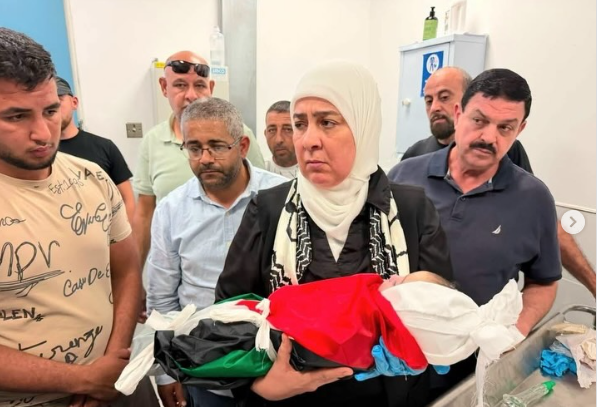
RAMALLAH — A four-month-old Palestinian infant tragically passed away after Israeli forces allegedly delayed his family’s access to urgent medical care in the occupied West Bank. The incident occurred as the family attempted to reach a hospital located west of Ramallah, according to a Palestinian official on Monday.
What Happened
The infant, whose identity has not been disclosed, was reportedly in critical need of medical attention when his family encountered an Israeli checkpoint. The family was held up for over an hour, during which time the child’s condition deteriorated. Despite their pleas for expedited passage, the delay proved fatal, as reported by Palestinian officials.
According to the family, they were en route to a hospital when they were stopped at a checkpoint controlled by Israeli forces. The delay in reaching medical facilities has sparked outrage among Palestinian communities and human rights organizations, who have long criticized the restrictions on movement imposed by Israel in the West Bank.
A spokesperson for the Palestinian Ministry of Health stated, “This tragic incident underscores the severe impact of movement restrictions on the health and well-being of Palestinians.” The Israeli military has not yet commented on the specific incident but has previously stated that security measures are necessary to prevent potential threats.
Background
The West Bank, a territory occupied by Israel since 1967, has been a focal point of the Israeli-Palestinian conflict. The region is dotted with numerous Israeli checkpoints, which Palestinians argue severely restrict their freedom of movement. These checkpoints are part of a broader security apparatus that Israel maintains, citing concerns over potential attacks.
Medical emergencies in the West Bank often bring to light the humanitarian challenges faced by Palestinians living under occupation. International human rights organizations have documented numerous cases where delays at checkpoints have resulted in critical health outcomes, including fatalities.
In 2004, the International Court of Justice issued an advisory opinion stating that the construction of the Israeli barrier in the West Bank and the associated regime of movement restrictions were contrary to international law. Despite this, the situation on the ground remains largely unchanged, with checkpoints continuing to operate across the territory.
Why It Matters
The death of the Palestinian infant has reignited debates over the humanitarian impact of Israeli security measures in the West Bank. For Palestinians, these measures are seen as a daily reality that infringes upon their basic rights, including the right to health care. The incident highlights the broader issue of access to medical services in conflict zones, where political and security considerations often overshadow humanitarian needs.
Economically, the restrictions on movement have significant implications for the Palestinian economy, affecting everything from trade to employment. Socially, the constant threat of delays and the potential for violence at checkpoints contribute to a climate of fear and anxiety among Palestinian communities.
Internationally, the incident may draw renewed attention to the Israeli-Palestinian conflict, with potential diplomatic repercussions. Countries and organizations advocating for human rights may use this incident to pressure Israel to reconsider its policies in the West Bank, though such efforts have historically faced significant political challenges.
Key Takeaways
- A four-month-old Palestinian infant died after a delay at an Israeli checkpoint in the West Bank.
- The incident has sparked outrage and highlighted the impact of movement restrictions on health care access.
- Checkpoints are part of Israel’s broader security measures, which are often criticized for infringing on Palestinian rights.
- The situation underscores the ongoing humanitarian challenges in the Israeli-Palestinian conflict.
- International attention may increase, potentially affecting diplomatic relations and policy discussions.
Source Attribution
This article is based on official statements from Palestinian authorities and public communications from relevant organizations.