
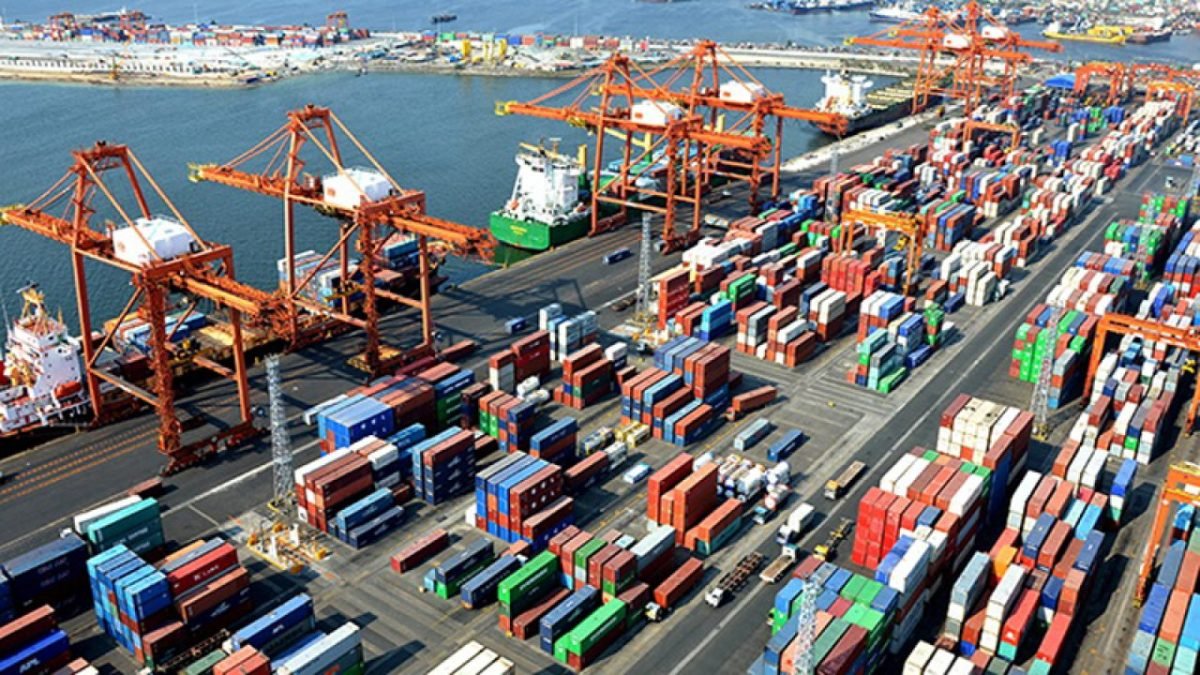
KARACHI — Port Qasim has witnessed a significant uptick in shipping activity as multiple vessels arrived and departed over the past 24 hours. The port, a crucial hub for Pakistan’s maritime trade, saw two ships, BGS Bimini and Samir, docking at the Qasim International Container Terminal and Pakistan International Bulk Terminal, respectively.
What Happened
On July 29, Port Qasim reported the arrival of two significant vessels, BGS Bimini and Samir, which berthed at the Qasim International Container Terminal and the Pakistan International Bulk Terminal. These ships were carrying containers and coal, integral commodities for Pakistan’s import and export activities. Additionally, the bulk cargo carrier ES Warrior, also laden with coal, arrived at the port’s outer anchorage on the same day.
During the last 24 hours, a total of ten ships were actively engaged at various berths within Port Qasim. Among them, two ships, SK Resolute and Gooby, departed from the port in the morning. Later in the afternoon, BGS Bimini and Intelligence Diva were scheduled to set sail. The port managed a substantial cargo volume of 161,288 tonnes, which included 123,221 tonnes of imported goods and 38,067 tonnes of exports. This cargo was transported in 3,400 containers, comprising 1,800 TEUs (Twenty-foot Equivalent Units) of imports and 1,600 TEUs of exports.
Currently, there are 14 ships anchored at the outer anchorage of Port Qasim. Among these, the bulk cargo carrier Vosco Proper and three other vessels—Bow Endeavour, BGS Barbados, and APL Oregon—are scheduled to dock at berths MW-1, EVTL, and QICT, respectively. These ships are expected to load and offload essential commodities such as rice, cement, chemicals, and containers.
Background
Port Qasim, located near Karachi, is one of Pakistan’s busiest ports and plays a vital role in the country’s trade and logistics sector. Established in the late 1970s, it has expanded significantly to handle a diverse range of cargo, including containers, bulk cargo, and liquid chemicals. The port’s strategic location and modern facilities make it a key player in facilitating Pakistan’s international trade, particularly with countries in the Middle East, Africa, and beyond.
Historically, Port Qasim has been instrumental in supporting Pakistan’s economic growth by providing an efficient gateway for imports and exports. The port’s infrastructure has been continuously upgraded to accommodate the growing volume of trade, reflecting the country’s increasing integration into the global economy.
Why It Matters
The recent surge in shipping activity at Port Qasim is indicative of Pakistan’s robust trade dynamics and the port’s capacity to handle significant cargo volumes. This activity not only underscores the port’s importance in the national economy but also highlights the broader implications for Pakistan’s trade relationships and economic stability.
Economically, the efficient handling of large cargo volumes at Port Qasim facilitates the smooth flow of goods, which is crucial for maintaining supply chains and supporting industries reliant on imported raw materials. The port’s operations directly impact the cost and availability of goods in the domestic market, affecting everything from consumer prices to industrial production.
On an international level, the port’s ability to manage increased shipping activity strengthens Pakistan’s trade ties with key partners, enhancing its position in regional trade networks. This is particularly significant in the context of the China-Pakistan Economic Corridor (CPEC), which aims to boost connectivity and trade between the two nations through infrastructural investments.
Key Takeaways
- Port Qasim has seen a notable increase in shipping activity, with multiple vessels arriving and departing.
- The port handled 161,288 tonnes of cargo in the last 24 hours, reflecting its capacity and efficiency.
- Fourteen ships are currently anchored at the port’s outer anchorage, awaiting berthing.
- Port Qasim’s operations are crucial for Pakistan’s trade and economic stability, impacting both domestic and international markets.
- The port’s activity is a key component of Pakistan’s integration into global trade networks, particularly under CPEC initiatives.
Source Attribution
This article is based on official government statements, press releases, and public communications from relevant authorities.














