
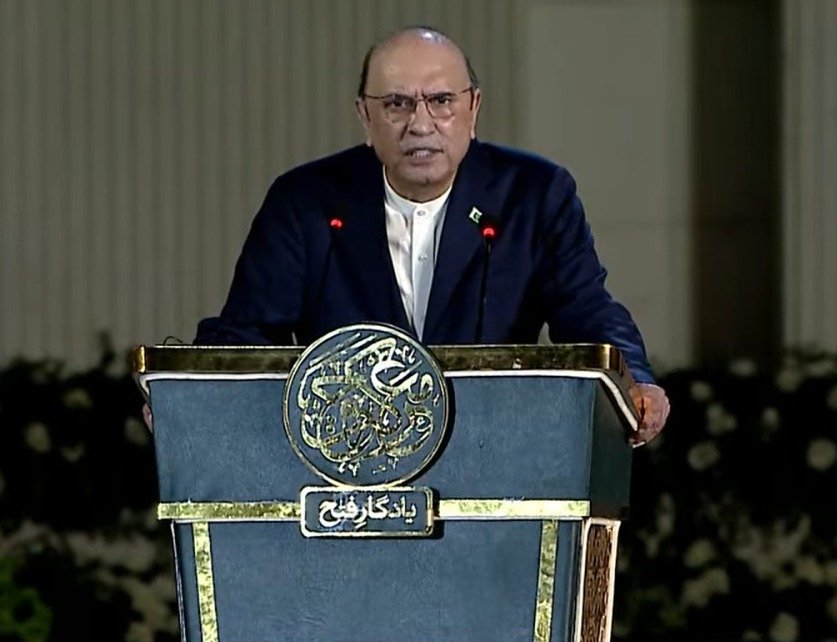
ISLAMABAD — President Asif Ali Zardari on Thursday lauded the efforts of Pakistan’s leadership in promoting the country’s interests on the global stage and fostering unity among Islamic nations. The commendation was directed towards Prime Minister Shehbaz Sharif, Deputy Prime Minister Ishar Dar, Chief of Defence Forces and Chief of Army Staff Field Marshal Syed Asim Munir, and Interior Minister Mohsin Naqvi.
What Happened
President Asif Ali Zardari expressed his appreciation for the key figures in Pakistan’s government, acknowledging their strategic roles in enhancing the nation’s international standing and advocating for cohesion among Islamic countries. The President highlighted the leadership’s commitment to advancing Pakistan’s interests, which he described as a vital component of the country’s foreign policy agenda.
In his remarks, President Zardari emphasized the importance of unity among Islamic nations, noting that Pakistan’s leadership has been instrumental in fostering stronger ties within the Muslim world. He praised the diplomatic efforts led by Prime Minister Shehbaz Sharif and the strategic guidance provided by Deputy Prime Minister Ishar Dar. The President also recognized the contributions of Field Marshal Syed Asim Munir and Interior Minister Mohsin Naqvi in maintaining national security and stability, which are crucial for international diplomacy.
The President’s commendation comes at a time when Pakistan is actively engaging with various international forums to address global challenges and promote mutual cooperation among Islamic countries. This initiative is seen as part of a broader strategy to enhance Pakistan’s role in regional and global affairs.
Background
Pakistan has historically played a significant role in the Islamic world, often acting as a bridge between different Islamic countries. The country’s strategic location and its status as a nuclear power have positioned it as a key player in the region. Over the years, Pakistan has participated in numerous initiatives aimed at fostering unity and cooperation among Muslim nations.
In recent years, Pakistan’s leadership has focused on strengthening diplomatic ties with other Islamic countries through both bilateral and multilateral engagements. These efforts have included participation in the Organisation of Islamic Cooperation (OIC) and other regional alliances. The government has also been active in addressing issues such as economic collaboration, security challenges, and cultural exchange among Islamic nations.
Why It Matters
The President’s commendation underscores the significance of Pakistan’s diplomatic efforts in the Islamic world. By promoting unity among Muslim countries, Pakistan seeks to enhance its influence and foster a cooperative environment that can address common challenges such as terrorism, economic instability, and political conflicts.
Economically, stronger ties with Islamic countries can lead to increased trade opportunities and investment flows, which are vital for Pakistan’s economic growth. Politically, a united Islamic front can provide a more robust platform for addressing issues at international forums, thereby amplifying the collective voice of Muslim nations.
For Pakistan, maintaining strong relations with other Islamic countries is also crucial for national security. Collaborative efforts in intelligence sharing and counter-terrorism can enhance regional stability and safeguard Pakistan’s interests.
Furthermore, the focus on Islamic unity aligns with Pakistan’s broader foreign policy objectives, which include promoting peace and stability in the region. By positioning itself as a leader in the Islamic world, Pakistan can leverage its diplomatic relationships to influence regional dynamics positively.
Key Takeaways
- President Asif Ali Zardari praised Pakistani leadership for advancing national interests and fostering Islamic unity.
- The commendation highlights the roles of Prime Minister Shehbaz Sharif and other key officials in international diplomacy.
- Pakistan’s efforts aim to enhance economic, political, and security cooperation among Islamic nations.
- Stronger ties with Islamic countries can lead to increased trade and investment opportunities for Pakistan.
- Unity among Muslim nations is crucial for addressing global challenges and promoting regional stability.
Source Attribution
This article is based on official government statements and public communications from relevant authorities.














