
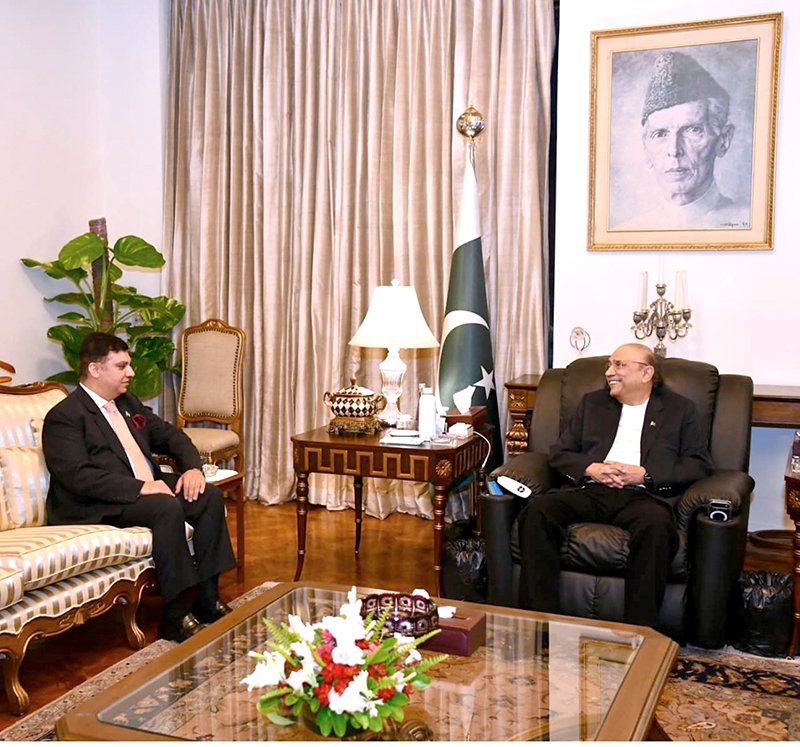
ISLAMABAD — President Asif Ali Zardari held a meeting with Ahmed Amjad Ali, the newly appointed Ambassador-designate of Pakistan to Sweden, at Aiwan-e-Sadr on Tuesday. The meeting focused on strengthening bilateral relations between Pakistan and Sweden and discussing the ambassador’s upcoming diplomatic mission.
What Happened
President Asif Ali Zardari met with Ahmed Amjad Ali, who has been designated as Pakistan’s ambassador to Sweden, at the presidential residence, Aiwan-e-Sadr. During the meeting, President Zardari emphasized the importance of enhancing diplomatic ties with Sweden, a nation known for its advanced technological sector and robust economy. The president expressed confidence in Ali’s abilities to represent Pakistan effectively and to further strengthen the relationship between the two countries.
Ahmed Amjad Ali, who has previously served in various diplomatic capacities, outlined his plans to foster closer economic and cultural ties with Sweden. He highlighted the potential for increased trade and investment opportunities, particularly in sectors such as information technology, renewable energy, and education. Ali assured President Zardari of his commitment to promoting Pakistan’s interests and enhancing its image abroad.
President Zardari advised the ambassador-designate to focus on building partnerships in innovation and technology, areas where Sweden excels and where Pakistan could benefit significantly. The president also stressed the importance of engaging with the Pakistani diaspora in Sweden to strengthen community ties and promote cultural exchange.
Background
Pakistan and Sweden have maintained diplomatic relations since 1951. Over the years, the two countries have collaborated in various fields, including trade, education, and technology. Sweden is a member of the European Union and is known for its high standard of living and progressive policies. The appointment of a new ambassador comes at a time when Pakistan is seeking to diversify its international partnerships and increase its global economic footprint.
Ahmed Amjad Ali brings a wealth of experience to his new role, having served in several key diplomatic positions. His appointment is part of Pakistan’s broader strategy to strengthen its diplomatic corps and enhance its international presence. The meeting with President Zardari underscores the importance Pakistan places on its relationship with Sweden and the potential for future collaboration.
Why It Matters
The meeting between President Zardari and Ambassador-designate Ahmed Amjad Ali is significant for several reasons. Firstly, it highlights Pakistan’s intention to bolster its diplomatic ties with Sweden, a country that can offer valuable technological and economic partnerships. Strengthening these ties could lead to increased trade and investment, which are crucial for Pakistan’s economic growth and development.
Secondly, the appointment of a seasoned diplomat like Ahmed Amjad Ali reflects Pakistan’s commitment to enhancing its diplomatic outreach and improving its international standing. By focusing on key sectors such as technology and education, Pakistan aims to attract foreign investment and expertise, which could drive innovation and economic progress within the country.
Furthermore, engaging with the Pakistani diaspora in Sweden can help foster a sense of community and cultural exchange, promoting a positive image of Pakistan abroad. This can lead to increased tourism and cultural collaboration, further benefiting Pakistan’s economy and international relations.
Key Takeaways
- President Zardari met with Ambassador-designate Ahmed Amjad Ali to discuss enhancing Pakistan-Sweden relations.
- The meeting focused on increasing trade, investment, and cultural ties between the two countries.
- Ahmed Amjad Ali brings extensive diplomatic experience to his new role as ambassador to Sweden.
- Strengthening ties with Sweden could lead to valuable technological and economic partnerships for Pakistan.
- Engaging with the Pakistani diaspora in Sweden is a key component of the ambassador’s mission.
Source Attribution
This article is based on official government statements and public communications from relevant authorities.














