
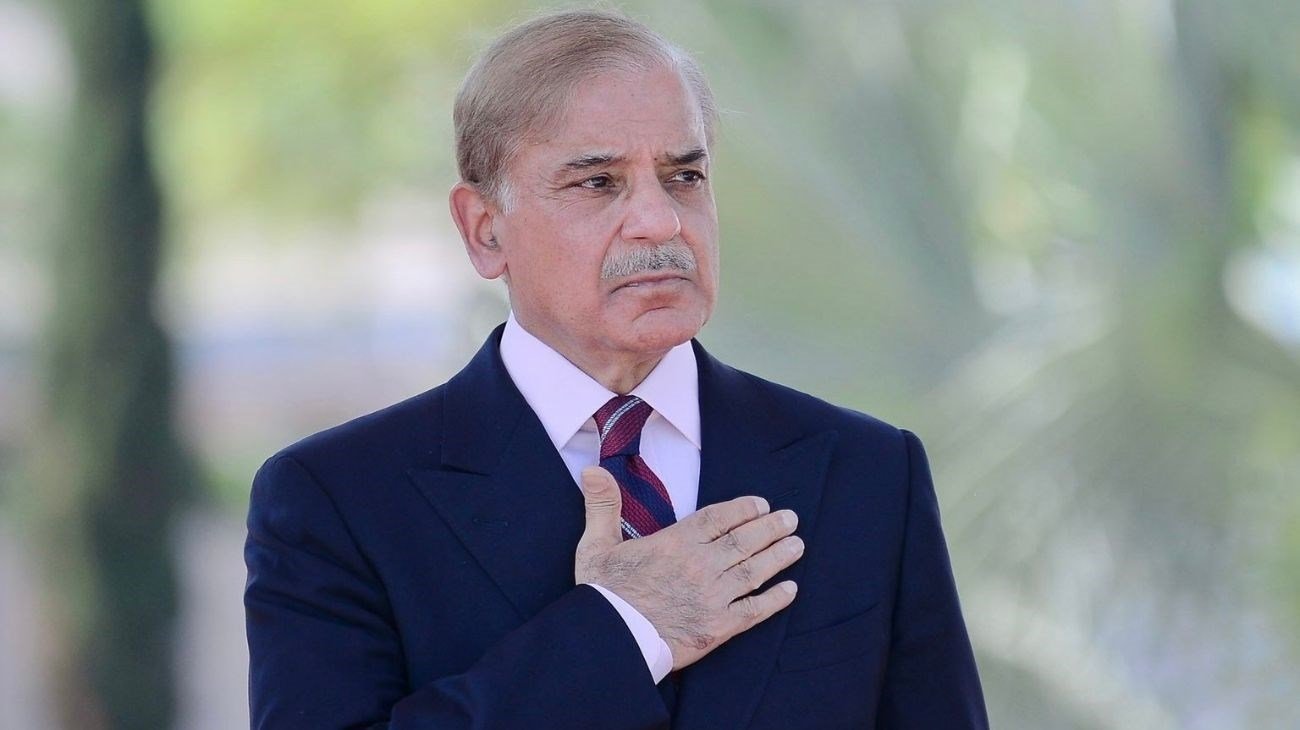
ISLAMABAD — Prime Minister Shehbaz Sharif reiterated Pakistan’s unwavering commitment to the Kashmir issue, emphasizing its central role in the nation’s foreign policy. On August 4, he affirmed that Pakistan would continue to provide diplomatic, political, and moral support to the Kashmiri people, advocating for a peaceful and just resolution of the Jammu and Kashmir dispute at all regional and international platforms.
What Happened
Prime Minister Shehbaz Sharif addressed the nation and the international community, underscoring Pakistan’s steadfast stance on the Kashmir issue. He stated, “The peaceful and just resolution of the Jammu and Kashmir dispute remains a cornerstone of Pakistan’s foreign policy.” This statement came amid ongoing tensions in the region, where the Kashmir issue has been a longstanding point of contention between Pakistan and India.
Sharif assured that Pakistan would persist in its efforts to highlight the plight of the Kashmiri people, advocating for their rights at every possible forum. He emphasized the importance of international support and intervention to resolve the dispute, which has been a flashpoint in South Asian geopolitics for decades.
The Prime Minister’s reaffirmation comes as Pakistan continues to seek broader international engagement on the issue, urging global powers and organizations to play a more active role in facilitating dialogue and resolution.
Background
The Kashmir conflict dates back to the partition of British India in 1947, which led to the creation of India and Pakistan. Both countries claim the region in full but control only parts of it. The dispute has led to several wars and ongoing skirmishes along the Line of Control (LoC), the de facto border between the two nations in the region.
In recent years, the situation has been exacerbated by India’s revocation of Article 370 in August 2019, which granted special autonomy to the region of Jammu and Kashmir. This move was met with strong opposition from Pakistan, which views it as a violation of international agreements and a unilateral attempt to alter the status of the region.
Pakistan has consistently sought international mediation to address the issue, citing United Nations resolutions that call for a plebiscite to determine the will of the Kashmiri people.
Why It Matters
The Kashmir issue remains a critical factor in South Asian stability, with significant implications for regional and global security. The ongoing conflict has the potential to escalate into a larger confrontation between two nuclear-armed neighbors, posing a threat to international peace.
Economically, the conflict diverts resources that could otherwise be used for development and poverty alleviation in both countries. Socially, it affects millions of people in the region, leading to human rights concerns and displacement.
Politically, the Kashmir issue influences domestic policies and electoral politics in both India and Pakistan. For Pakistan, maintaining a firm stance on Kashmir is crucial for national unity and identity, while for India, it is a matter of territorial integrity and national security.
Internationally, the dispute affects Pakistan’s diplomatic relations, particularly with countries that have strategic interests in South Asia. The resolution of the Kashmir issue could pave the way for improved bilateral relations and cooperation in various fields, including trade and counter-terrorism.
Key Takeaways
- Prime Minister Shehbaz Sharif reaffirmed Kashmir as a cornerstone of Pakistan’s foreign policy.
- Pakistan will continue to provide diplomatic, political, and moral support to the Kashmiri people.
- The Kashmir conflict remains a major point of contention between Pakistan and India.
- Resolution of the dispute is crucial for regional stability and international peace.
- The issue has significant economic, social, and political implications for South Asia.
Source Attribution
This article is based on official government statements and public communications from relevant authorities.














