
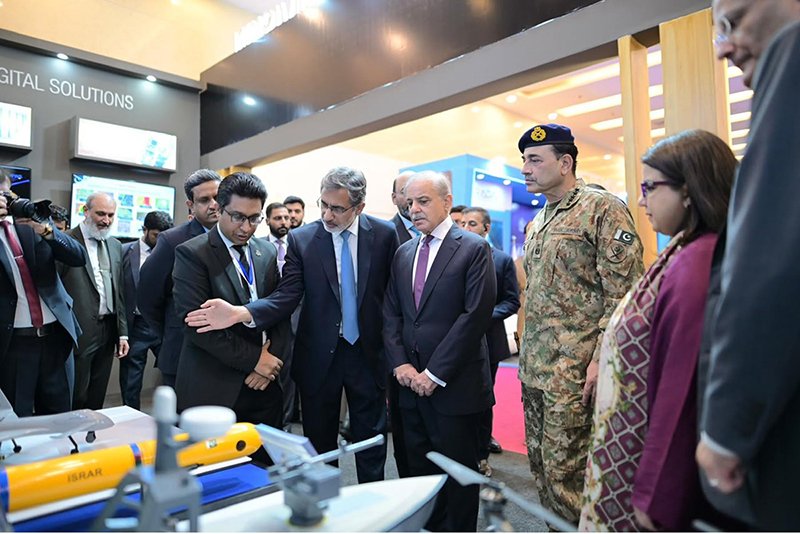
ISLAMABAD — Prime Minister Shehbaz Sharif and Chief of Army Staff Field Marshall Syed Asim Munir attended the Indus RAS Expo 2026, where they visited various stalls showcasing advancements in technology and innovation. The event, held in Islamabad, aims to highlight Pakistan’s progress in research and development.
What Happened
The Indus RAS Expo 2026, a significant event in Pakistan’s calendar, was graced by the presence of Prime Minister Shehbaz Sharif and Chief of Army Staff Field Marshall Syed Asim Munir. The expo, which took place in Islamabad, featured a wide array of stalls displaying the latest technological advancements and research initiatives from various sectors. Both leaders took a keen interest in the exhibits, engaging with innovators and industry leaders to understand the potential impact of these technologies on the country’s development.
During their visit, Prime Minister Sharif and Field Marshall Munir interacted with exhibitors, discussing the innovations on display and their applications in various fields such as agriculture, defense, and information technology. The Prime Minister emphasized the importance of fostering a culture of innovation and research to drive economic growth and enhance national security. He stated, “Pakistan’s future lies in the hands of our innovators and researchers. We must support and invest in these sectors to ensure sustainable development.”
Field Marshall Munir echoed these sentiments, highlighting the role of technological advancements in strengthening the country’s defense capabilities. He noted that the collaboration between civilian and military sectors in research and development is crucial for achieving strategic goals.
Background
The Indus RAS Expo is an annual event that brings together researchers, industry leaders, and policymakers to showcase and discuss technological innovations. It serves as a platform for collaboration and exchange of ideas, aiming to propel Pakistan towards a more technologically advanced future. The expo’s focus on research and development aligns with the government’s vision of transforming Pakistan into a knowledge-based economy.
Historically, Pakistan has faced challenges in keeping pace with global technological advancements. However, recent initiatives by the government and private sector have started to bridge this gap, with increased investment in research and development and the establishment of technology parks and innovation hubs across the country.
Why It Matters
The visit of Prime Minister Shehbaz Sharif and Field Marshall Syed Asim Munir to the Indus RAS Expo 2026 underscores the government’s commitment to promoting technological innovation as a cornerstone of national development. By actively engaging with innovators and industry leaders, the leadership is sending a strong message about the importance of research and development in shaping Pakistan’s future.
Economically, the focus on innovation and technology has the potential to boost productivity, create jobs, and enhance competitiveness in the global market. For a country like Pakistan, which is striving to diversify its economy and reduce reliance on traditional industries, investing in technology and innovation is crucial. Moreover, technological advancements can play a significant role in addressing some of the country’s pressing challenges, such as food security, energy shortages, and environmental sustainability.
On the international front, showcasing Pakistan’s technological capabilities can enhance its reputation as a hub for innovation and attract foreign investment. This, in turn, can lead to increased collaboration with international partners, further driving economic growth and development.
Key Takeaways
- Prime Minister Shehbaz Sharif and Army Chief Field Marshall Syed Asim Munir visited the Indus RAS Expo 2026 in Islamabad.
- The expo showcased advancements in technology and innovation, with a focus on research and development.
- The leaders emphasized the importance of innovation for economic growth and national security.
- The event aligns with Pakistan’s vision of transforming into a knowledge-based economy.
- Technological advancements can address key challenges and enhance global competitiveness.
Source Attribution
This article is based on official government statements, press releases, and public communications from relevant authorities.














