
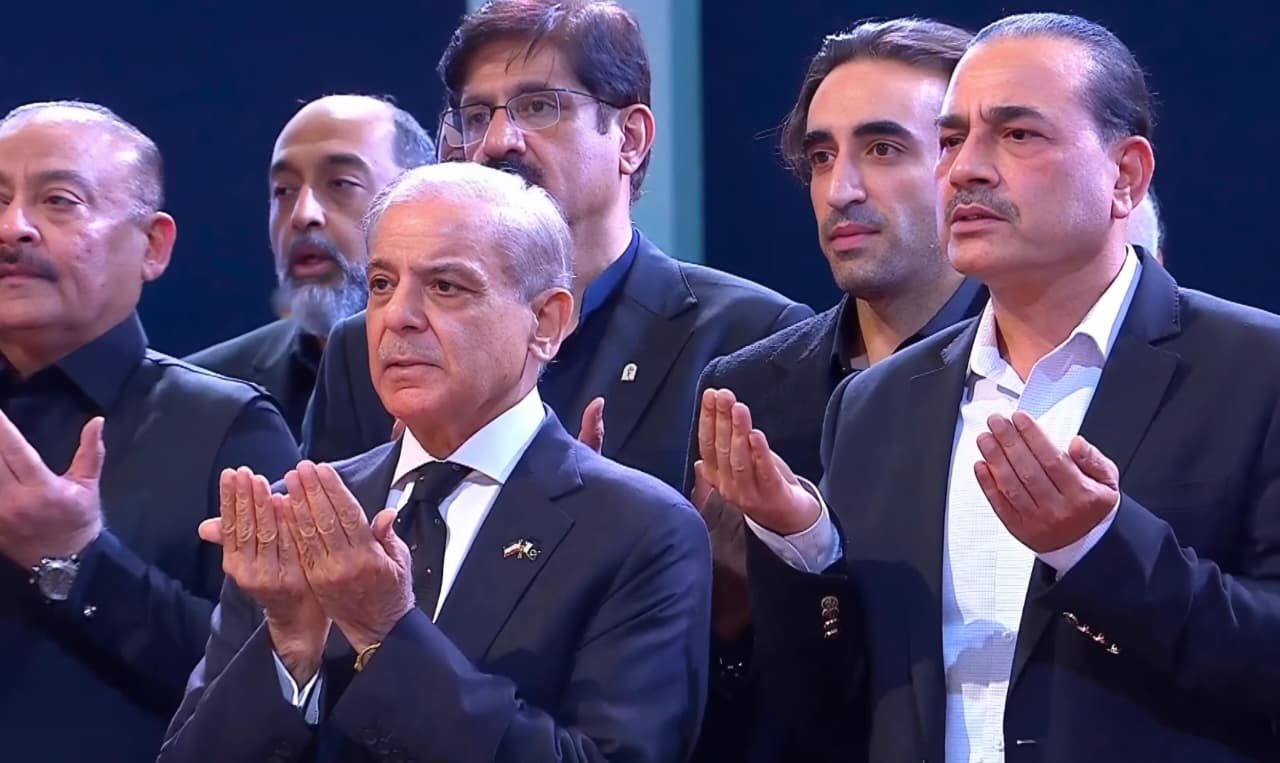
ISLAMABAD — Prime Minister Shehbaz Sharif on Saturday expressed profound condolences over the passing of Supreme Leader Ayatollah Sayyed Ali Khamenei, emphasizing that his wisdom and leadership will be cherished for generations. The Prime Minister conveyed his respects on behalf of the Government and people of Pakistan.
What Happened
Prime Minister Shehbaz Sharif paid tribute to the late Ayatollah Sayyed Ali Khamenei, recognizing his significant contributions to Iran and the broader region. During a statement on Saturday, the Prime Minister highlighted the enduring impact of Khamenei’s leadership and the deep influence he wielded throughout his tenure. “Paid my respects and conveyed deepest condolences on behalf of the Government and people of Pakistan, to the Government,” Sharif stated, underscoring the shared sentiments of loss and respect between the two nations.
The Prime Minister’s statement came in the wake of Khamenei’s passing, which has prompted reflections on his extensive role in shaping regional dynamics. As a pivotal figure in Iran’s political landscape, Khamenei’s leadership was marked by his steadfast commitment to the principles of the Islamic Revolution, which he upheld since succeeding Ayatollah Ruhollah Khomeini in 1989.
Background
Ayatollah Sayyed Ali Khamenei served as the Supreme Leader of Iran for over three decades, a period during which he became a central figure in the country’s political and religious spheres. His tenure was characterized by a focus on maintaining the ideological foundations of the Islamic Republic, as well as navigating complex international relations, particularly with Western powers.
Khamenei’s leadership was instrumental in Iran’s domestic and foreign policy decisions, often emphasizing self-reliance and resistance against external pressures. His influence extended beyond Iran’s borders, impacting regional geopolitics and fostering alliances with various countries, including Pakistan.
Throughout his leadership, Khamenei was a vocal advocate for the Palestinian cause and consistently supported resistance movements against perceived Western imperialism. His death marks the end of an era for Iran, as the nation reflects on his legacy and the future direction of its leadership.
Why It Matters
The passing of Ayatollah Khamenei holds significant implications for both Iran and the broader Middle East region. As a leader who played a crucial role in shaping Iran’s ideological and political trajectory, his absence leaves a considerable void in the country’s governance. The transition of leadership in Iran is likely to influence its domestic policies and international relations, particularly in the context of ongoing tensions with the United States and its allies.
For Pakistan, Khamenei’s death is a moment to reaffirm diplomatic ties and shared interests with Iran. The two countries have historically maintained a complex relationship, balancing cooperation and competition in areas such as trade, security, and regional influence. Prime Minister Sharif’s tribute underscores the importance of continuing this relationship, especially in light of shared cultural and religious ties.
On a broader scale, Khamenei’s passing may impact regional stability, as Iran’s foreign policy stance has been a key factor in Middle Eastern geopolitics. The new leadership will face the challenge of maintaining Iran’s strategic interests while navigating the evolving political landscape.
Key Takeaways
- Prime Minister Shehbaz Sharif expressed condolences over Ayatollah Khamenei’s passing, highlighting his lasting influence.
- Khamenei’s leadership played a pivotal role in shaping Iran’s domestic and foreign policies for over three decades.
- The transition of leadership in Iran may affect regional geopolitics and its relations with countries like the United States.
- Pakistan and Iran share complex diplomatic ties, with cultural and religious connections underscoring their relationship.
- Khamenei’s death marks the end of an era, prompting reflections on his legacy and the future of Iran’s leadership.
Source Attribution
This article is based on official government statements, press releases, and public communications from relevant authorities.














