
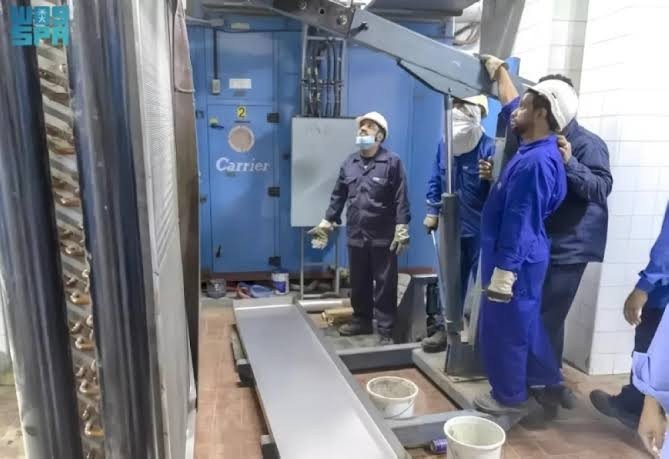
MADINA — The advanced cooling and air conditioning system at the Prophet’s Mosque, or Masjid an-Nabawi, operates continuously to provide a comfortable environment for visitors despite the region’s intense heat. This system boasts a capacity exceeding 19,300 refrigeration tons, as reported by the Associated Press of Pakistan (APP).
Cooling System Operations
The cooling system at the Prophet’s Mosque is vital for maintaining a pleasant atmosphere for the millions of pilgrims and visitors annually. It operates continuously to combat Madina’s extreme temperatures, especially in summer when temperatures can exceed 40 degrees Celsius. The system’s over 19,300 refrigeration tons capacity demonstrates the technology’s scale and sophistication, ensuring the mosque remains a refuge from the heat.
According to the APP, the system is extensive and employs advanced technology to deliver consistent cooling. This becomes crucial during peak pilgrimage seasons like Hajj and Ramadan, when visitor numbers spike, requiring a reliable cooling solution to accommodate the influx.
Historical and Religious Significance
The Prophet’s Mosque is one of Islam’s holiest sites, second only to Mecca’s Grand Mosque. It holds immense historical significance as the resting place of the Prophet Muhammad. Over the years, expansions and technological upgrades, including the advanced cooling system, have been implemented to enhance facilities for the growing number of worshippers.
The Saudi government invests heavily in infrastructure to improve pilgrims’ experiences. Projects include installing sophisticated cooling systems, expanding prayer areas, improving transportation links, and enhancing safety measures. These efforts are part of a broader strategy to accommodate the increasing number of visitors to the holy sites annually.
Importance of the Cooling System
The high-capacity cooling system at the Prophet’s Mosque is crucial for multiple reasons:
- The system underscores Saudi authorities’ commitment to providing a comfortable and safe environment for worshippers, essential due to the mosque’s religious significance and high visitor volume.
- It reflects regional trends towards adopting modern technologies to address environmental challenges like climate change, which exacerbate extreme weather. Efficient cooling solutions become increasingly critical.
- The system serves as a model for other large-scale public infrastructure projects in hot climates, leveraging technology for enhanced comfort and safety.
- Economic benefits arise from maintaining a comfortable atmosphere for worship. The successful system supports the religious tourism sector, contributing to the national economy by generating revenue and creating jobs.














