
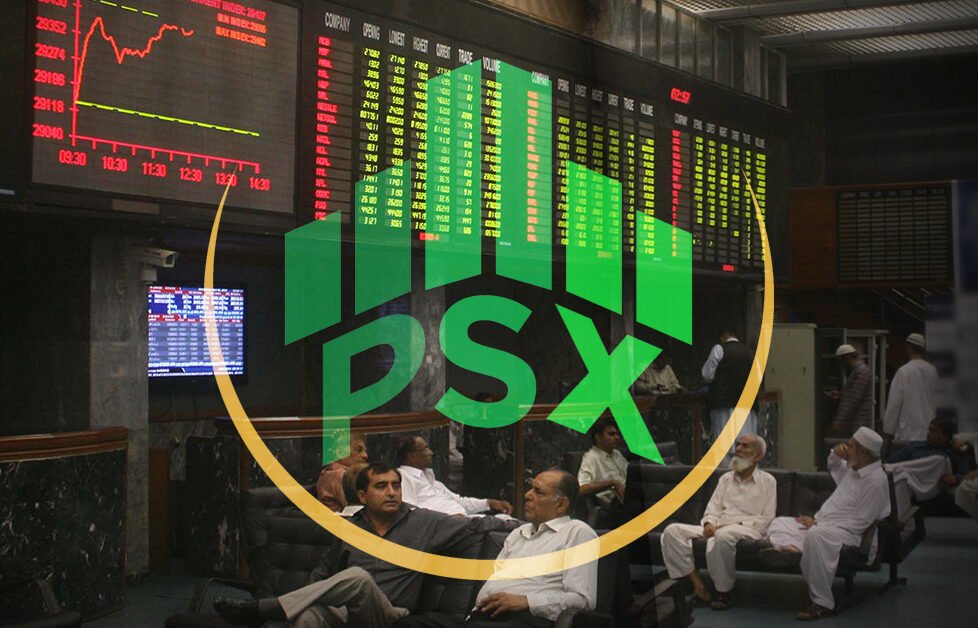
ISLAMABAD — The Pakistan Stock Exchange (PSX) experienced a significant downturn on Monday, as the benchmark KSE-100 Index plummeted by 2,314.73 points. This marked a 1.27 percent decrease, closing at 179,927.05 points compared to the previous day’s 182,241.78 points.
What Happened
The PSX’s sharp decline on Monday reflects a bearish trend that has gripped the market, causing concern among investors and stakeholders. The KSE-100 Index’s drop of over 2,314 points is one of the most substantial declines in recent months, signaling potential instability in the market. The index, which is a key indicator of market performance, saw significant losses across various sectors, contributing to the overall downturn.
Market analysts attribute this decline to several factors, including political uncertainty, economic challenges, and global market trends. The ongoing economic reforms and fiscal policies have also played a role in shaping investor sentiment. “The market is reacting to both domestic and international pressures,” said a financial analyst. “Investors are cautious due to the current political climate and economic policies that are yet to show tangible results.”
Additionally, the global economic environment, marked by fluctuations in oil prices and geopolitical tensions, has influenced investor behavior. The PSX’s performance is often seen as a barometer of the country’s economic health, and such a significant drop raises questions about the underlying economic conditions.
Background
The Pakistan Stock Exchange has faced several challenges in recent years, including economic instability and political uncertainty. Historically, the PSX has been sensitive to changes in government policies and international economic trends. The KSE-100 Index, which comprises the top 100 companies listed on the exchange, serves as a benchmark for market performance and investor confidence.
In the past, the PSX has experienced fluctuations due to various factors, such as changes in government leadership, fiscal policies, and international market dynamics. The current decline can be seen in the context of ongoing economic reforms aimed at stabilizing the economy and attracting foreign investment.
Why It Matters
The significant drop in the PSX is a cause for concern for both domestic and international investors. Economically, a declining stock market can impact investor confidence, leading to reduced investment and slower economic growth. The PSX’s performance is often viewed as an indicator of the country’s economic stability, and a continued bearish trend could deter potential investors.
Socially, the decline in the stock market can affect public sentiment, as many individuals and institutions have investments tied to the market’s performance. A prolonged downturn could lead to financial losses for investors, impacting their financial well-being and spending power.
Politically, the PSX’s performance can influence government policies and decision-making. A struggling stock market may prompt the government to implement measures aimed at boosting investor confidence and stabilizing the economy. This could include policy adjustments, economic reforms, or incentives to attract foreign investment.
Internationally, the PSX’s performance is closely monitored by foreign investors and financial institutions. A significant decline could affect Pakistan’s standing in global markets and its ability to attract foreign investment. It may also influence the country’s credit rating and borrowing capacity, impacting its economic trajectory.
Key Takeaways
- The PSX experienced a significant decline, losing over 2,314 points on Monday.
- The KSE-100 Index closed at 179,927.05 points, a 1.27 percent decrease.
- Factors such as political uncertainty and global market trends contributed to the downturn.
- The decline raises concerns about investor confidence and economic stability.
- Government policies and international investment may be influenced by the PSX’s performance.
Source Attribution
This article is based on official government statements, press releases, and public communications from relevant authorities.














