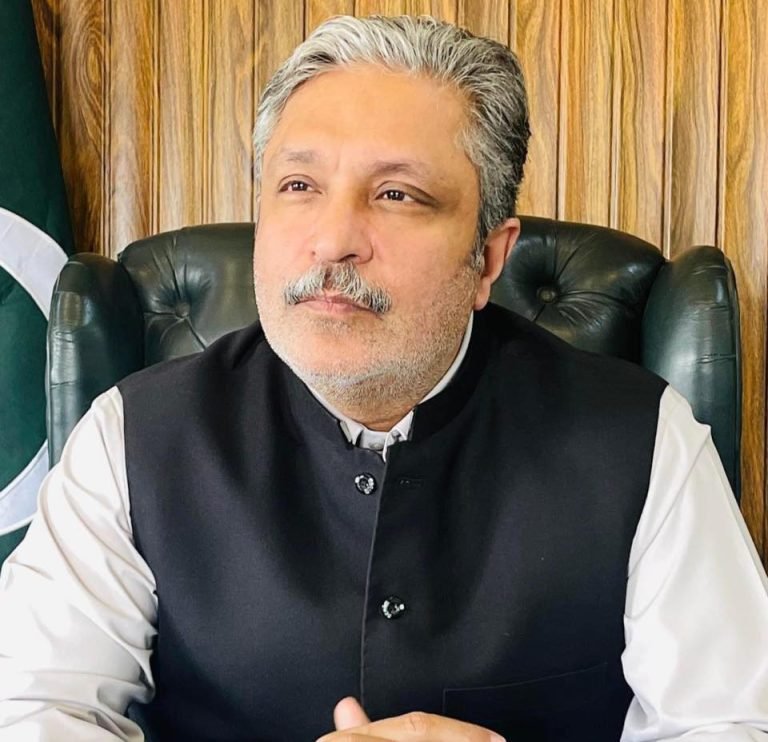
ISLAMABAD — Prime Minister’s Coordinator for Information, Ikhtiar Wali Khan, asserted that the people of Pakistan have turned away from the politics of agitation and unrest promoted by the Pakistan Tehreek-e-Insaf (PTI). Speaking on a private television channel on Thursday, Khan emphasized that the public’s response to PTI’s previous demonstrations, including a 126-day sit-in, indicates a clear rejection of such tactics.
What Happened
Ikhtiar Wali Khan, serving as the Prime Minister’s Coordinator for Information, addressed the nation through a televised interview, expressing his views on the political strategies employed by PTI. He highlighted that the Pakistani populace has grown weary of the continuous agitation and protests orchestrated by PTI, which he believes have not yielded any substantial outcomes for the public.
During the interview, Khan referenced PTI’s extensive 126-day sit-in, which took place in 2014, aiming to challenge the government of the time. He noted that despite the prolonged nature of the protest, it did not result in any significant political change or benefit for the citizens. Khan argued that such demonstrations only serve to disrupt daily life and do not contribute to constructive political discourse.
“The people of Pakistan have shown through their actions that they desire stability and progress, not chaos and disorder,” Khan stated. He further criticized PTI’s approach, suggesting that it focuses more on creating unrest rather than presenting viable solutions to the country’s challenges.
Background
The PTI, led by former Prime Minister Imran Khan, has been known for its confrontational political strategies, often involving large-scale protests and sit-ins. The most notable of these was the 2014 sit-in in Islamabad, which was organized to protest alleged electoral fraud in the 2013 general elections. The sit-in lasted for 126 days and was marked by high tensions and political drama.
Over the years, PTI’s approach has drawn both support and criticism. Supporters argue that such measures are necessary to hold the government accountable, while critics claim that they undermine democratic processes and create instability. The current government, led by the Pakistan Muslim League-Nawaz (PML-N), has often been at odds with PTI’s methods, advocating for dialogue and legislative processes over street protests.
Why It Matters
The rejection of PTI’s agitation politics by the public, as claimed by Ikhtiar Wali Khan, holds significant implications for Pakistan’s political landscape. If the public sentiment is indeed shifting towards stability and away from disruptive protests, this could lead to a more stable political environment, conducive to economic growth and development.
Economically, prolonged protests and political instability can deter investment and disrupt economic activities. A move towards more stable governance could enhance investor confidence and promote economic recovery, especially in the post-pandemic period where Pakistan is striving to stabilize its economy.
Socially, a reduction in political agitation could lead to a more peaceful society, where citizens can focus on development and progress rather than being embroiled in political unrest. This shift could also encourage political parties to engage in more constructive dialogues and policy-making processes, ultimately benefiting the democratic fabric of the nation.
Internationally, a stable Pakistan is crucial for regional peace and security. As a key player in South Asia, Pakistan’s internal stability can influence regional dynamics, including relations with neighboring countries and its role in international forums.
Key Takeaways
- Ikhtiar Wali Khan claims public rejection of PTI’s agitation politics.
- PTI’s 126-day sit-in in 2014 is cited as an example of ineffective protest.
- Public desire for stability could lead to economic and social benefits.
- Political stability in Pakistan is crucial for regional peace and security.
- Shift towards dialogue and policy-making may strengthen democratic processes.
Source Attribution
This article is based on official government statements, press releases, and public communications from relevant authorities.