
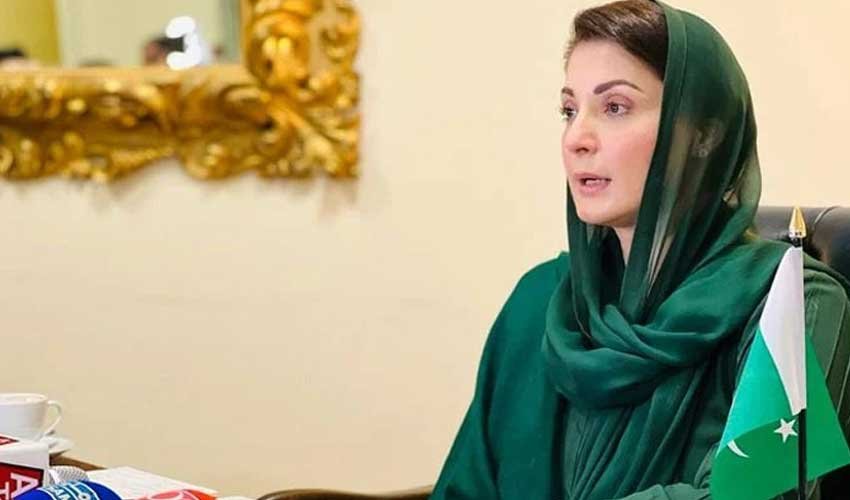
LAHORE — Punjab Chief Minister Maryam Nawaz Sharif emphasized the critical need for a peaceful resolution to the Kashmir dispute under United Nations resolutions, asserting that such a resolution is vital for regional stability. Her comments came on Sunday as she reiterated Pakistan’s unwavering diplomatic, political, and moral support for the people of Indian Illegally Occupied Jammu and Kashmir (IIOJK).
What Happened
During a statement issued on Sunday, Chief Minister Maryam Nawaz Sharif reaffirmed Pakistan’s commitment to advocating for the rights of the Kashmiri people. She highlighted the importance of resolving the Kashmir issue in line with United Nations Security Council (UNSC) resolutions, which call for a plebiscite to allow the Kashmiri people to determine their own future.
“The peaceful resolution of the Kashmir dispute is not only crucial for the Kashmiri people but also essential for lasting peace and stability in the region,” stated the Chief Minister. Her remarks underscore Pakistan’s long-standing position on the Kashmir issue, which has been a central point of contention between Pakistan and India since 1947.
Maryam Nawaz Sharif’s statement comes amid ongoing tensions in the region, with frequent skirmishes reported along the Line of Control (LoC) and continued reports of human rights violations in IIOJK. The Chief Minister’s call for a peaceful resolution aligns with Pakistan’s broader diplomatic efforts to bring international attention to the plight of the Kashmiri people.
Background
The Kashmir conflict dates back to the partition of British India in 1947, which led to the creation of the independent states of India and Pakistan. Both countries claim the region in full but control only parts of it. The conflict has resulted in several wars and continuous military skirmishes, making it one of the most protracted and volatile disputes in the world.
The United Nations has been involved in the Kashmir issue since its inception, with the UNSC passing resolutions that call for a plebiscite to determine the region’s future. However, these resolutions have yet to be implemented, and the situation remains tense, with both India and Pakistan maintaining significant military presences in the region.
In recent years, the situation in IIOJK has drawn international concern due to reports of human rights abuses, including restrictions on freedom of movement, communication blackouts, and arbitrary detentions. The region has been under a heightened security lockdown since August 2019, when India revoked its special autonomous status.
Why It Matters
The Kashmir dispute is a significant geopolitical issue with implications for regional and international peace. The unresolved conflict has the potential to escalate into a larger military confrontation between two nuclear-armed states, posing a threat to global security.
For Pakistan, the Kashmir issue is not just a territorial dispute but a matter of principle and humanitarian concern. The government’s stance is rooted in the belief that the Kashmiri people should have the right to self-determination, as promised by international law and UNSC resolutions.
Economically, the ongoing conflict diverts resources that could be used for development and improving the lives of citizens in both countries. Socially, it affects the lives of millions of Kashmiris who live under constant uncertainty and fear. Politically, it remains a core issue in Pakistan-India relations, affecting bilateral ties and regional cooperation.
Internationally, the Kashmir issue tests the effectiveness of global governance institutions like the United Nations in resolving long-standing conflicts and upholding human rights. The international community’s response to the situation in Kashmir could set precedents for handling similar disputes worldwide.
Key Takeaways
- Punjab Chief Minister Maryam Nawaz Sharif calls for a peaceful resolution of the Kashmir dispute under UN resolutions.
- The Kashmir conflict remains a central issue between Pakistan and India, with significant regional and international implications.
- UNSC resolutions have called for a plebiscite in Kashmir, but these have yet to be implemented.
- The situation in IIOJK has drawn international concern due to reports of human rights violations.
- The resolution of the Kashmir issue is crucial for regional peace and stability.
Source Attribution
This article is based on official government statements and public communications from relevant authorities.














